Tesla owner who drove 'no hands' up M50 motorway is cleared of dangerous driving
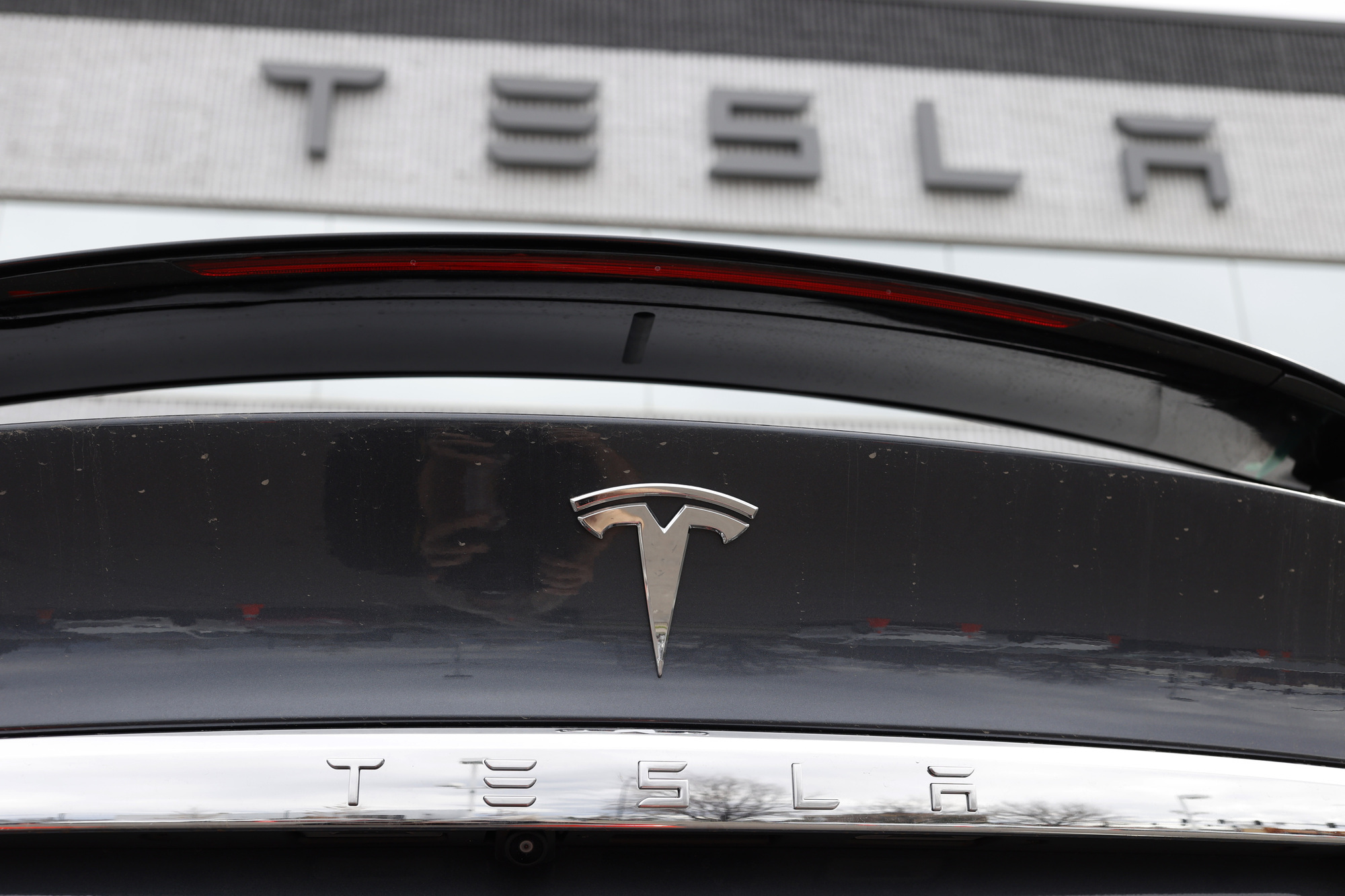
The Tesla owner was driving with 'arms folded... quite high, almost to his chin' on the M50 on March 22, 2021.
A Tesla owner, who drove "no hands" on the M50 with his arms folded, has been cleared of dangerous driving after a court heard he had activated the car's autopilot system.
Noel Bourke, aged 37, of Bramley Hall, Diswellstown Ave, Castleknock, Dublin 15, who pleaded not guilty, was pulled over on the motorway on March 22, 2021.
The defence accepted he was driving with no hands.
However, he testified that he was monitoring the car's autopilot driver assistant system and gave an in-depth explanation of how it worked.
The mechanical engineer works for a firm that develops military products and devices for autonomous vehicles.
Garda Colin McCluskey told Dublin District Court that he and a colleague were driving on the M50 when he noticed a Tesla car at 2.05pm heading northbound near the Ballymun junction.
Garda McCluskey said: "I looked to my left and two lanes across, I observed a male. He had his arms folded at the time, high across his chest, quite high, almost to his chin. It was quite obvious."
He accepted there was nothing dangerous about the driving, which he described as "a bit mechanical". He told the court he then saw Mr Bourke with his hands interlocked on his lap below the steering wheel.
The gardaí pulled him over and asked him what he was doing, and he replied: "I was using autopilot."
Garda McCluskey then cautioned Mr Bourke not to drive without his hands on the steering wheel.
He said the defendant drove a considerable distance like that, and there was some traffic on the motorway.
The garda was concerned the man could not control the car if he had to swerve, adding that holding the steering wheel gave stability to the car and the driver's body.
The court heard Mr Bourke had no previous convictions, a clean driving licence, and had been driving within the speed limit.
In evidence, Mr Bourke agreed with the garda that some vehicles were on the road, but it was "not rush-hour" traffic.
He said he bought the Tesla in March 2020 and had a previous automated vehicle.
He said he had 15 years of experience in his role and was a member of various technical societies.
He said the autopilot had to be engaged by the driver and only under acceptable conditions.
Mark O'Sullivan, solicitor, asked his client if the vehicle itself could disengage the autopilot. He replied: "It can if there is a visibility issue with the cameras or the system detects a situation it cannot handle."
However, Mr Bourke explained there were visual and auditory notifications when the autopilot disengaged.
Under cross-examination with a State solicitor, it was put to him that it was unsafe to drive using no hands on a public road. He replied: "Not with the correct systems." He added that without an automated system to control the car, it would be dangerous.
In later exchanges with Judge John Hughes, he explained how the driver regained control, including moving the steering wheel or using a switch.
He said that if the driver ignored or was unresponsive to the visual and audio notifications to disengage the autopilot, the car would slow down in the lane, stop, and activate the hazard warning lights.
Judge Hughes accepted the car was armed with various sensory devices that knew its environment. A car braking in front or changing lanes would be expected, but quoting the Road Safety Authority's maxim "expect the unexpected", he asked Mr Bourke: "What about the unexpected?"
Mr Bourke replied: "For some of those situations, judge, for example, an animal or child, the cameras recognise those things; a blowout is quite a different story; that is the reason the human being is there. It is an automated, not an autonomous vehicle. It is not capable of driving without supervision of a competent driver."
The judge asked if he accepted that it would be better to have two hands on the wheel to take control of the vehicle, and he answered: "Probably, yes."
Judge Hughes agreed with the defence solicitor that case law definitions of dangerous driving said there had to be a serious direct risk to another person.
Judge Hughes remarked that while having two hands on the wheel was optimal, he believed the accused was truthful and accepted Mr Bourke was monitoring the autopilot system.
Dismissing the case, he also noted the evidence describing the driving and amount of traffic at the time and held there was no direct risk to other people.
CONNECT WITH US TODAY



Be the first to know the latest news and updates