Hutch trial: Five questions still to answer after The Monk's acquittal
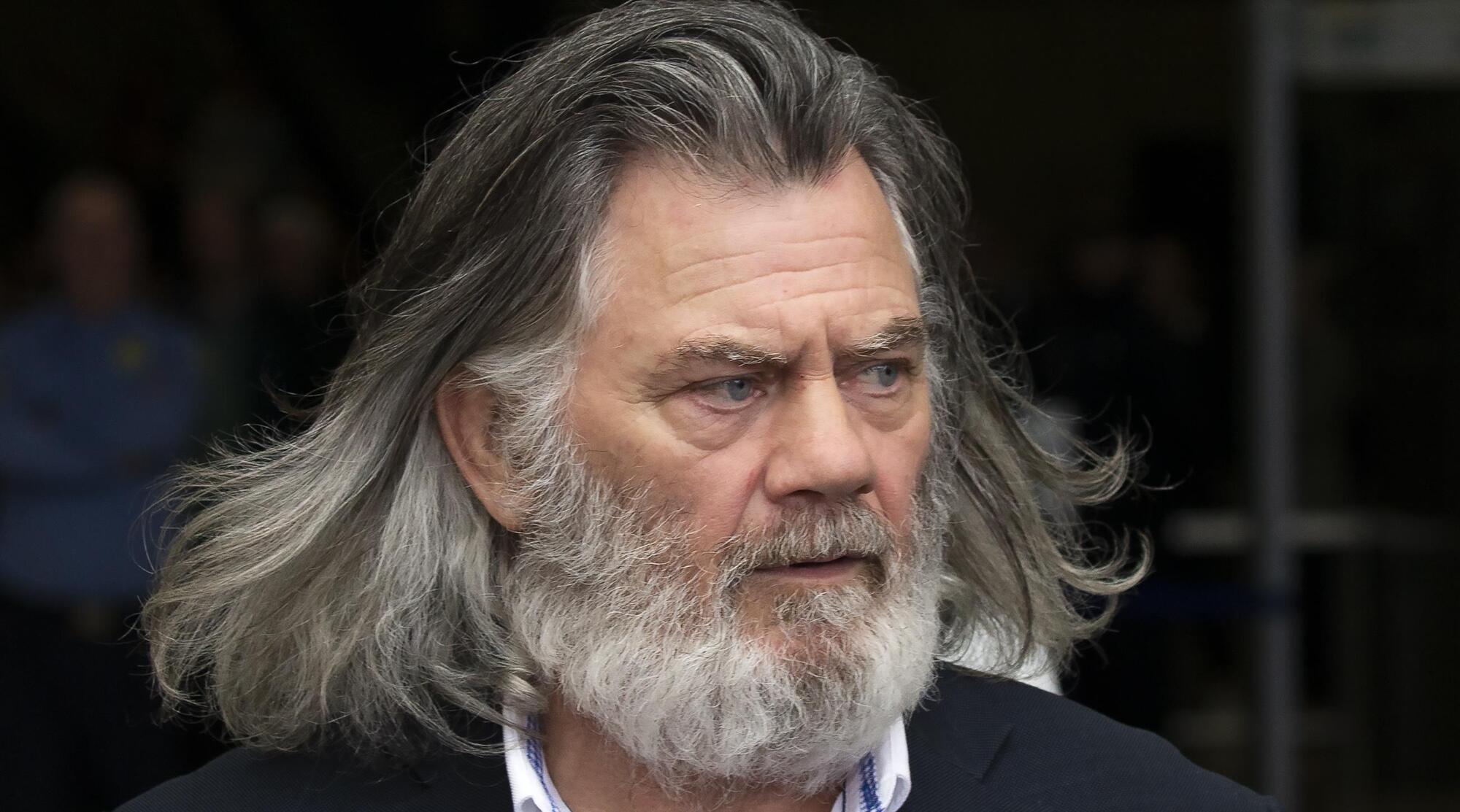
Gerry 'The Monk' Hutch walking free after he was acquitted of the murder of David Byrne. The fall-out from his acquittal may continue for some time. Picture: Colin Keegan, Collins Dublin
Splashed across every front page in Ireland yesterday was an image of the long-haired, bearded Gerard ‘The Monk’ Hutch walking out of the Special Criminal Court a free man after he was acquitted of the murder of David Byrne.
The landmark Regency murder trial was one of the most significant and dramatic to take place in the State in recent years, concerning one of the most notorious killings in modern Irish history with one of the most notable gangland figures of recent decades in the dock.

The feud which was brewing between the Hutch and Kinahan families exploded on February 5, 2016, when a hit team raided the boxing weigh-in for Daniel Kinahan’s MGM promotions. They missed Kinahan but shot dead one of his loyal lieutenants David Byrne.
The fall-out from Mr Hutch’s acquittal may continue for some time but, in the immediate aftermath, here are the most pressing questions being asked of the likes of the gardaí, DPP and others.
In the lengthy judgement delivered on Monday, Ms Justice Tara Burns said: “At most, the segments [of the surveillance audio] give rise to a possible inference that Gerard Hutch gave the go-ahead for the Regency.
“However, the case against Gerard Hutch is not one of common design but rather participation. Although one wonders what the case was intended to be before the introduction of Jonathan Dowdall as a prosecution witness.”
The State’s case was that Mr Hutch was one of the shooters; one of the men who shot Byrne in the Regency. Not that he’d planned it from afar and watched it happen, but that he’d been there and was one of the men that had done it. And it was a proposition dismissed by the three-judge court.

Could another charge have been brought forward based on the evidence?
Question marks about the choice of Jonathan Dowdall as a key witness in the trial will also persist, given how thoroughly he was eviscerated – first in cross-examination by Hutch’s defence counsel, Brendan Grehan SC, and then Ms Justice Burns in her judgment.
Dowdall was facing a murder charge himself before, at a very late stage, pleading guilty to a lesser offence of helping to facilitate the murder. As Mr Grehan put it during the trial, Dowdall effectively had the DPP “over a barrel” when he vowed to tell all he supposedly knew, which included the so-called confession from The Monk to having been one of the shooters.
Ms Justice Burns couldn’t accept this evidence. She said that, given the situation he was in and that he was being assessed for the witness protection programme, he would’ve been expected to tell the court the “whole story in a forthright manner, warts and all” and this was “not the case”.
Ms Justice Burns said that it could not be said that Dowdall “found god or decided to do what was right” and instead was “acting out of his own self-interests” when giving evidence against Mr Hutch.
Dr Cian Ó Concubhair, associate professor in criminal justice at Maynooth University, said it was a “legitimate strategy” to use Dowdall’s evidence given what he had to say but that it’s “problematic, high-risk and can go pear-shaped" as it did for the State in this case.

“The Special Criminal Court delivers an overwhelming majority of verdicts that are guilty,” he said. “But what I assume happened was they expected they’d get a conviction as they usually get one in the Special Criminal Court.”
How the State's case progressed so far relying on a witness that turned out to have “significant question marks” over his character and reliability is an important question that lingers in the wake of this trial.
The oft-debated role of the Special Criminal Court is likely to heighten after this most high-profile of trials. There is a perception among critics that such a court is unnecessary and infringes fair trial rights.
Last year, Minister for Justice Helen McEntee told the Dáil that this court plays a “necessary and important role” in the criminal justice system. “We cannot ignore the threat posed to the criminal process by terrorist groups and organised criminal groups which seek to intimidate jurors or potential jurors,” she said.
Despite its high conviction rate, in this case, it ruled Mr Hutch to be not guilty based on the evidence before it. Ms Justice Burns spelled out in detail that fundamental principles of Irish criminal courts are applied equally at this non-judge court, used in gangland and terrorist cases.
Read More
However, Dr Ó Concubhair said that this ruling is unlikely to quell the calls from some quarters for its abolition.
“The main argument for the SCC is to address jury tampering,” he said. “Procedural changes could be easily implemented to protect juries. Our system is designed to be a jury system.”
And was Monday a good day for the Special Criminal Court? The associate professor added: “My view is no. Competent judges have reached this decision.”
Given the increasingly bitter exchanges between Sinn Féin and Fine Gael, in particular, in recent months it is likely that the name of Jonathan Dowdall will be a stick to beat Sinn Féin with for some time to come.
Not only was he already convicted of a brutal attack on a man a number of years ago, now he has been described by the Special Criminal Court to be acting like a “ruthless, base, callous criminal involved in making bombs, suggesting assassinations of people” in that secret recording.
All of this will mean questions persist over why he was a councillor for them in the first place. On RTÉ’s Morning Ireland, Sinn Féin’s housing spokesperson Eoin Ó Broin repeated that Dowdall should never have been a member of the party.
“We simply didn’t know” about his criminality, claimed Mr Ó Broin. He said the claim made by Dowdall — in the secretly recorded tapes — that he was confronted by a Sinn Féin director of elections over an incident where he was alleged to have shot up his uncle’s house as “one of a number of lies” told by Mr Dowdall.
“My understanding is [the director of elections] had a number of meetings with Jonathan Dowdall,” he said. “It was Jonathan Dowdall who raised the issue of an attack on a family member’s home... He wasn’t questioned.”

Similarly, on the tapes, claims are made that party leader Mary Lou McDonald received money and electoral support from The Monk. Post-verdict, she labelled these claims as “false”.
In a statement, she said she wanted to “set out the facts” related to “false and deeply offensive comments made about me during the course of this trial”.
“I have never met Gerard Hutch. I have never received money or electoral support from Gerard Hutch,” she said.
And indeed, Fine Gael was out of the stalls on Tuesday with a press release saying that Ms McDonald and the party have further questions to answer. It is near certain we’ll be hearing the name of Jonathan Dowdall thrown out again and again for quite some time.
In her judgment, Ms Justice Burns said the court was satisfied beyond reasonable doubt that the Hutch Criminal Organisation orchestrated the Regency Hotel attack. It wasn’t satisfied beyond reasonable doubt that Gerard Hutch was one of those hitmen who shot David Byrne, hence his acquittal.
But seven years on, and with no one having been convicted for Byrne’s murder as of yet, the investigation goes on.
Indeed, in the wake of the verdict, An Garda Síochána issued a statement to say that the Regency probe was an “active ongoing investigation”.

“Investigators remain convinced that there are still individuals, with information relating to the events of the 5th February 2016, who have not made contact with An Garda Síochána,” a spokesperson said.
One thing the trial of Gerard Hutch made clear is the sheer scale of the evidence gathering that went on in the immediate aftermath of the Regency, from CCTV to surveillance to the movement of the AK-47-style rifles used in the attack.
Whether more arrests or further developments in this case are in the offing remains to be seen.
Now in his 60s, Mr Hutch has been warned by gardaí that his life is under threat. This is despite the cooling of the Hutch-Kinahan feud in recent years and the efforts from gardaí to prosecute those responsible for the crimes committed during the feud.
Mr Hutch walked free from court on Monday and entered a taxi accompanied by his solicitor.
This acquittal does not preclude him from garda investigation for separate alleged crimes in the future.
But, having been a resident of Spain prior to his extradition, it is widely believed a return to sunnier climes is in the offing for the Monk in as soon as just a few days.