Orders sought to remove alleged trespassers from disused historical building
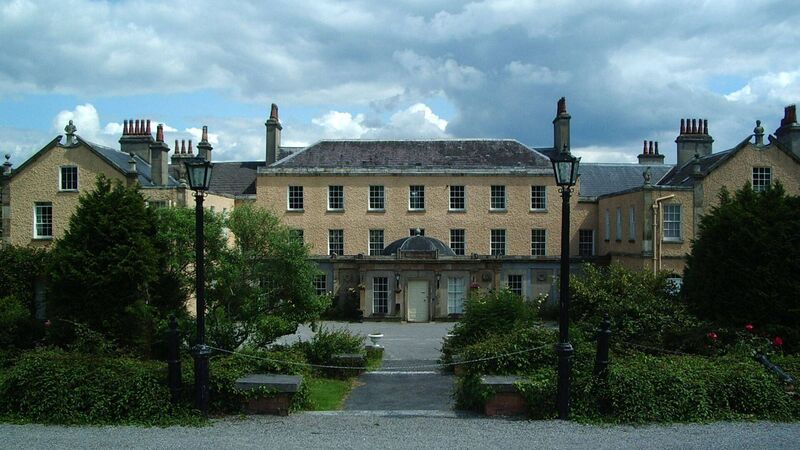
The receiver says he has not been able to persuade the alleged trespassers to leave Knocklofty House in Tipperary.
The High Court has been asked for orders directing unknown persons in four caravans to vacate and cease occupying the well-known historical Co Tipperary property Knocklofty House.
Mr Justice Brian O'Moore was informed on Tuesday that several persons in the caravans have been illegally occupying Knocklofty House, a protected or listed building located outside Clonmel, have no permission to be there, are causing an ongoing nuisance, and have refused to leave.
It is claimed that they have set up a makeshift camp on the property and have been grazing up to 20 piebald ponies on lands surrounding the property, which has fallen into disrepair and is unsafe for human habitation.
The orders are being sought by Chartered Accountant Ken Fennell, who in 2015 was appointed receiver over certain assets, including Knocklofty House and surrounding lands, of businessman Denis English, of Marlfield House, Clonmel.
He seeks orders from the court directing the persons unknown to vacate the site and cease interfering with the property.
Represented by Frederick Gilligan Bl, the receiver claims that the makeshift camp allegedly built by the persons unknown on the property are "unsightly" and "may cause a danger to both humans and animals".
As well as the ponies, it is claimed that other animals, including chickens and dogs, are being kept in makeshift wooden structures on the property.
The receiver has animal welfare concerns due to the apparent poor state in which the various animals are being kept.
There is also "a significant amount" of debris on the site, including bricks, wooden planks, sulky racing traps, and toys, which Mr Fennell says may be causing a danger to anyone wishing to attend at the property.
Built in the 18th century, Knocklofty House was formerly owned by Anglo-Irish aristocrats the Earls of Donoughmore.
In 1974, John Hely-Hutchinson, the then Earl of Donoughmore and a member of Britain's House of Lords, and his wife Dorothy were kidnapped from the property by the IRA, before being released unharmed in Dublin five days later.
From the 1980s, the property operated as a hotel but this closed some years ago.
It was acquired by Mr English in 2007. However, after he allegedly defaulted on loans he acquired to buy the property, Mr Fennell was appointed receiver.
The loans were originally taken out with Ulster Bank but were acquired by financial fund Promontoria (Aran) Ltd, which appointed Mr Fennell as receiver.
That appointment resulted in litigation between the receiver and Mr English, which was resolved late last year.
In a sworn statement to the court, Mr Fennell said that following a settlement agreement reached with Mr English, the receiver was now solely responsible for the property.
Mr Fennell wants to prepare the property for sale and or development. He said that he had been unable to take action against unknown persons, who have been on the property for some time, due to the litigation with Mr English.
Mr Fennell said that neither he nor his agents, KTech Security, have been able to persuade the persons to leave the site.
He added that the interior of Knocklofty House has also been extensively damaged.
Wooden floorboards have been lifted and removed, he said, adding that services to the property have been impaired.
He does not know who caused this damage or when it was done, but he wants to secure Knocklofty House so it can be sold or developed.
In his ruling, Mr Justice O'Moore said that he was satisfied to grant Mr Fennell permission, on an ex-parte basis, to serve notice of the proceedings on the persons unknown alleged to be trespassing on the property.
The action will return before the court next week.