Supreme Court to hear O'Flynn's appeal against former business partner's PIA
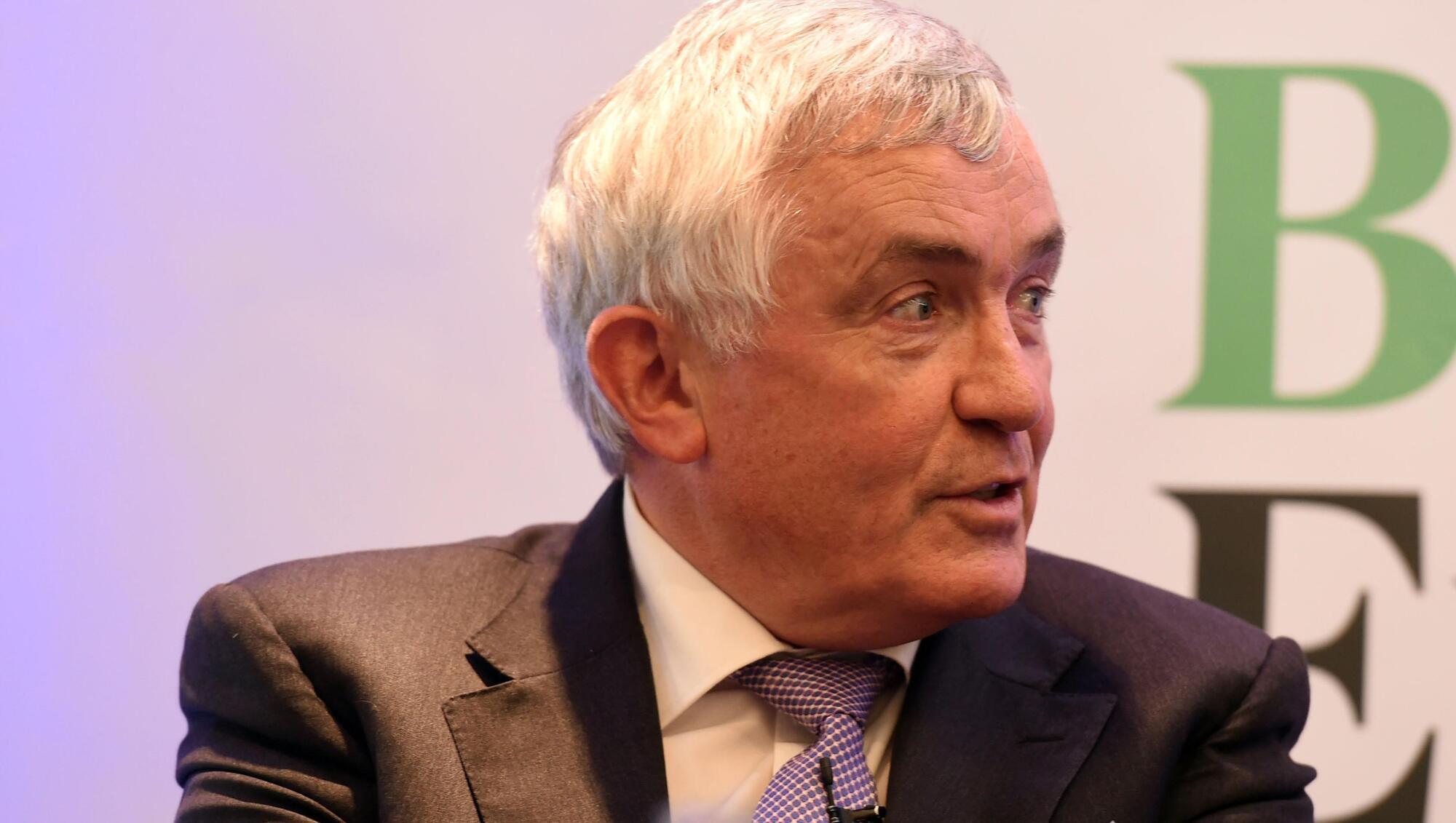
Michael O'Flynn (pictured) claims that he advanced a loan to a pub business Mr O’Driscoll was involved in. As a result, it is claimed that Mr O’Driscoll became a signatory to a €2.2m loan guarantee in favour of the developer, and that the two became shareholders in the business. File picture: Larry Cummins
The Supreme Court has agreed to hear developer Michael O’Flynn’s appeal against a ruling preventing him from objecting to the Personal Insolvency Agreement made in favour of former business partner John O’Driscoll.
The developer claims that Mr O’Driscoll from Ovens, Co. Cork, owes him over €750,000 and was not insolvent when Mr O'Driscoll sought and was granted a PIA by the courts.
The developer claims that he advanced a loan to a pub business Mr O’Driscoll was involved in. As a result, it is claimed that Mr O’Driscoll became a signatory to a €2.2m loan guarantee in favour of the developer, and that the two became shareholders in the business.
Mr O’Driscoll rejects the claim that he was not insolvent and said his PIA should remain undisturbed. Last July, the High Court, upholding a decision previously made by the Circuit Court, ruled that Mr O’Flynn had no right to be heard in relation to the Mr O’Driscoll’s PIA.
Mr Justice Alexander Owens agreed that Mr O’Flynn lacked the locus standi to be heard because, despite being invited by Mr O’Driscoll’s Personal Insolvency Practitioner to file a proof of debt, he did not do so.
The judge said the 2012 Personal Insolvency Act was quite clear and participation in the creditor process depends on proof of debt. The developer then applied to the Supreme Court for permission to hear his appeal against the refusal.
In a written determination, a three-judge panel of the Supreme Court, comprised of the Chief Justice Mr Justice Donal O’Donnell, Ms Justice Elizabeth Dunne, and Ms Justice Iseult O’Malley agreed that the appeal raised a matter of general public importance.
The issue relates to the interpretation of the 2012 Insolvency Act, and Mr O’Flynn’s entitlement to raise an objection, the panel held. The issue raised would, the panel said, affect other cases and will bind the lower courts in future cases.
It was, the panel added, desirable that there should be a definitive guidance on the interpretation of the Act and the procedure to be followed. The matter will be heard by the Supreme Court at a later date.
Mr O’Flynn’s opposition to the PIA relates to an alleged debt of €750,000 plus interest owed to him relating to a guarantee on a €2.2 million loan to Ezeon Entertainment Ltd, a company set up in 2007 and which operated the Silly Goose pub in Cork.
The loan was used to pay off monies owed to a financial fund in 2014, which had acquired loans that had been advanced to the company. The other guarantor on the loan, and shareholder in Ezeon, is former rugby player and coach Ronan O’Gara.
In a separate but related case, lawyers representing Ezeon have asked the High Court to set aside Mr O’Driscoll’s PIA. That application, supported by Mr O'Flynn and Mr O'Gara, which is pending before the High Court, is opposed by Mr O’Driscoll, who denies any wrongdoing.
Mr Justice Owens is due to fix a date for the hearing of a preliminary issue in that case on whether the High Court has the jurisdiction to hear Ezeon’s application.
CONNECT WITH US TODAY



Be the first to know the latest news and updates