Gardaí back Electric Picnic drug testing, but no amnesty for possession

Crowds at a previous edition of Electric Picnic in Stradbally, Co Laois. File picture
With just days to go before Electric Picnic returns, and after recently revealing that a pilot drug testing service would operate at the music festival, An Garda Síochána is eager that those attending are crystal clear on what's happening.
The Irish Examiner last week revealed that the country’s first ever drug testing outside of State laboratories would take place at Electric Picnic.
It follows a series of HSE proposals, going back to 2019, to pilot such a system, which it believes would provide crucial insight into what substances were in circulation and issue alerts to users.
These trends in stimulant drugs — both of unexpected substances, such as cathinones, selling as ecstasy tablets or powders, or cocaine, and of ecstasy tablets three or more times the average strength — have been flagged by testing services in the UK, such as The Loop and Mandrake, most recently as this weekend, as well as by the EU drugs agency, EMCDDA.
A HSE report published in September 2019 recommended pilots in drug testing and said people could surrender tablets into “amnesty bins” for testing, but would not be told directly what was in them.
That report said gardaí and the Department of Justice would have to agree.
There followed long and intensive discussions, but agreement was eventually nailed down last week.
A so-called pilot back-of-house drug testing will take place, but no front-of-house service, which is where users can approach the scientists, hand over the drug, and be told face to face what is in it.
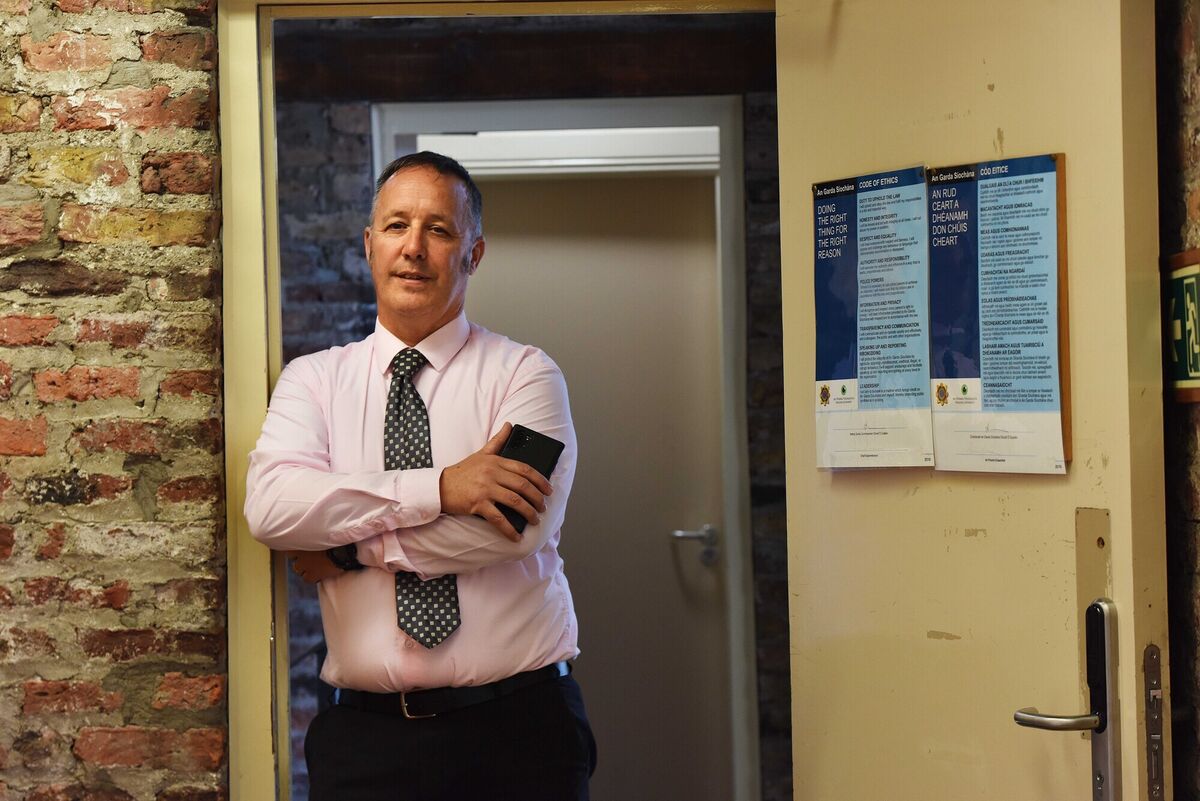
Detective Superintendent Sé McCormack of the Garda National Drugs and Organised Crime Bureau is the force’s lead on drug policy, including with the HSE and various departments.
“The law hasn’t changed,” he said. “There is no change in legislation to facilitate the possession of illegal or controlled drugs.”
He takes particular exception to the word “amnesty” in referring to the bins.
“Some agencies have been using the word ‘amnesty’,” said Det Supt McCormack. “This is not an amnesty bin. There is no amnesty bin. They are surrender bins.”
This, he said, is to make it clear there is no amnesty or exemption from the law, including in cases where people tell gardaí they are going to the medical tent to hand over their drugs.
“There is no defence, ‘I’m on my way to the tent’,” he said. “There is no part of the ground that says it's OK to hold illegal drugs.
“I cannot be more clear — there is no amnesty area, there's no sacred ground where you can say, 'It's OK for me to possess the drugs.' These are illegal drugs.”
He said the drug monitoring is a “health-led” initiative.
“That’s what the testing and the monitoring is about. We're working with our HSE partners to get the messages out on both fronts. And it's Government policy. It's coming from the national drug strategy. So we're happy to do it.”
He said they have been been engaged from the very start of this process.
“We've been consulted and engaging with our health partners and the criminal justice partners to get this over the line and to highlight that it is something that can be of use in preventing illness.”
But have the gardaí always been in favour of this, with reports over recent years indicating they had serious concerns?
“It's about making sure that we know what we're involved in,” he said, "because there are always different agendas and always different considerations. So we're looking at it from a criminal justice consideration. How can we do this without breaching the law?”
He wants people to be clear that this is just a ‘back of house’ system.
“It's a back of house drug monitoring, and it's a service - but it's not a service for individuals," he said. "It's not a case where you can go and say ‘I've taken this or I'm going to take this, can you tell me what's in it?’ It's if they come into the possession of the HSE through medical facilities or through medical intervention, and someone goes, ‘No, I'm not going to take this’ and they throw it in the bin and then they'll be tested by the HSE.
"The HSE will discover what's in it, and if there's anything problematic, they will raise the issue, to let people know.”
The bin, similar to sharps-type bins, will be located inside the medical tent.
As well as people handing over substances, it may also cover situations where the person is not able to voluntarily hand the tablet or powder over and the medic is able to take it and put it into the surrender bin.
Det Supt McCormack said these bins are later locked, sealed, and secured and taken by the medics out of the tent, through a corridor, into the security area of the festival, where scientists conduct tests on the substances.
“The medic has a licence to be in possession of the drug and the scientists in the back of house have a licence too,” he said.
The licences are being provided by the Health Products Regulatory Authority.
The testing process dissolves the substances, Det Supt McCormack explained.

In addition, gardaí may also provide samples from seizures they make, where they assess there is no prospect of identifying who they belong to and no prospect of a prosecution.
Det Supt McCormack said gardaí will not be watching who goes in or out of the medical tent.
He said the only reason gardaí are ever in a medical tent is if there is a public order issue or someone wants to make a complaint of a crime.
He said gardaí will be performing all the usual policing functions — crowd control, searches, covert policing, traffic management, and public order policing.
There will be “several search points”, not just at entry, he said.
Det Supt McCormack said that while most people may get their drug from a friend, who may in turn get it from another friend, it is all part of a chain leading to organised crime.
“If you are taking an illegal drug, it was supplied at some point along the line by a dealer,” he said. “At some point there is a direct link to the high-level criminal gangs.”
And, he said, there is the link to the violence inherent in the drugs trade — the feuds between gangs, drug-related intimidation, and the impact on local communities from open drug dealing.
“Your consumption is normalising that. You are wittingly, or unwittingly, saying that is normal and acceptable. You may try and disassociate yourself from that, but your consumption is facilitating the drug trade.”
At the same time, Det Supt McCormack said the Garda motto is “keeping people safe”, which is what the drug monitoring is trying to do.
“We don’t want people falling ill,” he said. “We don’t want people suffering negative health consequences.”


CONNECT WITH US TODAY



Be the first to know the latest news and updates