Young mother died due to medical error after giving birth to third child
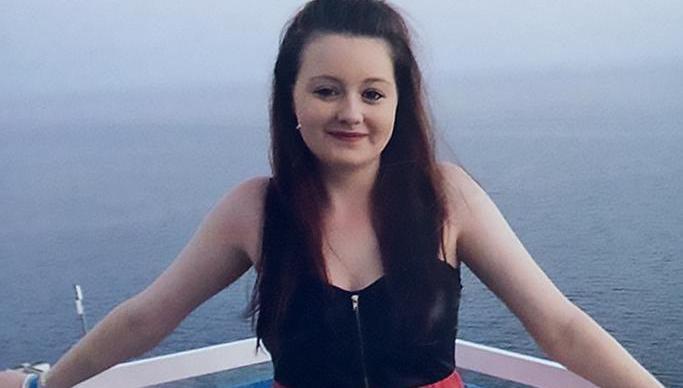
Inquest found that the midwife did not take vital signs and did not detect sepsis in Karen McEvoy, who later died on Christmas Day.
A family photo of the late Karen McEvoy, who died on Christmas Day, 2018. Picture: Colin Keegan, Collins Dublin

A family photo of the late Karen McEvoy, who died on Christmas Day, 2018. Picture: Colin Keegan, Collins Dublin

The death of a 24-year-old mother who died a week after giving birth to her third child following an uncomplicated pregnancy was due to medical error, an inquest has found.

A jury returned a verdict of medical misadventure for the maternal death of Karen McEvoy of Red Bog, Blessington, Co Wicklow, who suffered a fatal cardiac arrest at Naas General Hospital on Christmas Day, 2018, from multiple-organ failure as a result of sepsis.

Ms McEvoy, who was originally from Tallaght, Co Dublin, had given birth to a daughter, Ruby, at the Coombe Women and Infants University Hospital in Dublin on December 18, 2018, before suffering progressive pain over the following days after she returned home.

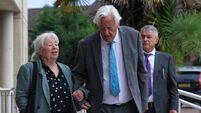
Karen McEvoy's mother Margaret McEvoy wipes away a tear at Kildare Coroner's Court after the second day of the inquest into the death on Karen McEvoy. Picture: Colin Keegan, Collins Dublin

Former Master of the National Maternity Hospital, Professor Peter Boylan, who appeared as an expert witness, told the inquest that the failure of the Coombe to check Ms McEvoy’s vital signs when she attended its emergency room on December 23, 2018, was a missed opportunity.

Evidence had been heard during the two-day inquest at Kildare Coroner’s Court that Ms McEvoy and her partner, Barry Kelly, were informed that the pain she was suffering was due to sciatica and advised to go to an adult hospital if the pain was still continuing after two days.

Barry Kelly, partner of Karen McEvoy, claimed that the assessment of Ms McEvoy had lasted less than five minutes. Picture: Colin Keegan, Collins Dublin

Prof Boylan said it was “regrettable” that guidelines which had been in place since 2006 had not been followed during Ms McEvoy’s visit to the Coombe.

In addition to the failure to check vital signs, he pointed out that no records of the examination were available and there were no results for a urine sample that had been provided by the patient.

Prof Boylan said it was likely a more detailed assessment of the patient would have allowed medical staff to detect an abnormality with Ms McEvoy which would have enabled them to diagnose an infection.

However, he conceded that it was not possible to say definitively if such an abnormality would have been detected.

Prof Boylan said the early detection of sepsis was “challenging” for medical staff and he acknowledged that the rarity of maternal deaths from sepsis meant there was low awareness of such cases among doctors and nurses.

He said an examination of medical records and witness statements showed Ms McEvoy had displayed symptoms consistent with a developing inflammation by December 22, 2018.

If Ms McEvoy had intense treatment from December 24, 2018, the outcome might have been different,” he observed.

The retired consultant obstetrician also expressed concern that no consultant had been on site at the emergency department in Naas General Hospital until around the time Ms McEvoy suffered a fatal cardiac arrest during treatment over two hours after she had been brought there by ambulance.

Prof Boylan said such a situation was “regrettable” and he had “a major problem” with such a scenario.

Professor Peter Boylan appeared as an expert witness at Kildare Coroner's Court. Picture: Colin Keegan, Collins Dublin

Prof Boylan said Ms McEvoy was seriously ill by the time she was brought to Naas General Hospital on December 25, 2018, but it was “debatable” whether the outcome would have been different if she had been brought to St James’s Hospital in Dublin, which was being considered by medical staff, as he believed her condition was “basically unsalvageable” at that stage.

The inquest heard maternal deaths from sepsis arise in one in every 100,000 pregnant women while the infection, which causes an extreme reaction in the body, is fatal in 60% of cases of septic shock.

At the conclusion of what the coroner, Professor Denis Cusack, described as “a case of national importance”, the jury of two women and five men issued 10 recommendations including ones calling for campaigns and training to raise awareness about maternal sepsis among the public and medical staff and to ensure all patients were seen by a doctor before leaving the Coombe.

It also recommended that public health nurses should have equipment to check the vital signs of new mothers during home visits after the inquest heard that such equipment was not available to a nurse who examined Ms McEvoy on December 21, 2018.

Prof Cusack said he hoped the recommendations on what was “a tragic maternal death” would prevent further fatalities in similar circumstances.

He said the recommendations would be notified to the Minister for Health, the HSE, and the two hospitals, as well as the Royal College of Physicians of Ireland.

Last November, the Coombe apologised over “failings in care” of Ms McEvoy as part of a confidential High Court settlement in an action taken by Mr Kelly and the couple’s three children — Jake, 7; Toby, 5; and Ruby, 3.

At the end of the inquest, an apology was again read out on behalf of the Master of the Coombe, Professor Michael O’Connell, who said the hospital “fully accepts these failings should not have happened”.

Speaking after the hearing, Mr Kelly said he was very happy with the verdict and expressed hope that the recommendations could save other women’s lives.

“Karen’s death was preventable," he said.

We always knew that, but today we heard it.”

Karen’s parents Margaret McEvoy and Alan Gilbey also expressed satisfaction with the verdict.

Karen McEvoy's parents, Margaret McEvoy and Alan Gilbey. Picture: Colin Keegan, Collins Dublin

“It’s been a really horrendous three years and a tough two days,” said Ms McEvoy. 

I hope there is a lot of awareness put out there about sepsis, as I don’t want my daughter’s name to be forgotten."

Earlier, a midwife at the Coombe, Geraldine Kavanagh, agreed with counsel for Mr Kelly, Richard Kean SC, that her failure to check Ms McEvoy’s vital signs on December 23, 2018, represented “a significant missed opportunity”.

Ms Kavanagh said she could not recall how long her assessment of Ms McEvoy had lasted after hearing that the patient’s partner, Barry Kelly, claimed it was less than five minutes and that she had spent longer trying in a bathroom to get a urine sample than being assessed.

The midwife said Ms McEvoy had complained of a sciatica-like pain in her left buttock, and was using crutches because of a pain in her left leg.

Ms Kavanagh said the patient appeared well, although she felt tired, but otherwise had no complaints.

The midwife said Ms McEvoy had replied “no” when asked if she had any abdominal pain.

Ms Kavanagh advised her to go to either St James’s Hospital or Tallaght Hospital if the pain persisted, as she might need an X-ray.

Staff midwife at the Coombe Women's Hospital, Geraldine Kavanagh pictured at Kildare Coroner's Court. Picture: Colin Keegan, Collins Dublin

The midwife said there was no medical record of her assessment of Ms McEvoy because the hospital’s computer system had crashed as she was inputting information.

However, Mr Kean pointed out that Ms Kavanagh had made a statement in which she also claimed there was no written records of the assessment because the patient had been referred to another hospital.

The barrister observed that Ms McEvoy, who had no medical history of sciatica, was basically advised to go to another hospital.

Asked who had diagnosed sciatica, the midwife said she had explained what she was told by the patient to senior house officer, Dr Bernard Kennedy.

Dr Bernard Kennedy at the second day of the inquest into the death on Karen McEvoy. Picture@ Colin Keegan, Collins Dublin

However, Dr Kennedy, who did not physically examine Ms McEvoy, told the inquest that he had made no diagnosis of sciatica.

The SHO said no file had been given to him to check and the midwife had raised no concerns about the patient that would require her condition to be reviewed in an obstetric hospital.

Dr Kennedy agreed with another counsel for Mr Kelly, Esther Early BL, that he had provided “another layer of assurance to the midwife”.

However, he acknowledged that he had not asked Ms Kavanagh specifically about the patient’s vital signs as he had presumed they were taken and were normal when no concern was raised by the midwife.

Dr Kennedy accepted he had not asked any questions about sciatica and had relied on the midwife’s observations without carrying out any independent medical assessment of the patient.

In evidence, the then Master of the Coombe, Dr Sharon Sheahan, said the care provided to Ms McEvoy was not in accordance with the hospital’s clinical standards at the time.

Dr Sheahan accepted that, under hospital guidelines, all patients should have been seen by a doctor, and she expressed surprise that Ms Kavanagh had not seen or read them.

She apologised to the McEvoy and Kelly families for Ms McEvoy’s death and “every failing in her care”.

The consultant obstetrician and gynaecologist responsible for Ms McEvoy’s care, Deirdre Murphy, fought back tears as she described how she was alerted to the patient’s deteriorating condition on Christmas Day, 2018.

x

More in this section

Lunchtime News

Newsletter

Get a lunch briefing straight to your inbox at noon daily. Also be the first to know with our occasional Breaking News emails.

Cookie Policy Privacy Policy Brand Safety FAQ Help Contact Us Terms and Conditions

© Examiner Echo Group Limited