Barry Comer suing St James's Hospital over late wife's terminal cancer diagnosis
Businessman claims wife told to get bed rest after ultrasound scans when in fact she had an aggressive form of terminal illness
Barry Comer suing St James's Hospital over late wife's terminal cancer diagnosis

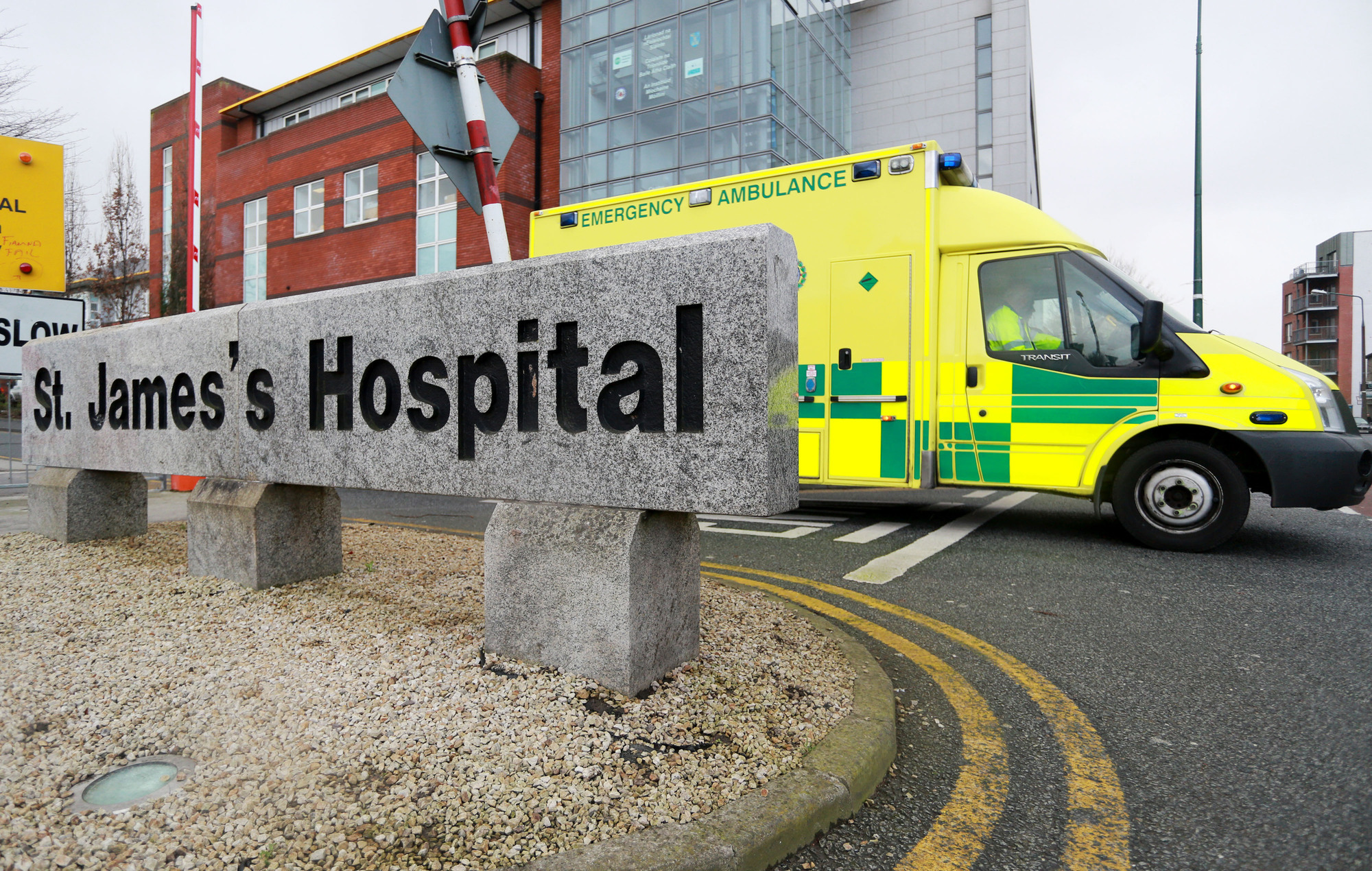
St James's Hospital denies the claims and says Lyndsey Comer's death was not caused by the delay in her diagnosis, or that an earlier identification of her cancer would have made a difference to her treatment or survival. File picture: Wanderley Massafelli/RollingNews.ie 

A well-known businessman has claimed before the High Court that his late wife was told to get bed rest after undergoing ultrasound scans at St James's Hospital Private Clinic when in fact she had an aggressive form of terminal cancer.

Lyndsey Comer, a 36-year-old mother of two young children, died from cancer in early August 2017.

Her husband, Barry Comer, who is the managing director of Comer Group Ireland and a son of one of the group's founders, Luke Comer, accepts his wife had terminal cancer.

He claims she died six to 12 months sooner than she should have due to the clinic's alleged misdiagnosis of the scans, and negligence.

He claims Lyndsey should have been diagnosed as having cancer following scans performed on her at the clinic in October 2015 and January 2016, after she complained of pain from a lump on her lower left side.

Following the ultrasounds of her abdomen, conducted by different radiologists, his wife was diagnosed as having a large bilateral rectus sheath haematoma, which he was allegedly told may have been caused by low-level bleeding into a muscle.

After the scans, she was advised to take bed rest.

However, her pain persisted, and she was referred to the Hermitage Clinic in February 2016.

After undergoing various procedures, including a CT scan and​ biopsy were carried out, Lyndsey was diagnosed in early March 2016 as having cancer, which had spread from her colon.

'How can you not see a tumour?'

Mr Comer said in evidence he had brought the case so "nobody else has to go through" what he and his family had endured.

He said his view of an ultrasound is that you "can see a baby's heart at 10 weeks of age, how can you not see a tumour?"

He accepts that all professionals "learn from their mistakes" so "these things don't happen again".

Mr Comer, from Dunboyne, Co Meath, claims that had his wife been properly diagnosed in October 2015, her life would have been lengthened by six to 12 months.

Experts for Mr Comer's side have also said her quality of life during that period would have been better, as the tumour would have been much smaller and easier to manage had she been diagnosed a few months earlier than she was.

On behalf of their family, Mr Comer has sued St James's Hospital and its staff, including those who provide services at the private clinic, seeking damages for the alleged wrongful death, due to negligence, of his wife.

He also seeks damages for mental distress.

Hospital defence

In its defence, the hospital accepts the scans were misinterpreted and she should have been referred for CT scans.

However, the hospital denies the claims and says that her death was not caused by the delay in her diagnosis, or that an earlier identification of her cancer would have made a difference to her treatment or survival.

It also claims her cancer had a genetic mutation which made it more resistant to standard chemotherapy and she would have sadly died when she died.

The action opened before Ms Justice Leonie Reynolds on Tuesday.

Mr Comer, who has played Gaelic football at various levels for Meath and represented London in the Connacht GAA Championship, said Lyndsey was referred for scans after complaining of pain, caused by a lump in her lower left side.

He said after the ultrasounds were performed, he said he and his wife accepted and didn't initially question what they were told following the ultrasounds at the clinic.

They returned for a second scan in early 2016 after her pain persisted and the lump got bigger.

Lyndsey also suffered additional and severe complications caused both by the tumour and the several difficult bouts of palliative chemotherapy she underwent, said Mr Comer.

He said was not disputing the final outcome of her diagnosis, but said her cancer should have been spotted following her first ultrasound.

Mr Comer said he and his children would have taken extra months "any day".

"I'd pay whatever it would cost to get an extra day in this world if I was told I was terminal" as "every day counts", he added.

The hearing continues.

More in this section

Lunchtime News

Newsletter

Get a lunch briefing straight to your inbox at noon daily. Also be the first to know with our occasional Breaking News emails.

Cookie Policy Privacy Policy Brand Safety FAQ Help Contact Us Terms and Conditions

© Examiner Echo Group Limited