Defence disputes bloodstain evidence against man accused of killing homeless Cork chef
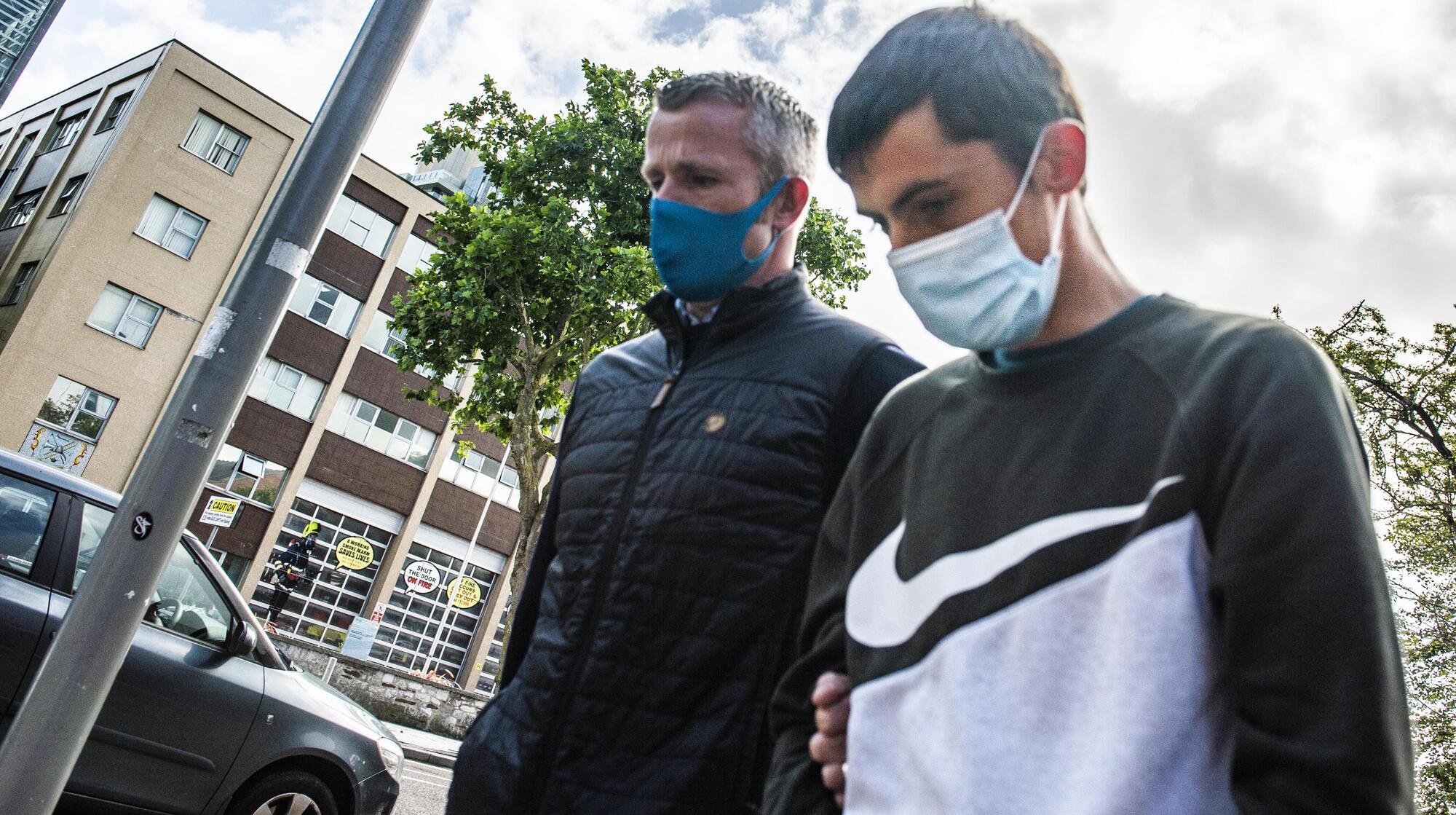
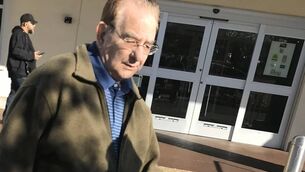
The prosecution told the jury that the three interviews given by James Brady (right) were littered with small lies and inconsistencies. Photo: Michael Mac Sweeney/Cork Courts
Bloodstains on the right shoe of the man accused of murdering Cork chef Timmy Hourihane could not have been transferred by stamping on the victim because he kicks with his left leg, his barrister has said.
And the “light bloodstains” around the tongue and laces of James Brady’s right shoe were too light to have been transferred if he had been stamping on the victim’s head as alleged, defence barrister Vincent Heneghan SC said.
Mr Hourihane’s blood had soaked through to the socks of the other man charged with murder but only light bloodstains were noted by forensic scientist John Hoade on Mr Brady’s right shoe.
And during a garda interview, when Mr Brady demonstrated what he saw the other man accused of murder do to the victim that night, he started viciously stamping on a box of tissues with his left foot - not his right where bloodstains were found, Mr Heneghan said.
During his closing statement in the murder trial, Mr Heneghan, Senior Counsel, said that although the other man who stands accused allegedly took off his blood-stained clothes following the assault and burned them on the fire, it is believed that he forgot to change his socks because Mr Hourihane’s blood was found on them.
“To get it onto his socks, I would suggest it [blood] would have had to soak through his shoes, his shoes must have been covered in blood,” Mr Heneghan said. But no evidence of blood was found on Mr Brady’s socks while light blood-staining only was found on the tongue and laces of his right shoe and clothes.
Mr Heneghan suggested that the blood transfer stains on Mr Brady’s right shoe and clothing could have occurred from contact with the other man as he tried to pull him off the victim.
And he said that if Mr Brady had been stamping on the victim’s head, his shoes would have been “drenched in blood”. While it is alleged that the other man burned his blood-soaked clothes immediately after the assault, as multiple witnesses have testified, Mr Brady did not.
Instead, he voluntarily handed them into gardaí later that day when he presented himself at Mayfield Garda Station to make a voluntary statement about what he witnessed. “Is that the action of a guilty man?
“He puts out his hands, allows swabs to be taken, allows photos to be taken. That was on October 13 [the day of the killing],” Mr Heneghan said.
Three days later, on October 16, 2019, Mr Brady agreed to an enhanced cognitive interview with gardaí in which he described his memories from that night like a “stream of consciousness”.
“He spoke clearly, fluidly. It’s clear that he’s an intelligent man, but it’s also clear that he’s not well educated,” Mr Heneghan said.
“I think it’s compelling, it’s reliable. Is he truthful? By and large yes.” Mr Heneghan said that although there were some small inconsistencies in Mr Brady’s interviews, the core of what he witnessed that night remained unchanged - that he was present and witnessed the assault on Mr Hourihane by another man who cannot be named for legal reasons.
Mr Heneghan also reminded the jury that this unnamed man had admitted assaulting Mr Hourihane that night, according to witnesses at Mr Brady’s trial. Mr Heneghan also cast doubt over the evidence given by some eye-witnesses, claiming that they were too far away and it was too dark to clearly see or hear exactly what was happening.
While the omission of major details like seeing the tent on fire that night cast doubt on the testimony of a key witness, Kathleen O’Brien, he said.
And while Ms O’Brien said that Mr Brady had opened Mr Hourihane’s legs and encouraged the other man to kick him in the groin "because he was only a faggot", State Pathologist Margot Bolster found no evidence of injury to Mr Hourihane’s groin at post-mortem, Mr Heneghan said.
These were some reasons given by the defence as to why they believed Ms O’Brien was an unreliable witness. Mr Heneghan said that Mr Brady had clearly demonstrated repeatedly in interviews that he was not homophobic.
“It’s quite clear he does not care about sexual orientation. So I say that does not exist as a motive as far as Mr Brady is concerned,” Mr Heneghan said.
He said that although there were some inconsistencies in Mr Brady’s various interviews they were minor and the core of his evidence - where he was and what he witnessed regarding the assault - had remained constant.
He reminded the jury that memory is subjective, and pointed out how various "very good people with no axe to grind" who testified at the trial had very different memories of the same event that night. Mr Heneghan told the jury that they must be beyond reasonable doubt in their verdict.
“It’s a huge task to sit in judgement of a fellow human being. You’re being asked to do your civic duty. It’s not easy. This case has been a long case, it’s a sad and tragic case, Mr Hourihane died a sad and tragic death. We all feel sympathy with Mr Hourihane.
"But you must dispel any sympathy with Mr Hourihane. You must dispel any sympathy you may have for Mr Brady as well. You must separate your heart from your head and coldly, clinically look at the evidence.”
While finishing her closing statement, which began on Tuesday afternoon, Siobhán Lankford prosecuting, reminded the jury that all evidence, including that given by Mr Brady must be critiqued and cross-checked against witness statements and forensic evidence.
She said that his three interviews were littered with small lies and inconsistencies. But they also contained three big lies - how long he was at the camp with Mr Hourihane before the assault began; his “constant refrain” that he never touched Mr Brady but had the dead man’s blood on his shoe and clothes; and insisting that Mr Hourihane had never made sexual advances on him when he later admitted that he had done so two weeks before the killing and that he spoke to a powerful man at the homeless camp they were staying at about it.
Ms Lankford suggested that if Mr Brady was indeed as close a friend of Mr Hourihane’s as he claimed to be, then he would have spoken to him directly about it rather than going to a “hard man” of the camp.
She said that she believed that the greatest legal engine for discovery of truth is the jury and they must critically examine all of the evidence put before them.
Mr Brady, 28, of Shannon Lawn, Mayfield, has pleaded not guilty to murder. On Thursday, the jury of seven women and five men are to be charged.
Justice Deirdre Murphy said that her summation of the case for the jury will take longer than usual because of the volume of evidence in this trial which has lasted for almost four weeks.
CONNECT WITH US TODAY



Be the first to know the latest news and updates