Cancellation of trials will 'add to the trauma' for victims, advocates warn

Late on Friday evening, it was confirmed that President Michael D Higgins will move to appoint judges sooner, with the first due to be appointed on Tuesday
Cancellation of trials will 'add to the trauma' for victims, advocates warn

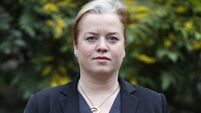
Director of the National Women’s Council of Ireland Orla O'Connor said the delay between reporting a crime and a trial was a 'huge issue' for victims, and further delays increase stress for survivors. File picture: Leon Farrell / Photocall Ireland

A decision to cancel a substantial amount of trials scheduled for October will "add to the trauma" for affected victims and international protection applicants, advocates have warned.

On Friday, the president of the High Court said she had "no option" but to cancel a "substantial amount" of trials and hearings scheduled for October as five newly-appointed judges were unlikely to be able to sit before November.

That postponement followed the significant delays that had emerged as a result of the Covid-19 pandemic and causes further stress for victims, advocacy groups have said.

Late on Friday evening, it was confirmed that President Michael D Higgins will move to appoint judges sooner, with the first due to be appointed on Tuesday.

However, it is anticipated that a number of cases will still be affected.

Speaking in court, Ms Justice Mary Irvine said it had been reasonable to assume that the five additional high court judges announced by Government in September would be in place for the start of the new legal year on Monday, October 4.

It was also reasonable to assume a number of other judges who had retired or been promoted in the intervening period would be replaced, she said.

“Unfortunately, these assumptions have proven to be misplaced," she said, as the judges have not yet received their warrant of appointment.

As such, Ms Justice Irvine took the landmark move of postponing a "substantial" number of trials and hearings, including all asylum cases listed up to October 29, some personal injury trials, planning cases and some rape and murder trials.

The Department of Justice said on Friday it was working with other State actors to ensure the nominees can be formally appointed "as quickly as possible", as is normal practice.

In a statement, a spokesman for President Higgins said: “Following recently received requests, arrangements have been made, as is normally the case, for President Higgins to appoint a number of Judges to the High Court on Tuesday 5 October, to appoint Mr Justice O’Donnell as Chief Justice on Monday 11 October, and to appoint Justice Hogan to the Supreme Court on either 15 or 18 October.”

Despite this, though, it is still anticipated a huge number of trials will be affected.

The criminal division of the High Court was set to be short two judges for October, resulting in the “probable postponement” of a number of lengthy criminal trials, “most likely murder or rape trials”, Ms Justice Irvine said.

The court would concentrate on keeping most of the shorter trials in place, subject to affording priority to particularly sensitive trials involving sexual offences involving juveniles and young vulnerable witnesses, she added.

Justice Irvine acknowledged the impact this would have on all parties. She said she would do everything she can to have the cases relisted as soon as possible in 2022. 

Orla O’Connor, from the National Women’s Council of Ireland (NWCI), said the delay between reporting a crime and a trial is a “huge issue” for victims, and further delays increase stress for survivors.

“The longer the process is, the harder it is for victims. They are constantly reliving it. It is not a victim-centred approach,” she said.

“There are already delays for trials - people can wait up to a year - and Covid has lengthened that wait. This announcement is moving in the opposite direction.” 

John Lannon, chief executive of Doras, a Limerick-based migrant support organisation, said the cancelling of these cases "means yet another distressing delay for asylum seekers".

"Seeking international protection in Ireland is already a long, distressing process. Asylum seekers’ lives are in limbo as they try to survive in direct provision centres that are often remote and badly run," he said.

"All this leads to depression, anxiety and other mental health difficulties for protection applicants."


This article was amended on Saturday 2 October to correct an inaccuracy.

x

More in this section

Lunchtime News

Newsletter

Keep up with stories of the day with our lunchtime news wrap and important breaking news alerts.

Cookie Policy Privacy Policy Brand Safety FAQ Help Contact Us Terms and Conditions

© Examiner Echo Group Limited