Munster rape trial: Children's abuse 'could not have happened under constant scrutiny'
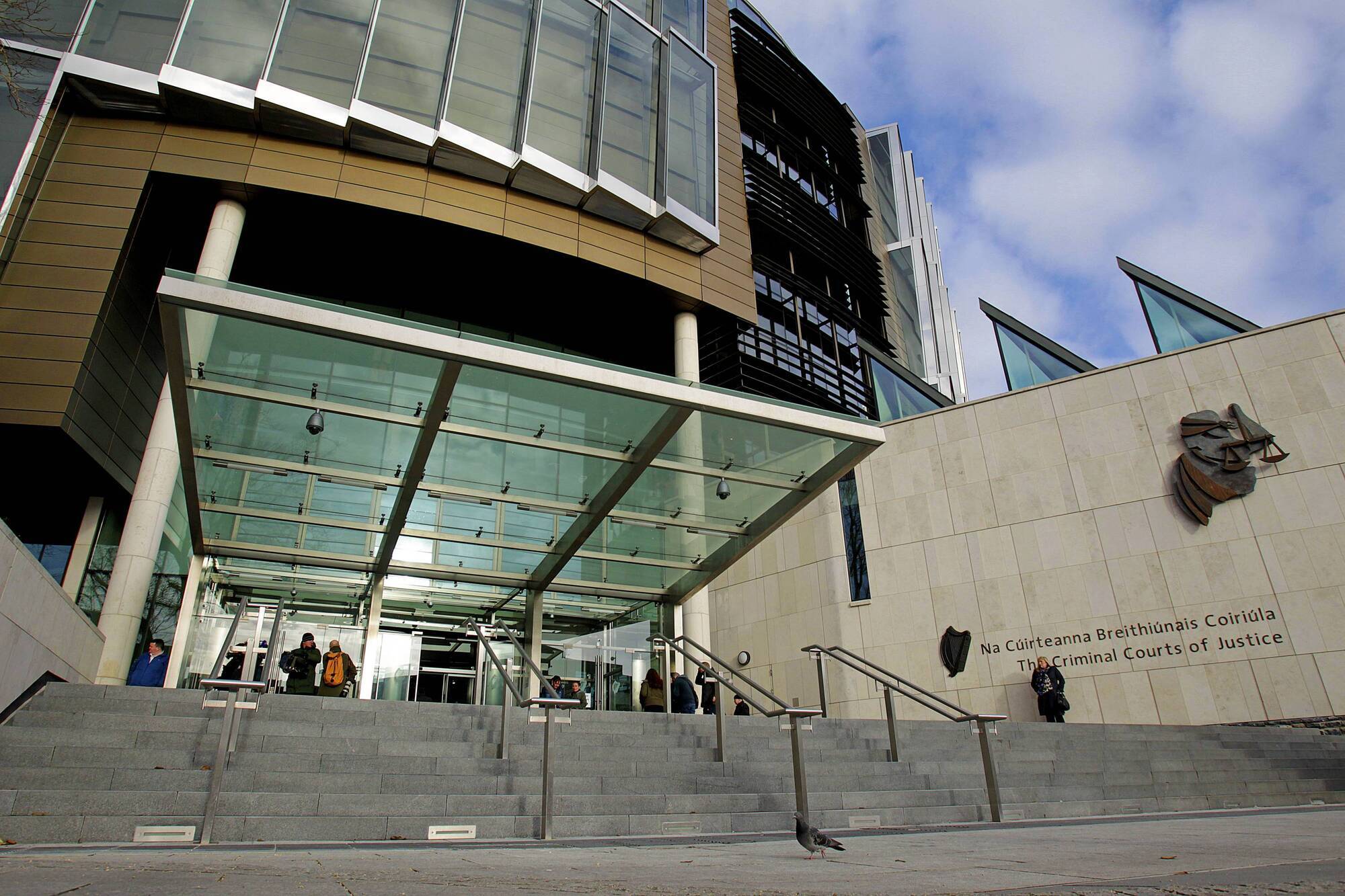
The jury at the Central Criminal Court trial, heard in the defence closing speech that the abuse as alleged occurred while the family were under the care of a level of professional involvement which had been described in the trial as “tremendous and monumental” and that the parents were under “intense and constant scrutiny”. File photo
It has been suggested to a jury that the sexual abuse alleged by three children against members of their family could not have happened because of “the constant scrutiny” of State agencies.
Dean Kelly SC, defending the children's mother, told the jury in his closing speech at the Central Criminal Court trial, that the abuse as alleged occurred while the family were under the care of a level of professional involvement which had been described in the trial as “tremendous and monumental” and that the parents were under “intense and constant scrutiny”.
Counsel told the jury it was almost like “a police helicopter was hanging over the house, where everything was illuminated” and suggested that it would be “extraordinary” if the allegations as set out by the children happened “under the noses of that constant level of scrutiny”.
Mr Kelly referred to the evidence given by a family support worker from a children’s charity and a social worker and said the women didn’t give evidence of having a concern around physical, emotional or sexual abuse.
He said the evidence of “a family circle of awful sexual violence” would have to have involved “a collusion between these family members” coming to this house and these children to satisfy their depraved needs “while literally passing social workers at the gate”.
Mr Kelly also referred the jury to his client’s interview with gardaí and asked the jury to put out of their mind “the fallacy that innocent people don’t confess to crimes they didn’t commit”.
He also suggested that, while the sergeant in the case said that adaptations had been made during the interview process to allow for his client’s intellectual disability, these adaptions were not made, “not one jot”.
Mr Kelly said his client absolutely denied the allegations for four interviews until “deep in interview five” she made exhausted admissions.
He suggested to the jury that the various admissions the mother made about sexual allegations against her children should have been questioned further by gardaí, as many of her admissions were “hard to make sense of”.
Counsel said instead the questioning moved on. He said the gardaí should have interrogated everything “to make sure they are getting to the nub of the matter, the core of it, to prepare it for evidence” but he said they didn’t do that.
“They instead hook in that admission, drop it into the evidence bag and drive on,” Mr Kelly said.
“That is the interrogation from gardaí who claim they don’t take the first answer, that would not be the best way to put the best body of evidence before you,” counsel said.
He said the gardaí only focused on the questions asked of her “to bag those admissions as quickly as possible” and suggested to the jury that officers then turned their face away from the questions those admissions should have raised.
Mr Kelly asked the jury that they listen to him with “an open heart and an open mind” as his client faces “shattering allegations” and it is her entitlement that they listen to him.
He asked the jury to treat the case seriously and suggested that the only way to do that is to “focus on the detail, focus on the substance”.
He asked them not to do “as invited by the prosecution” to allow their “initial primal response of horror to be their guiding light".
He suggested doing so would mean the jury were not “weighing up the evidence” and would therefore “be abandoning your oath”.
He said the suggestion of asking themselves “why would the children make this up?” was dangerous and “an exercise in speculation”.
Counsel asked the jury to approach the case with their “sleeves rolled up and a willingness to explore and consider the things that should cause you disquiet. That disquiet should not be shifted or pushed to one side.”
The mother has pleaded not guilty to 25 counts including sexual assault, sexual exploitation and wilfully neglecting a child at locations in Munster on unknown dates between August 18, 2014, and April 28, 2016.
The mother and father have also pleaded not guilty to wilfully neglecting another two of their children at a location in Munster on unknown dates between August 18, 2014, and April 28, 2016.
The five family members, who can't be named for legal reasons, are accused of abusing three children between 2014 and 2016. The accused are the parents, aunt and uncles of the children. They live in various locations in Munster.
All of the accused have denied the charges against them.
Reporting restrictions are in place to protect the welfare and identities of the children.
In relation to the mother, Bernard Condon SC, prosecuting, told the jury in his closing speech that she was a “central part of this case” and that she had made admissions when interviewed by gardaí.
“Importantly, she has admitted her wrong-doing but is just not prepared to stand by the admissions she made to the guards,” he said.
Her admissions to gardaí were “the strongest evidence you can have, an acknowledgment by the person who did it, that they did it,” Mr Condon said.
He said that for the entirety of her garda interviews, the mother had a solicitor with her and no complaints were made. She had 11 consultations with her solicitors throughout the course of her interviews, the jury was told.
Mr Condon said the idea that some of the language used by gardaí was overpowering to her was “unworthy of comment” given that the trial had heard bad language was used in the family home.
“One can't overplay this, she was dealt with appropriately,” Mr Condon said.
He said the jury heard from the interviewing garda who said it was not unusual for people to “start off denying and as time goes by, they begin to accept it”.
He said it was “convenient” now for the mother to not want to accept her admissions but that there was a “ring of basic truth” to them which was consistent with her children's allegations against her.
Mr Kelly asked the jury to consider that the fact that his client’s daughter resiled from her allegations against both her grandmother and her uncle’s partner, “who no longer sit behind me”, as cause for concern.
He said in such cases “you don’t tend to get the curtain pulled back and a great reveal but sometimes through that crack you glimpse something that makes you feel uncomfortable, disquiet”.
Referring to the neglect allegations Mr Kelly said the children were failed by their parents and said they were fortunate that there were State officers to assist them.
He referred to those witnesses’ evidence that they wanted the couple to be able “to parent on their own” and a social worker’s admissions that it was “with a clear professional eye but heavy heart” that she recommended the children be put into State care.
He said that the evidence of these witnesses and others that their mother was “struggling to cope” does not suggest a deliberate and callous attempt of his client to wilfully neglect her children.
Mr Kelly also drew the jury’s attention to evidence of his own client’s bad personal hygiene and said not only had she deprived her children of good hygiene; she had denied it to herself as well.
Counsel suggested to the jury that evidence that the children had “neither fear or respect” for their parents is not the behaviour one would expect of children subjected to sexual violence.
Mr Kelly said his client was “an inadequate mother, a hopeless mother” and said that is something she would have to live with for the rest of her life but reminded the jury of the evidence of her son that his client was "not very good at being a Mam" but "sometimes she tried to do her best".
The father has pleaded not guilty to 31 counts including rape, anal rape, oral rape, sexual assault, sexual exploitation and wilfully neglecting a child at locations in Munster on unknown dates between August 18, 2014, and April 28, 2016. An additional three counts against him were withdrawn during the trial.
Earlier Mark Nicholas SC, defending the father, told the jury in his closing speech which continued from Tuesday, that this was not your normal family dynamic. He said there were no boundaries, no structures, no respect, no routine, there was strong language, there was fighting.
“They are all done in front of the social workers. They are not putting on a good show,” Mr Nicholas said.
He reminded the jury of the evidence of those social workers, the family’s neighbour and the children’s teachers and told the jury that none of these people saw any signs of sexualised behaviour by the children.
“They said nothing, they sensed nothing, they suspected nothing,” Mr Nicholas said that it was the social workers are good at talking to children but yet “it still remained a neglect case”.
Mr Nicholas spoke to the jury about the fact that a suggestion that the children had access to pornography was never investigated further by the gardaí.
“It just slipped away. Nothing was done about the children’s knowledge of this,” counsel said.
He acknowledged that of the 66 devices taken in the course of the investigation for analysis nothing of significant evidential value to the prosecution was found, but yet the boys’ tablets had evidence that they viewed pornography and had done similar internet searches.
He said the children clearly had an interested in looking up such things but it was never probed. Mr Nicholas asked the jury to consider if the children’s testimonies related to “a lived experience or something they could have picked up from somewhere”.
He acknowledged that there is “a temptation to ask” why would the children make up the allegations.
He said the jury’s job is “to stick to the cold clinical evidence of what was before you. People may bend or say things for all kinds of reason”.
“You are not here to solve anything. You are here to assess the evidence and see if it stands up to the high standard,” Mr Nicholas.
“This is an extremely odd house. How this feeds into young people we will never know? Normal rules do not apply,” counsel said.
He told the jury that “the central issue remains” that is “the credibility of the children’s evidence”.
“Do not rush into this. It is not a slam dunk.” Mr Nicholas advised.
The trial continues before Mr Justice Paul McDermott tomorrow afternoon.
CONNECT WITH US TODAY



Be the first to know the latest news and updates