Life detention with review after eight years for teenager who murdered defenceless man
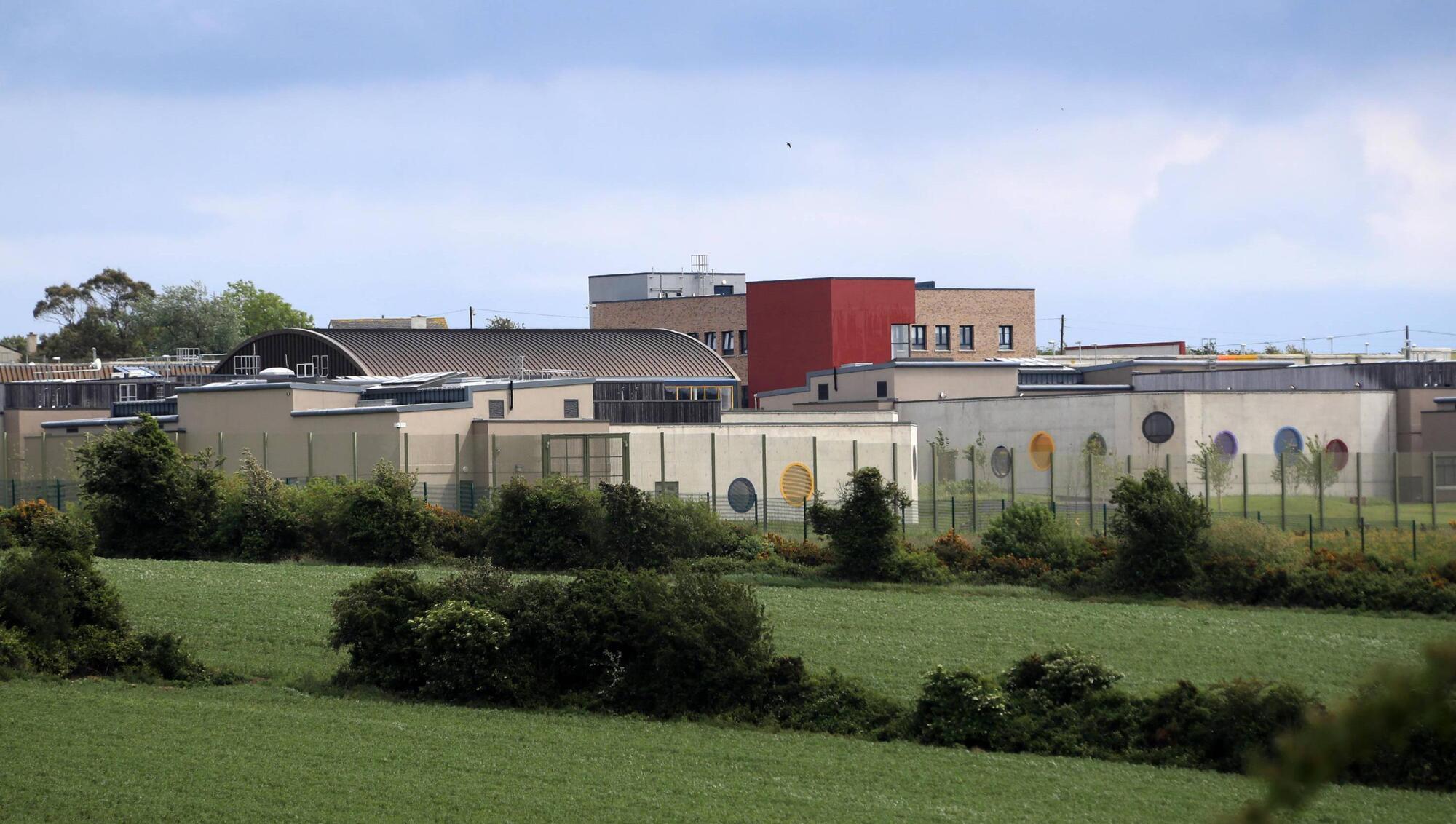
The judge noted the accused had made significant efforts while in Oberstown Detention Centre (pictured) and has achieved "some degree of progress in respect of his drug and alcohol abuse". File photo: Colin Keegan, Collins Dublin
A teenager who used "extreme violence" in kicking a defenceless man to death has been sentenced to life detention with a review after eight years.
The 17-year-old, who can't be named as he is a minor, will come before the Central Criminal Court again in June 2028 when a judge will use probation and education reports and psychological assessments to review his progress and decide whether he can safely return to society.
The sentencing judge said a "significant effort" will be required from State agencies to give hope of rehabilitation, as reports before the court indicate that the boy is at a high risk of violent re-offending.
The court previously heard that the boy had experienced "17 years of neglect", cannot articulate the loss, loneliness or rejections he has experienced and that "the only expressive language available to him appears to be anger".
The accused pleaded guilty earlier this year to the murder of Romanian national Claudio Robu (39) on a laneway off Madison Road, South Circular Road, Dublin 8 on September 14, 2020. The accused was 16 at the time of the murder.
Passing sentence this afternoon, Mr Justice Paul McDermott said the youth had a "high degree of moral culpability" and knew what he was doing when he kicked Mr Robu to death. The judge said it is "disturbing" that he assaulted his victim and then returned some hours later to continue the fatal attack after he had time to withdraw and think about what he had done.
He had used "extreme violence," the judge said, and although he did not use a weapon there was "ferocity and intent in his actions."
Mr Justice McDermott said there were "very concerning elements" to the case, including that the accused is a "volatile young man who is prone to anger and capable of great violence".
Justice McDermott noted mitigating factors including the offender's age, guilty plea and acceptance of moral responsibility. He has also shown, the judge said, "a degree of remorse", and while a lack of empathy has been noted in psychological assessments before the court, Mr Justice McDermott said that is due to the youth's "lack of emotional development".
The judge also noted the teenager's difficult upbringing in which he witnessed and experienced violence and was abandoned as a child and left in the care of his step-father, with whom he had a difficult relationship. The accused is now "isolated", the judge said, with little family support.
The judge also noted the accused had made significant efforts while in Oberstown Detention Centre and has achieved "some degree of progress in respect of his drug and alcohol abuse". The reports before the court, however, indicate that the boy is at a high risk of violent reoffending. "A significant effort will be required from the State agencies to give hope of rehabilitation," the judge said.
Mr Justice McDermott went through the principles for sentencing child offenders. He said there is no guidance in the Children Act or the Parole Act on sentencing children convicted of murder but among the fundamental principles is to work rehabilitation into any sentence imposed on a juvenile and to use detention as a last resort.
He said the mandatory term of life imprisonment does not apply and he had to consider the offender's level of development, state of mind at the time of the offence and his level of culpability in the context of his age and maturity. He also considered the offender's capacity for cognitive development, his prospects for rehabilitation and possible safe return to society.
The Central Criminal Court judge who reviews the case in 2028 will have the benefit of psychological assessments and probation and education reports that will be submitted to the court registrar every two years. Those reports, Justice McDermott said, will be "relevant and important factors in determining if and when he should be released".
Due to the offender's age, Justice McDermott said, it is not possible to assess his personality and character and "time will be required to assess them as he grows older to determine the appropriate release date in his and society's best interests".
Addressing the family of the deceased, the judge said the murder had "caused enormous damage and hurt and loss and that is something that cannot be appreciated fully, except by those who suffer as a consequence of this offence." He said the sentence will be of little comfort to those who have suffered the loss of a loved one.
At a sentence hearing earlier this year Brendan Grehan SC for the accused told Mr Justice Paul McDermott that his client's father died when he was young. His mother later left him with his step-father but the boy was taken into care months before the murder when his step-father was charged with assaulting him, causing him harm.
He then stayed at a number of foster homes before going to a care facility for young people in Dublin weeks before the fatal attack on Mr Robu. Mr Grehan said a mental health report submitted to the court said his client is "unable to use language to express his emotions and can't identify or articulate the multitude of emotions he has suppressed over 17 years of neglect".
The report further states that he had no appropriate parenting relationships, had not had the benefit of a nurturing environment and came from an "abusive home".
The report said the teenager had described how he would, "keep everything inside and then explode when he is pushed to his limit".
Inspector Brian Hoey told Dean Kelly SC for the Director of Public Prosecutions that gardaí were alerted to Mr Robu's murder when another resident of the care home came to Kilmainham Garda Station at about 1.15am on September 14 last year and said he had witnessed someone being killed. He then took gardaí to the laneway where they discovered Mr Robu at about 1.24am with severe injuries to his face.
He was "gasping for air" with shallow breaths and was surrounded by a pool of blood. Assistant State Pathologist Dr Heidi Okkers would later cite the cause of death as blunt force trauma to the head.
The witness told gardaí that his housemate had come home at around midnight and told him he had attacked someone on the street and had stolen his Samsung phone. The witness said his housemate then led him to the laneway where they found Mr Robu lying on the ground.
He said he saw his housemate repeatedly kick and stomp on the victim who initially groaned but after being stomped on four times made no sound.
The accused and the witness went back to the care home where the accused washed his bloodstained runners and changed his clothes before going back out. The witness then ran to the garda station to reveal what he had seen.
During garda interviews the accused initially blamed his housemate for the assault but Mr Grehan said that his client now accepts full responsibility and is not suggesting that anybody else was involved. Inspector Hoey said gardaí also do not believe the other boy had anything to do with it, a view that he said is backed up by CCTV evidence.
The court heard that the deceased's family all live outside Ireland. They wrote a joint impact statement in which Mr Robu's brother Emmanuel said he left Ireland after his brother's murder because he was "traumatised and afraid".
He said that when he summoned the courage to call his mother and tell her Claudio was dead she "suffered shock leading to depression and emotional distress." She goes to the cemetery every day, he said, and cries: "Why didn't I get to see you one more time so I could say goodbye?"
Mr Grehan said his client has had great difficulty in accepting what he did and "the manner in which he did it." He read out an apology penned by the teenager in which he said he is "sorry for what I have done."
He said he knows what it is like to lose someone in your family and understands what the Robu family is going through. He added: "I feel guilt for what I have done that will stay with me for the rest of my life." He said his time in custody has given him time to "think about my behaviour and change."
He is, Mr Grehan said, "incredulous he could cause so much harm" and accepts that he identified Mr Robu as someone he could steal from and without provocation, beat him and took his mobile phone.
Since going to Oberstown his unit manager has noted "significant and positive changes" since last December. Reports drawn up for the court suggest he is "more calm and measured" and is willing and motivated to receive professional support.
Mr Grehan said he accepts that the court is dealing with an unprovoked murder of a man who could not defend himself due to intoxication, "and died a quite horrible and lonely death in a dark lane".
Counsel asked, however, that the judge have regard to his client's early guilty plea, his apology, lack of previous convictions and his abandonment and anger issues. He said his client had abused various drugs "as a coping mechanism" and was intoxicated on the day of the offence.
CONNECT WITH US TODAY



Be the first to know the latest news and updates