Man denies raping asylum seeker fleeing forced marriage

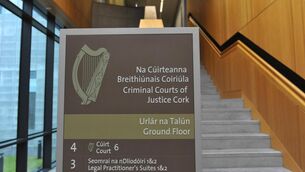
The man, who cannot be named to protect the identity of the woman, pleaded not guilty at the Central Criminal Court to three counts of rape, one of sexual assault and one of attempted rape of the woman in his Dublin home on dates between December 1 and December 3, 2017.
A man is accused of raping a woman he had been introduced to through a mosque after she sought asylum here because her family were trying to force her into a marriage in her home country.
The man, who cannot be named to protect the identity of the woman, pleaded not guilty at the Central Criminal Court to three counts of rape, one of sexual assault and one of attempted rape of the woman in his Dublin home on dates between December 1 and December 3, 2017.
The now 36-year-old woman, who gave evidence via video link, told Sean Gillane SC, prosecuting, that she came to Ireland in November 2017 to attend a conference. At that time, she stayed with a friend and discussed with this friend that she didn’t want to return to her home country.
She said her friend encouraged her to return home “but I didn’t listen to him. I was determined not to go back home”.
“I was not happy with so many things. I wasn’t happy with my job. There was a toxic environment around lots of things. My family were trying to force a marriage on me. I was not happy with the way I was being treated,” the woman said.
She said she travelled to Dublin to the International Protection Office and filed papers with them to seek asylum in Ireland. She was later told about a particular centre who could help her and a contact in this centre then told her about a Mosque in Dublin.
She said she became aware that there was a service that was provided to the Muslim community where they could arrange for people to meet who were interested in getting married. She ultimately was introduced to the accused through this mosque.
The woman said she returned to Dublin the following week and the accused was recommended to her as a suitable candidate and a meeting was facilitated between them.
She told the jury that during that meeting the marriage issue was raised and “I could see that he was urging me to go in that direction”. He told me he was in middle of a divorce and had a child.
“I didn’t know if he was joking (in relation to a marriage). This was the first time I met him so it was not in my mind,” the woman said.
She said a second meeting was arranged after she requested it and she got the accused’s number and made contact. He picked her up and brought her to his home in Dublin.
She told Mr Gillane that later that evening the accused tried to contact the Imam of his local mosque but was unsuccessful. She stayed over that night in the accused’s child bedroom and during a conversation with the accused he asked her why she was not married.
“I told him that my family had arranged a marriage for me but I didn’t accept that. I told him I was a virgin. He didn’t take it seriously and said ‘No, there are no virgin girls these days,’” the woman said.
She said the following morning the accused was again unable to make contact with his Imam.
She arranged a call with her family after the accused agreed he would speak to them.
She told Mr Gillane that culturally it is very important that she speak to her father. “I cannot take full responsibility for myself. I have to go back to my father. This is because I am a virgin. He has to be in charge of any decision for me,” the woman said.
She said the accused told her father he was interested in marrying her and would travel to her home country to ask her father for permission to do so. “He told my father he would take care of me,” she said.
“My mother told me to be very careful, not to rush, to take my time and get to know the person very well. My father was kind of agreeing that we could get to know each other,” the woman said.
The trial continues before Mr Justice Alexander Owens and a jury of eight men and four women.
CONNECT WITH US TODAY



Be the first to know the latest news and updates