ODCE case involving John Delaney can remain in public for time being, court rules
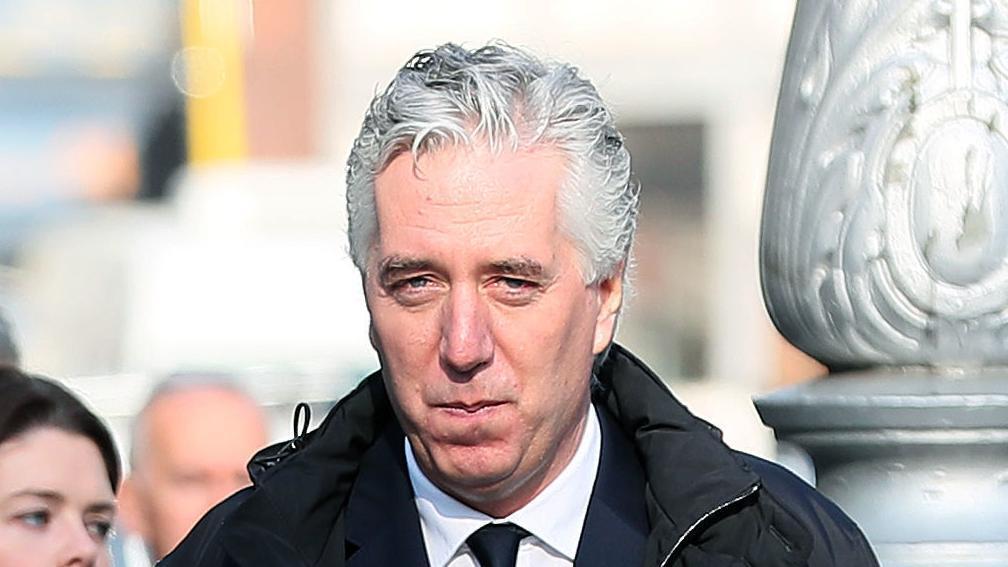
Former FAI chief executive John Delaney sought the order over his concerns that media reports of the action would result in legally privileged information being wrongfully put into the public domain. File picture
The High Court has ruled that proceedings brought arising from the corporate watchdog's seizure of documents from the FAI last year are to remain in public for the time being.
An application by former FAI chief executive John Delaney for the proceedings to be held in camera, meaning the media could no longer report on them, can be revisited at a later stage if needs be, Ms Justice Leonie Reynolds said.
Mr Delaney sought the order over his concerns that media reports of the action would result in legally privileged information being wrongfully put into the public domain.
His application was opposed by media outlets including the newspaper.
After hearing submissions from the parties on Tuesday, Ms Reynolds said while the proceedings remain in public, there may well be a need to revisit the in-camera issue at a later stage.
The judge said there was nothing before the court that would allow the court have the action held in private.
The case arises out of the seizure of some 280,000 files covering a 17-year period, by the Office of the Director of Corporate Enforcement as part of its criminal investigation into certain matters at the FAI.
In proceedings brought by the ODCE against the FAI, where Mr Delaney is a notice party, the judge has been asked to determine which of that material is covered by legal privilege, and cannot be used by the ODCE as part of its probe.
To assist with this process, barristers Niall Nolan and Patrick Mair were appointed as independent persons to review materials over which claims of legal privilege are made by Mr Delaney.
The assessors will prepare a report for the court to help it determine what material is privileged.
Claims of legal professional privilege have been made in respect of about 1,000 documents by the FAI and more than 3,500 documents by Mr Delaney.
On Tuesday, Paul McGarry, counsel, said Mr Delaney seeks a formal order, under the 2014 Companies Act, from that the hearing be conducted 'in camera', where only the parties involved would be present.
Such a provision was in put in the act by the Oireachtas, counsel said, adding that his client was entitled to the benefit of it.
Solicitor Simon McAleese for the disagreed with Mr McGarry's submissions and said in this case the constitutional right that justice be aired in public is a relevant consideration.
In his submissions, he said his client was sceptical about why Mr Delaney's application for the hearings to be held in public.
He added that had Mr Delaney obtained a super-injunction against the paper in March 2019 and prevented it running a story about a €100,000 cheque Mr Delaney wrote to the FAI in 2017, there might well not be an ODCE investigation at all.
The ODCE, represented by Kerida Naidoo, said it was neutral on the application, but may need to revise that stance if his client was concerned that information could be put into the public domain that could prejudice the investigation.
The FAI, represented by Brian Gageby, said it was neutral to the decision.
Ms Justice Reynolds said she was not making any order regarding private hearings at this stage.
The proceedings had been ongoing for some time before the issue of an in-private hearing was raised, the judge also noted.
She said when the assessors' report comes before the court, the court was willing, if required, to hear further submissions from the parties for an in-camera hearing.
It could well be the case that there is no dispute between the parties over any material and therefore no necessity for any part of the proceedings to be held in camera, the judge said.
A lot would depend on the contents of the assessor's reports, she added.
Both Mr McAleese and Mr McGarry said they had no issues with the judge's decision.
The case, which has come before the courts on many occasions since February 2020, was adjourned to a date in April.
CONNECT WITH US TODAY



Be the first to know the latest news and updates