Permission for Trinity's 358 student bed development overturned on consent
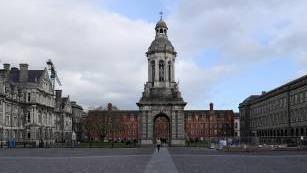
Mrs Kenny challenged the permission granted by An Bord Pleanala to Trinity College (pictured) for demolition of existing structures within the curtilage of Greenane House, a protected structure, and the construction of four apartments and 358 student accommodation bed spaces and associated site works at Cunningham House, Trinity Hall. File photo
An Bord Pleanála has consented to High Court orders overturning its planning permission for 358 student accommodation bed spaces and four staff apartments on a site alongside the existing Trinity Hall student accommodation complex in Dartry.
Patricia Kenny, from nearby Temple Road, Dartry, took the proceedings against the board over its permission granted last August.
Today, Mr Justice Richard Humphreys, who manages the High Court’s commercial planning and strategic infrastructure list, was told the board was consenting to an order quashing its permission decision and to a costs order. The judge made those orders.
The permission was for demolition of existing structures within the curtilage of Greenane House, a protected structure, and for the construction of four apartments and 358 student accommodation bed spaces and associated site works at Cunningham House, Trinity Hall.
The board granted permission, subject to 21 conditions.
It considered, provided those conditions were complied with, the proposed development would, inter alia, constitute an acceptable scale of development in this urban location, respect the existing character of the area and be acceptable in terms of urban design, height and extent of development.
Represented by Oisín Collins BL, the core claim by Mrs Kenny, who lives directly across the road from the site, was that the board, in considering whether the development required an Environmental Impact Assessment, wrongly treated it as a standalone development rather than one linked to existing accommodation at Trinity Hall.
Previously, when seeking leave to bring the challenge, Mr Collins said the proposed development is an extension to the original development of student accommodation at Trinity Hall which was subject to an EIA. Mrs Kenny’s case was this proposed development also required an EIA.
A board inspector had said the environmental report submitted by TCD identified and adequately describes the environmental effects of the development and an EIA was not required, counsel outlined.
Mrs Kenny’s case was that the screening was not adequate and the board erred in law in agreeing with the inspector.
The inspector had also concluded an EIA was not necessary because the proposed development was for 358 student bed spaces, not 358 dwelling units.
Mrs Kenny argued the inspector, and the board, erred in law in not assessing the development in relation to dwelling units.
CONNECT WITH US TODAY



Be the first to know the latest news and updates