Children aged six trafficked into criminality as issue 'largely ignored' by State
The Sexual Exploitation Research and Policy Institute found children were trafficked out of State care for sexual exploitation. File picture
Children as young as six are being trafficked into criminality in Ireland, but domestic child trafficking is not being adequately tackled by the State, experts have warned.
Young children are being trafficked from State care or from vulnerable families into criminal gangs. A six-year-old boy was recently found carrying heroin for criminals in Kerry.
JP O’Sullivan, operations manager at anti-trafficking charity, MECPaths, which educates and advocates on the issue, said children are also being trafficked domestically into sexual exploitation.
“You hear of 12-year-old John being trafficked into criminality," Mr O'Sullivan said.
"He starts to owe money to criminal networks, he can’t pay off the debt quickly enough by running packages, and John is told, ‘you have a sister, Mary, bring her in here and she can help to pay off your debt'.
“But ministers are shirking their responsibility in terms of owning the challenge. It’s been batted over and back between the Department of Justice and the Department of Children for years, neither wishing to grab it and own it and respond to it,” Mr O’Sullivan said.
The Sexual Exploitation Research and Policy Institute (SERP) found that children, mostly 14-year-old girls, were being groomed and trafficked out of State care for sexual exploitation.
Until Tusla, the Department of Justice, and the Department of Children work closely together, the problem will not be adequately addressed, he said.
While there is some effort to intercept international human trafficking, domestic child trafficking is being largely ignored by the State, Mr O’Sullivan said.
Only 16 child-trafficking victims were identified last year, an increase from 10 the year before and five the year before that, he said.
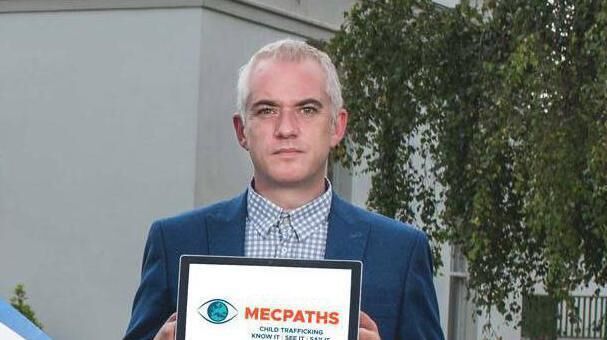
Only 37 child-trafficking victims were identified in Ireland in the last five years, while 37,500 children were identified as being trafficked in the UK over this time.
The vast divergence in the identification of child victims between the jurisdictions “does not add up,” Mr O’Sullivan said, even factoring in the different population sizes.
More than 80% of children who are groomed and trafficked into criminality are forced into that world by someone they know, often family, including their parents, brothers, sisters, or grandparents.
“There’s a vulnerability in those children and in children in State care. The commonality is vulnerability," he said.
“But the domestic aspect of human trafficking is being missed,” Mr O’Sullivan said.
Experts in the Irish Human Rights and Equality Commission (IHREC) agree that problems exist in identifying and supporting victims.
It will launch a new report in September with multiple recommendations on how Ireland can improve its response to human trafficking.
The IHREC wrote to justice minister Jim O’Callaghan on Friday, raising concerns about the current system and asking for a meeting.
A lack of progress was identified by the IHREC in key areas to combat human trafficking in Ireland.
It also identified “potential backsliding” in critical areas, one of which the IHREC said was in the provision of safe and appropriate accommodation for victims.
Ireland also failed to fully transpose the amended EU Anti-Trafficking Directive by the July 15 deadline, the IHREC said.
This amended EU Anti-Trafficking Directive strengthens member states’ obligations to identify, protect, and support victims of trafficking, including through formal referral mechanisms such as a National Referral Mechanism (NRM).
But Ireland has failed to implement a statutory NRM.
Although in 2024, the Criminal Law (Sexual Offences and Human Trafficking) Act introduced a new statutory NRM, Part 3 of the Act has not yet been commenced and the NRM has still not materialised, IHREC said.
“The current system for identification and support is persistently problematic and is insufficient to identify and support victims and those at risk,” the IHREC said.
Accommodation for victims of trafficking is also problematic and worsening, the IHREC said, particularly for those outside the international protection system.
And as the highest numbers of trafficking victims in Ireland currently come from Brazil, China, and Romania, all of these are likely to be outside of that protection.
There also appears to be a lack of clarity as to which department has overall responsibility for ensuring the accommodation needs of victims are met, the IHREC said.
The process of officially recognising a trafficking victim currently rests with gardaí, and that process is opaque, a source who works in the anti-human-trafficking field said.
Victims say that it can take many months to receive updates on their case and that there is a lack of clarity on how or why someone is classified as a trafficking victim or not.
Although migration and asylum reforms should strengthen the identification and protection of trafficking victims, the IHREC is concerned that new legislation is doing the opposite.
The Department of Justice told the that the prevention, detection, and prosecution of human trafficking, including child trafficking, is a priority for Government.
“The Department of Justice, Home Affairs and Migration co-ordinates the State's strategic response to human trafficking, while a range of departments and agencies, including the Department of Children, Disability and Equality, Tusla, An Garda Síochána, the HSE, and others, exercise their respective statutory responsibilities in relation to child protection, criminal investigation, victim support and safeguarding. Officials work together on an ongoing basis to coordinate the State’s response and strengthen these arrangements,” a statement said.
Human trafficking is one of a number of serious offences through which children may be exploited, the justice department said.
"This operates alongside the child protection system to ensure that children who are victims of exploitation are identified and supported appropriately.
“Under Irish law, a child who is recruited or controlled for the purpose of exploitation may meet the definition of a victim of human trafficking. Whether a particular case is identified as trafficking depends on the facts of the individual case and the available evidence. Where the legal threshold for trafficking is not met, other criminal offences or child protection responses may apply.”
A statement from the Department of Children, Disability and Equality said that both it and Tusla “work closely and constructively with all other relevant agencies, including the Department of Justice and An Garda Síochána, to protect children from the risks of sexual exploitation and child trafficking.
“Children in the care of the State are among the most vulnerable individuals in our society,” a statement from the Department of Children said.
“The Department of Children, Disability and Equality and Tusla are committed to promoting safe and high-quality practice across all areas of alternative care, including protecting this vulnerable cohort from the risks of sexual exploitation and child trafficking.
“The Child Sexual Exploitation Procedure was developed in 2021 to assist Tusla social workers and care workers in recognising indicators of child sexual exploitation, making appropriate referrals where such concerns exist, and responding to cases where children may be at risk of sexual exploitation. This procedure is currently under review.”
Tusla continues to take the issue of potential child sexual exploitation and child trafficking very seriously, including working with An Garda Síochána as required, the Department of Children said.
“All children in the care of Tusla are screened for indicators of trafficking. In addition, engagements with An Garda Síochána are ongoing in relation to data collection and alignment, and to ensure that Tusla records this data appropriately through its case management system.”
A conference to address human trafficking will be held in Cork on July 30 to mark World Day Against Trafficking in Persons.
Cork Against Human Trafficking and MECPaths are organising the event in Cork County Hall.
The theme of the event is Human Trafficking and Technology, with a special focus on child exploitation.
Speakers include: Mick Moran (Hotline.ie), JP O'Sullivan (MECPaths), An Garda Síochána, and The Council of Europe.
The public is invited to join the conference but must register at https://www.eventbrite.com/e/technology-human-trafficking-tickets-1993021631350?aff=oddtdtcreator

CONNECT WITH US TODAY



Be the first to know the latest news and updates