Sharp increase in asylum appeals in 2025
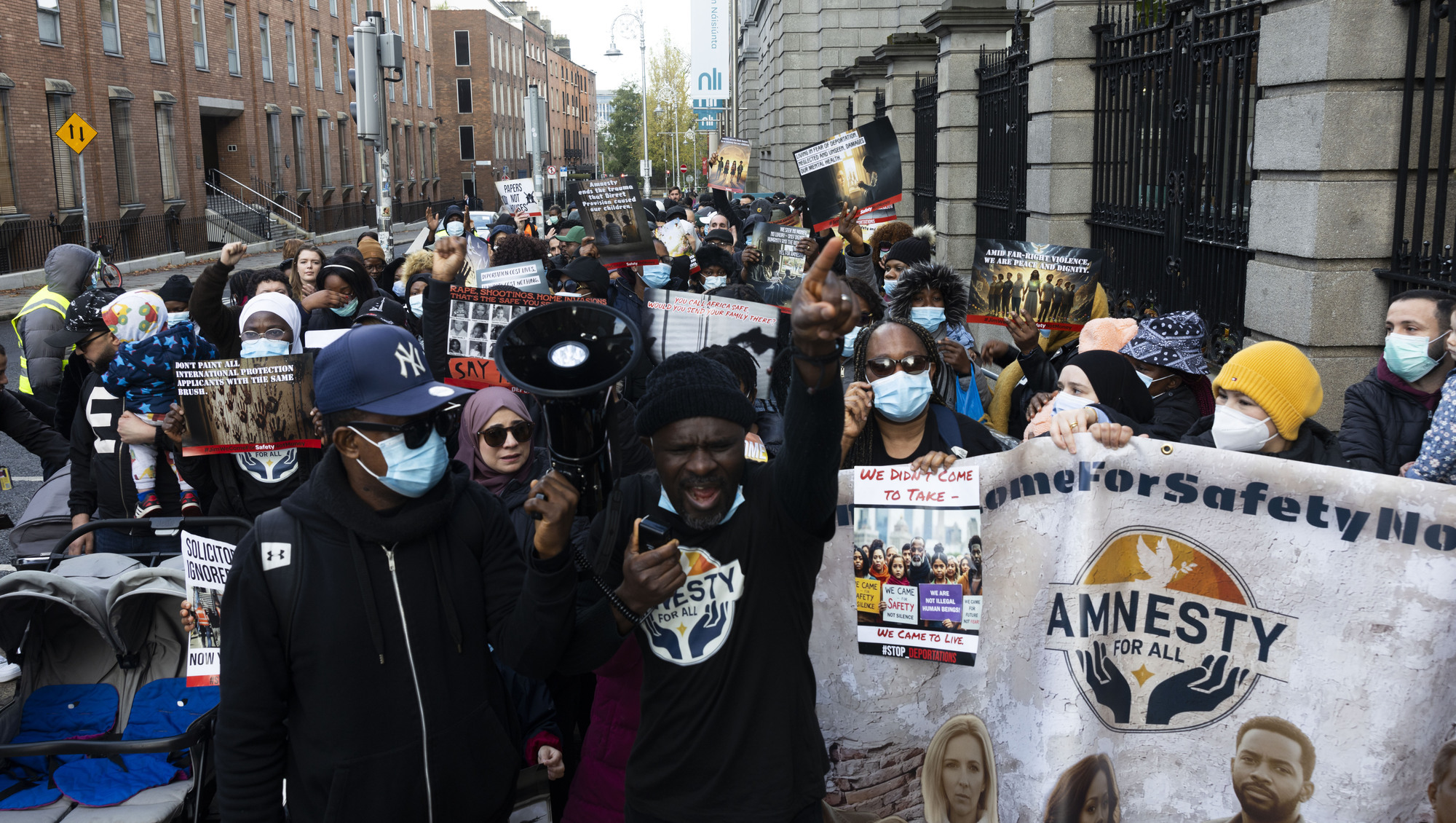
People seeking international protection and asylum seekers protest against deportations outside Leinster House last November. Picture: Sam Boal/Collins
There was a 74% increase in the number of appeals from people refused asylum last year, official figures show.
Despite a doubling in the number of cases completed in 2025, there were almost 19,000 appeals pending at the end of the year.
The International Protection Appeals Tribunal (Ipat) annual report for 2025 shows the typical length of time for appeal decisions was 12.5 months last year.
This compares to 10 months in 2024 and 5.5 months in 2023, reflecting the rise in cases received in 2025 and 2024.
The report shows 28% of appeals are successful, with 25% granted asylum and 3% granted subsidiary protection.
There is a large degree of variation in the rate of successful appeals depending on the country of the applicant — with 73% of applicants from Somalia successful compared to just 8% from Egypt.
In her foreword, Ipat chair Hilkka Becker said they had “significant challenges” in 2025, particularly a “further increase of appeals coming to the tribunal, rising by yet another 74% to 15,334”.
She said a positive development was the appointment of an additional 67 tribunal members in the second half of the year.
She said the challenges ahead “may be significant” and said the resourcing of the tribunal “remains essential” so it can meet a continuing rise in appeals foreseen in 2026.
The report said the rise in appeals in recent years came as the number of original applications for asylum fell by more than 30%, from 18,561 in 2024 to 13,160 in 2025.
But it said the 2025 figure was still high by historical standards in Ireland. It said the downward trend mirrored a “broader trend” in Europe.
The report said: “Despite the easing off of applications from an exceptionally high starting point, the tribunal had a very high volume of appeals on hand at the beginning of the year and receiving an additional 15,334 appeals throughout the year, ended 2025 with 18,864 pending before it.”
It said the tribunal completed a “record number of appeals” in 2025, at 6,254 — the highest number since the tribunal started in 2016 and double the amount of completions in 2024.
It said there was a “relatively low rate” of judicial reviews on IPAT decisions, at just 5.5% — compared to 7.4% in 2024.
The highest percentage of appeals came from Nigerian applicants (28%), followed by Jordan (12%), Algeria (8%) and Pakistan and Georgia (both 7%).
Of the 4,557 cases where a final decision was made, 72% were rejected, with 25% accepted and a further 3% given subsidiary protection or had their original rejection set aside. The percentages are similar to the last two years.
Applicant countries that received the highest level of rejections were Egypt (92%), Algeria (83%), Georgia (81%) and Albania (74%), with the lowest rate of rejections from Somalia (27%), Zimbabwe (42%), Botswana (56%) and Nigeria (68%).
A new appeals body will be set up this year under the International Protection Bill when enacted.
A large number of bodies have expressed alarm at measures in the International Protection Bill, including the Irish Human Rights and Equality Commission, the Irish Refugee Council, the Immigrant Council of Ireland, Doras, Nasc and the ICCL, with concerns also expressed by the Ombudsman for Children, UNHCR, and the Law Society.

CONNECT WITH US TODAY



Be the first to know the latest news and updates