Rare spinal condition added to newborn blood screening test
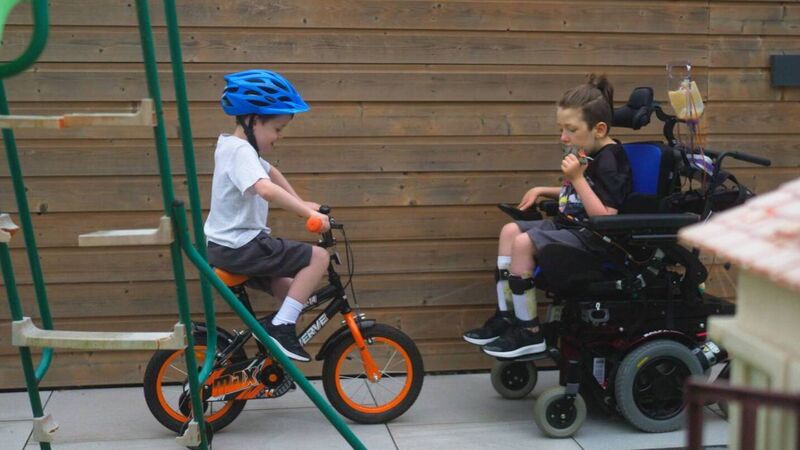
'We have lived the reality of both late and early diagnosis. The difference is life-changing.' Liz McMahon's sons, Luke (8) and Sean (6) both have spinal muscular atrophy (SMA). File picture
A family affected by the rare disease spinal muscular atrophy (SMA) has welcomed expansion of the heel prick test for newborns to include the condition, with the first babies already tested.
It means that “life-changing” early treatment can be given to any child born with SMA. This is a rare genetic condition causing severe muscle degeneration and can cause death by the age of two.
Liz McMahon and Dave Ryan from Meath have two boys, Luke aged 8 and Sean aged 6, who both have SMA.
Luke was diagnosed at eight weeks old and, by the time he received treatment, irreversible damage had been done.
However, Sean was diagnosed before birth and given treatment at just a few days old, meaning he now lives without disabilities.
Liz said: “This is a remarkable day for families like ours.
She said other parents will not have to worry now, and said: “Screening gives children the best chance from the very beginning.”
Advocacy group SMA Ireland also welcomed the news. An estimated six babies are born with SMA every year in Ireland and they can now have swift access to several cutting-edge treatments in Irish hospitals.
“This is excellent news for new and expectant parents and for everyone who will have a baby in Ireland in the future,” said SMA Ireland director Jonathan O’Grady.
Health minister Jennifer Carroll MacNeill announced the expansion, saying that testing for severe combined immunodeficiency and SMA has begun through the national newborn bloodspot screening programme.
The heel prick tests now cover 11 conditions.
Ms Carroll MacNeill described the expansion as “a significant milestone” that will be very welcome for families.
“This programme enables us to detect rare but serious conditions which benefit from early intervention and lead to vastly improved outcomes for children,” she said.
She also committed to further expansion of the programme, saying work has already begun on assessing this by the National Screening Advisory Committee.
Mr O' Grady also praised the work which has gone into this move by the HSE, Department of Health and Ms Carroll MacNeill.
A number of different HSE units were involved in it, including the National Healthy Childhood Programme, staff at the National Newborn Bloodspot Screening Laboratory in CHI at Temple Street and other areas across the health service.
- Niamh Griffin, Health Correspondent
CONNECT WITH US TODAY



Be the first to know the latest news and updates