GP practices at breaking point, warns incoming head of Irish Medical Organisation

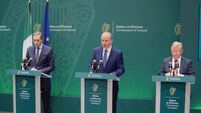
Jenifer Carroll MacNeill and Professor Matthew Sadlier. Picture by Shane O'Neill, Coalesce
There are now “many GPs” too over-worked to take on new patients, the in-coming head of the Irish Medical Organisation has warned as he also called for new hospitals to be built.
Professor Matthew Sadlier called for “a major investment” programme in health infrastructure as well as other changes at the IMO annual conference in Killarney.
Investment in new hospitals is needed to help address an estimated shortfall of 5,000 beds nationally, he said.
These shortages are “directly contributing” to the overcrowding crisis, he argued.
This is leading to delays in emergency departments and also leaving thousands more on waiting lists.
New figures on Friday showed waiting lists for in-patient and out-patient care rose again last month compared to February.
Prof Sadlier warned these pressures are forcing many hospitals to run “beyond safe capacity levels”.
In community services, GP shortages are leading to issues for patients, he said.
He called on the Department of Health to conclude its review of general practice, saying this must focus on “the very serious manpower crisis” there.
“The workload of GPs has increased enormously over the past decade, and many practices are now reaching breaking point,” he said.
“We have too few GPs in general and too many of those still working are approaching retirement age. Many GPs are unable to take on additional patients.”
He also drew attention to the obstacles faced by international doctors working here.
About 40% of HSE doctors have trained abroad. The Irish health services and the people of this country are utterly dependent on the contribution of international doctors, nurses and support staff,” he said.
“The thugs who shout obscenities and physically threaten these colleagues bring shame to this country and their behaviour must never be tolerated or accepted.”
The conference also heard about the drive to move health services to a 6-day week from health minister Jennifer Carroll MacNeill.
“Once we achieve it we will never go back,” she said, adding: “It will be entirely normal for the next generation of patients.”
About 69% of consultants are now working on a public-only contract meaning the new working hours are now part of their terms.
However, she is still worried hospitals are not yet using their rooms efficiently.
“It doesn’t make sense to me when I go to a hospital on a Thursday evening, as I did in the Southwest a number of times in the last couple of months, and find it eerily quiet,” she said.
She described visiting St James hospital in Dublin on a Friday when the corridors are thronged with patients.
“Then I go on a Saturday and I genuinely could do cartwheels – if I could do cartwheels - I would be able to do them down the corridors, it doesn’t make any sense,” she said.
She called on doctors to be innovative in their use of existing hospitals buildings, saying: “There isn’t going to be massive additional resources every year.”
Hospitals and other building must be “used in every way” to justify any extra spending, she said.
The new HSE chief executive Anne O’ Connor also spoke at the conference about the organisation across various areas.
“I have a couple of ambitions,” she told reporters afterwards.
“Culture is big, that is within the organisation. How we look after the population is hugely important and how we look after the staff who look after the population is important.”
Older people’s care is vital within that ‘population’ she said, adding this be across the health services not only in hospitals.
It needs to include “early intervention, prevention, supporting people to stay well”, she said, adding that sometimes: “we don’t think a lot about that because we’re so focused on providing services and yet we all know if we do that well, the demand for our services goes down".
Working with GPs and keeping people in the community will be central, she stressed.


CONNECT WITH US TODAY



Be the first to know the latest news and updates