Average cost rises to €99 per night to accommodate asylum seekers despite drop in applicants
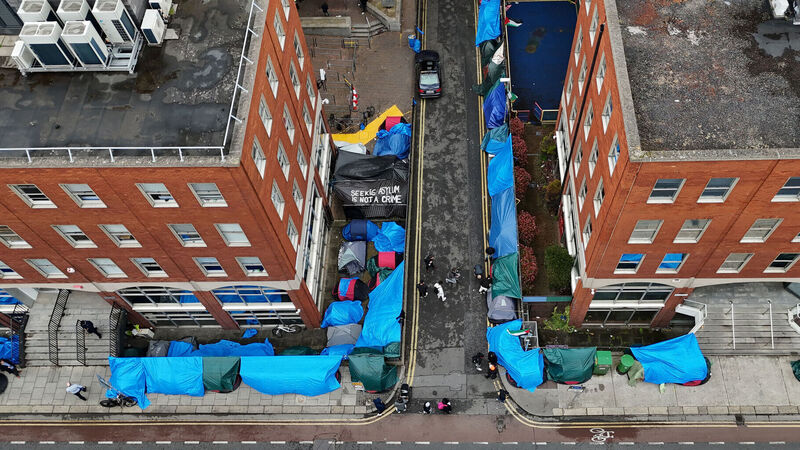
Tents housing asylum seekers near to the Office of International Protection, in Dublin in 2024. Staffing levels at the International Protection Office have increased by around 330% since 2018. Photo: Niall Carson/PA
The average nightly cost of accommodating international protection applicants increased to €99 per person last year despite a 30% drop in the number of people seeking asylum.
The details are contained in a new internal government report which warns that new arrivals continued to exceed outflows from IPAS accommodation in 2025, “straining a system under pressure”.
Read More
It also noted that around 80% of international protection applications were rejected at first instance but approximately 75% of these decisions were appealed, “prolonging stays and straining decision-making capacity”.
An increase of around 50% in the number of judicial reviews following unsuccessful appeals “presents a further risk to throughput”, according to the analytical paper by the Irish Government Economic and Evaluation Service.
The paper revealed that total expenditure increased by 14% to €1.213 billion in 2025 despite new arrivals dropping by around 30% from a peak of around 18,500 in 2024, driven by the rising cost of private accommodation.
The average nightly cost of accommodation has increased from €38 per person in 2018 to €99 last year. Meanwhile, staffing levels at the International Protection Office have increased by around 330% during the same period.
The report said the large number of appeals is prolonging accommodation stays. The International Protection Appeals Tribunal accepted more than 15,000 appeals in 2025, and had around 19,000 on hand at the end of the year.
Occupancy levels at IPAS centres stood at 33,250 at the end of last year, which was 450% higher than at the end of 2021. Net occupancy growth stabilised in 2025 after years of rapid expansion, it added.
It concluded that international protection applications remain higher than pre-pandemic levels despite a decline last year, and said high volumes were challenging the State’s capacity to respond effectively.
The report said the implementation of the EU Pact on Migration and Asylum would play an important role going forward, but would have little impact on those already in the system.
It suggested that medium-term savings could be achieved through faster processing and improved capacity for dealing with appeals, as this would reduce time spent in accommodation.
However, longer-term cost reductions could require structural reforms, it added. The report noted that more than 5,000 people who have already been granted legal protection remain in State-funded accommodation because they cannot find housing.
CONNECT WITH US TODAY



Be the first to know the latest news and updates