House price inflation at lowest rate in over two years
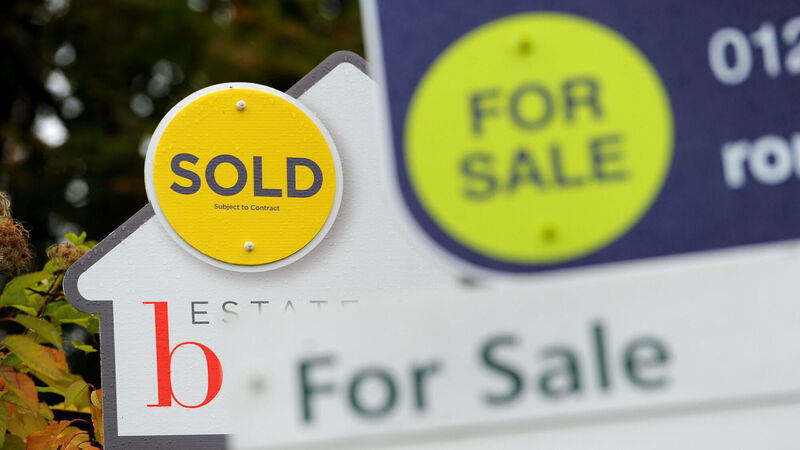
Housing supply remains constricted, with the median transaction price at 7% over the asking price. File picture: Andrew Matthews/PA
One in six properties sold at 20% or more above the asking price in the first three months of the year, but house price inflation dropped to its lowest rate in more than two years.
Annual asking price inflation is now running at 4.7% nationwide.
The last time the rate was lower was in the fourth quarter of 2023, at 4.1%, a new report by MyHome in association with Bank of Ireland found.
This is the fifth consecutive quarter in which annual asking price inflation nationwide has eased, with MyHome forecasting that Irish house price inflation will slow to a 4% overall rise this year.
However, supply remains constricted, with the median transaction price at 7% over the original asking price.
And median homes are taking just over one month to go sale agreed.
The median house price was €385,000 nationally in the first quarter of this year, the report found.
Cork house prices were up almost 12% to €335,000.
Wicklow was the most expensive with the median asking price at €435,000, up 7.168% from the previous year.
Dublin was the second most expensive, with the median asking price of €375,000, followed by Galway on €365,000.
In Munster, several counties in addition to Cork saw double-digit price gains in the 12 months to the first quarter of this year.
In Kerry, prices were up 10% to €270,000 and by 13% in Tipperary to €239,000.
In contrast, Limerick prices rose just 1.8% to €280,000, and prices in Waterford rose 2% to €230,000.
The median price in Clare fell slightly, by 3.4% to €285,000.
Similarly, Limerick City saw a relatively subdued 4.2% rise to €280,000 and Waterford City a 2.7% gain to €190,000.
There were 8,000 new listings of properties for sale in the first three months of 2026, up only 2% on the year, with 11,800 properties listed for sale on MyHome in total, the report found.
The 36,000 home completions in 2025 exceeded expectations, and the increase in small landlords leaving the market ahead of new rental regulations may boost supply later this year, the report said.
Of the 10,612 notices of rental termination received in the second quarter of last year, 60% of landlords indicated they expected to sell their properties, and 20% said a family member was moving into the property.
The recent surge in Brent oil above $100 per barrel will feed through into build cost inflation, the report warned.
Annual asking price inflation in Dublin is now 2.9%, and the rate is 6.1% in the rest of Ireland.
The average mortgage approval to first-time-buyers was €320,000, up 1.9% year-on-year, the slowest pace of increase since 2021, Banking Payments Federation Ireland data for January shows.
The author of the report, Conall MacCoille, chief economist at Bank of Ireland, said: “This quarter’s MyHome Report shows that asking prices rose by 1% in Q1 2026, a relatively sedate rise ahead of the summer trading season.
"Hence, the annual rate of inflation slowed again, to 4.7% in Q1 2026, down for a fifth consecutive quarter from the 8.4% peak at end-2024.
“A notable feature of the Irish housing market in 2026 will be elevated numbers of small landlords in the private rented sector leaving that market and selling their properties — the catalyst being new stricter regulations and the introduction of six-year minimum tenancies."
CONNECT WITH US TODAY



Be the first to know the latest news and updates