Secondary teachers reject motion to refuse Leaving Cert project work after pay warning
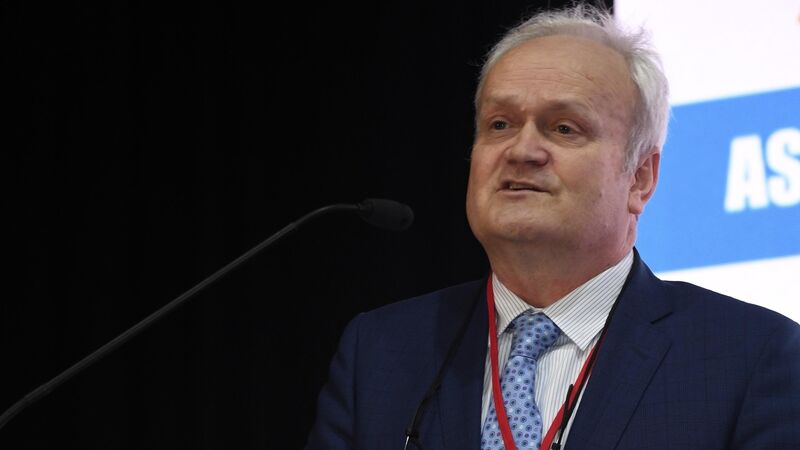
Association of Secondary Teachers, Ireland general secretary Kieran Christie told the ASTI convention 'we will effectively have withdrawn from the public sector agreement' if teachers refuse to oversee AAC component of the Leaving Cert. File picture: Don MacMonagle
A motion calling for teachers to refuse to administer Leaving Cert project work has been rejected after the union’s general secretary noted that members would lose a forthcoming pay rise if they endorsed it.
The Association of Secondary Teachers, Ireland (ASTI) voted to reject the motion by 131 votes to 114.
The motion had called for the State Examinations Commission to take responsibility for “all aspects” of that project work.
Introduced at the ASTI’s annual convention in Wexford on Tuesday afternoon, the motion was described by both supporters and opponents as particularly divisive.
Read More
General secretary Kieran Christie said that refusing to engage in overseeing the additional assessment component (AAC) would amount to industrial action and a rejection of the public‑service pay agreement.
AACs, which account for 40% of final marks in four subjects, have proven controversial among teachers, who argue they widen the gap between affluent schools and less well‑resourced ones and allow the use of AI in project work.
Signing up to AACs as part of senior cycle reform is part of the current pay agreement, which is due to be renegotiated in the coming weeks and which will see teachers gaining a 1% pay rise from June.
“I don’t want to be accused of scaremongering... but we were asked for the facts,” Mr Christie said.
“The 1% will be gone, no question of that. At least it could be withheld,” he said, adding that should the union adopt the motion, it would lose access to Ireland’s public pay dispute resolution mechanisms as “we will effectively have withdrawn from the public sector agreement”.
In her speech to the convention after the motion was defeated, education minister Hildegarde Naughton noted that the ASTI had signed up to her department’s suite of support measures for the implementation of senior cycle reform, committed to under the public pay agreement.
Her assertion was greeted with derision by delegates.
Meanwhile, ASTI president Padraig Curley argued that the “accelerated” implementation of Leaving Cert reform is “unsustainable”, noting that previous calls for a one-year pause in the process had been rejected by Government.
Regarding AI influence on project work, Mr Curley said teachers “are being asked to authenticate work they cannot possibly verify”.
He asked why, given third-level education is moving towards in-person presentations to combat the effects of AI, that “senior cycle redevelopment inexplicably moves in the opposite direction”.


CONNECT WITH US TODAY



Be the first to know the latest news and updates