Nearly 200 patients stuck in hospital due to homelessness as delayed discharges rise 29%
Last month, the number of homeless people breached 17,000 for the first time
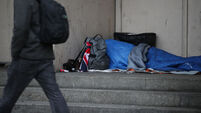
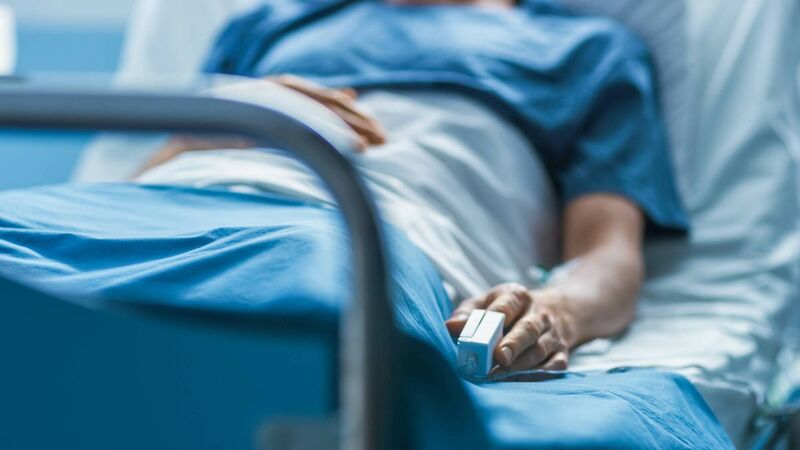
Nearly 200 people could not be immediately discharged from hospitals last year because they were homeless.
Figures show that in 2024 and 2025, five children had their discharges delayed because they had no fixed abode.
However, Conor Sheehan, Labour TD for Limerick City, who obtained the figures from the HSE, said he knows of a case where a person needs surgery but cannot get it because she resides in emergency accommodation.
The figures show that 191 people had their hospital discharge delayed last year because they were homeless.
This was up from 148 in 2024, an increase of 29%.
The number of delayed discharges due to homelessness rose in four of the six HSE regional health areas between 2024 and 2025.
One child receiving care in Children’s Health Ireland (CHI) Crumlin, three children in CHI Tallaght, and one child in CHI Temple Street had their discharges delayed because of homelessness.
Up to March 3, some 24 homeless people could not be discharged from hospital in 2026, bringing the total number to 363 in 27 months.
Mr Sheehan said: “There is no alarm going off between the local authority and the HSE as to getting that person housed so she can have her operation, or, in these cases, being able to discharge people appropriately."
Last month, the number of homeless people breached 17,000 for the first time.
Monthly figures from the Department of Housing showed there were 11,793 adults and 5,319 children, a new record high.
In a letter to Mr Sheehan, the HSE confirmed that a “delayed transfer of care” occurs when a patient is “ready to leave inpatient care but is still occupying a HSE-funded acute bed”.
Derek McCormack, assistant national director of performance at the HSE, advised that a patient can leave inpatient care when three conditions are met.
The patient must be “medically fit for discharge to their home or for transfer to a non-acute setting”; a multidisciplinary team has decided that the patient is ready; and the patient is considered safe for discharge.
“There are a number of possible reasons why a patient may not leave an acute setting despite being clinically discharged,” he said.
“These can include patients who are awaiting arrangement of suitable home support or residential care, and patients with complex clinical needs, those experiencing homelessness or legally complex circumstances.”
Mr Sheehan told the he was aware of one constituent who could not get a “big operation” because she was living in emergency accommodation.
“This is a microcosm of just how much worse every metric is getting in terms of homelessness.
The HSE said a protocol "primarily designed to support safe and appropriate discharge from hospital" that is currently operating in the Dublin region is planned for other regions.
"Communication between health services and homelessness services is intended to be led from the hospital side, most commonly through Inclusion Health Teams or hospital social work, once a person is admitted or engaged with acute services.
"These teams liaise with the HSE Social Inclusion, appropriate primary care teams, NGOs, and local authorities to plan discharge and identify the most appropriate available accommodation and supports," it said.
"The HSE continues to work with local authorities and homelessness partners to strengthen coordination."


CONNECT WITH US TODAY



Be the first to know the latest news and updates