Dolores Keane obituary: An hauntingly talented singer who battled her demons
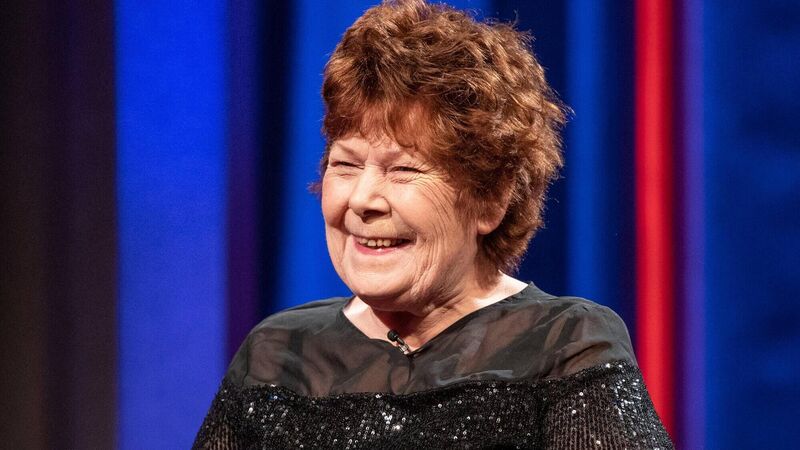
Dolores Keane on the Tommy Tiernan Show in 2023.
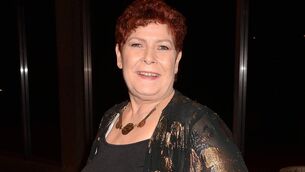
Dolores Keane, who has died aged 72, will be remembered as a singer of immense talent and as someone who spoke with courage and honesty about her struggles with depression and alcoholism.
Blessed with a haunting voice, she made an immediate impact on the Irish folk scene as a member of De Dannan in the 1970s, and later achieved household fame as part of the A Woman’s Heart project.
She toured across the world — and even featured alongside Bruce Springsteen and Jackson Browne on a tribute album to folk singer Pete Seeger. Her friend, the country singer Nanci Griffith, described her as “the queen of the soul of Ireland”.
But for all her success, she had her demons and was frank about the many years lost to alcohol. “I was the last person to realise I was an alcoholic. I didn’t know the effects that drinking was having on me until other people pointed it out to me,” she said in a recent interview on Lyric FM.
“I started slurring my words while singing on stage, and then I thought I better do something about this. I actually didn’t realise I was an alcoholic.”
She finally conquered her addictions in 2014 after a spell in rehab at the Hope House clinic in Foxford, Mayo. Keane had blamed her drinking for the implosion of her relationship with her partner, Barry Farmer, and was determined to quit.
“I was serious. I had given up drink when I walked through the doors. I had given up drink when I had phoned my best friend, and then I phoned Hope House and I asked them if I could come.”
Keane was born in Caherlistrane, Co Galway, into a musical family. Her father, “Big Matt” Keane, played with the Keanes’ Ceilidh Band, and her aunts Rita and Sarah were respected local singers. She grew up surrounded by music. The family home was a gathering point for musicians and she recalls sessions that would go on all night and well into the morning after.
But there was tragedy, too. When Keane was eight, her sister Marian died from TB, and her mother, Bridie, had a nervous breakdown. Because the family was struggling to cope, Keane was sent to live with Rita and Sarah in the nearby townland of Carragh. But they had never had children of their own, and she recalled them being ill-equipped for the challenges of raising a young woman.
“If I had a problem, the elders would say to put the sign of the cross on it and it would be fine tomorrow,” she said. “But the thing was, everything wasn’t always right tomorrow — sometimes it was even worse. There were times when I felt stuck in Carragh, and I didn’t really know my brothers and sisters that well.”
Though her talent was obvious from a young age, she was shy and unsure of herself and never imagined she could make a living from music. After completing a secretarial course in Galway, she worked as a typist at a factory in Tuam when she joined De Dannan, part of a new wave of folk acts putting a new spin on old music.
It was around then she met her husband, a BBC TV producer named John Faulkner, who had come to Galway to record the singing of his aunts Rita and Sarah. Keane, aged 22, had never been in a relationship and was swept off her feet by the dashing Englishman, who was also a talented musician.
They married in 1977 and often played and toured together. They had a son, Joseph, but the pregnancy was troubled: Keane was told the child would be lucky to see his second birthday. He proved the doctors wrong, though he was diagnosed with Bardet–Biedl syndrome, a rare genetic disorder that caused him to become clinically blind.
“I took it in my stride, but of course it broke my heart to know that he’d never see the moon or the stars and the changing of the seasons,” she would later say.
Her marriage to Faulkner ended in 1988 and she began a relationship with Barry Farmer, with whom she had a daughter, Tara. But as her drinking continued, things fell apart — not helped by two drink-driving cases brought against her, which led to her being banned from the road for three years.
“Bazza had enough; he just couldn’t take it any more,” she said not long afterwards.
“In a way, I was disappointed that he left when I needed him most, but I don’t blame him. The way that he saw me was killing him, no more than everyone around me. He tried to help me, but all I did was abuse him verbally, demanding that he would go out and get me cans to drink. The more I think about it now, the more I realise that it was my fault, not Bazza’s, and I take responsibility for that.”
If her personal life had its ups and downs, on stage she thrived. A Woman’s Heart made her famous in Ireland and her reading of the old Scottish folk standard was widely acclaimed.
Nanci Griffith, a confidante and collaborator, spoke for many when she said: “As long as Dolores Keane is walking around this earth, I won’t call myself a singer.”
However, she always suffered from doubt and would turn to alcohol to numb her anxieties. While she loved connecting with audiences, life on the road — where there was a drink always to hand — was not a good place for her.
Sobriety brought her the peace she had long sought, and in 2023, she marked her 70th birthday by releasing — a song that celebrated survival and renewal. It was a fitting swansong for an artist who had gone through immense spiritual and emotional suffering but who had survived and, against all odds, finally found peace.


CONNECT WITH US TODAY



Be the first to know the latest news and updates