Households face gloomy 'vibecession' with food bills expected to remain high
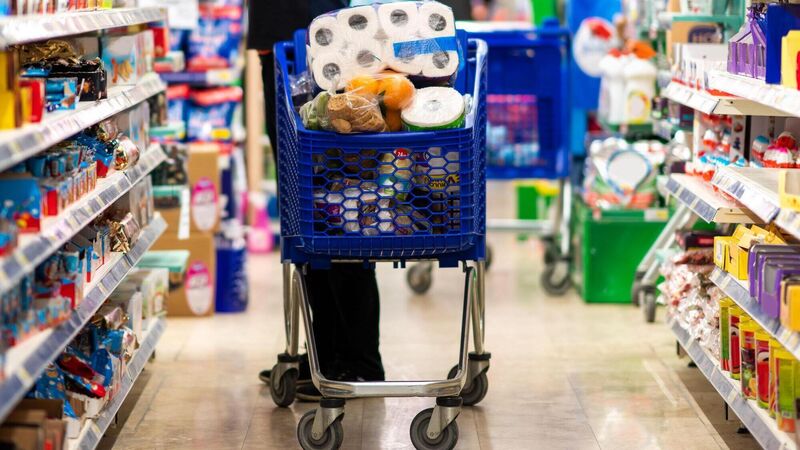
Mr Looney said that food inflation remaining above that of general inflation is merely continuing a trend that has been 'quietly draining household budgets in recent years'.
Households hit by surging grocery prices are facing a gloomy "vibecession", and must expect food bills to remain permanently higher into the future, it has been warned.
It comes as the latest Central Statistics Office (CSO) figures show many staples are continuing to rise at a rate far higher than general inflation, with the likes of beef up 23.7%, poultry 8%, and eggs 5.7%, compared to the same time last year.
David Looney, a financial advisory director at Alpha Wealth, said the inflation figures for January from the CSO show that the rising cost of food remains “stubbornly” high as consumers are feeling the pinch.
“Every week, clients sit across from me and say the same thing: ‘I think I’m doing everything right, but money just seems to disappear’,” he said.
“When we dig into their spending beyond the usual obligations like mortgage payments and energy bills, the answer has increasingly been made evident in their supermarket receipts.
“The combined results are what many households are experiencing: Stabilising inflation statistics, but a weekly shop that still feels expensive.
"A phenomenon known as a ‘vibecession’ — when there is a disconnect between positive economic data and consumer sentiment."
The term "vibecession" was coined by Irish-American economist Kyla Scanlon in 2022, describing the feeling among the public that the economy is worsening despite data suggesting otherwise. It was largely seen as a major reason for Joe Biden's downfall as US president, paving the way for the return of Donald Trump.
The CSO’s latest Consumer Price Index showed that prices rose by 2.7% in the Irish economy in the year to January 2026.
While this was a slight fall from 2.8% the previous month, the statistics show consumers getting hit by rising prices in important essentials ranging from food, electricity, childcare, insurance, and bin collections.
The categories of items that rose the most in the last year were education (up 8.9%) and clothing and footwear (up 7.3%). In the case of education, this reflected a rise in third-level fees in October.
CSO statistician Anthony Dawson said: “There were price increases in the 12 months to January 2026 for sirloin steak per kg (+€4.68), Irish cheddar per kg (+45c), a pound of butter (+34c), two litres of full-fat milk (+6c), and an 800g loaf of white sliced pan (+4c).”
While the national average price of a pint of stout was €6.10 in January, this is likely to rise in next month’s figures following recent hike announcements from Diageo and Heineken.
Mr Looney said that food inflation remaining above that of general inflation is merely continuing a trend that has been “quietly draining household budgets in recent years”.
“Even if inflation moderates, we are now operating from a permanently higher cost base, and the bottom line is income levels have not been increased to the same levels, so we are feeling the pinch,” he said.
“From a financial planning perspective, households should assume grocery bills will remain structurally higher for longer. The focus now shifts to protecting purchasing power — through disciplined budgeting, reducing impulse buys where necessary and shopping around.
“Not just on groceries, but on other financial obligations such as mortgage rates, insurance, and energy costs.”
Thomas Pugh, the chief economist at RSM Ireland, said all signs point to underlying inflation remaining elevated this year, and that we can't expect it to fall much further.
“The recent rise in oil prices will filter through to the pumps in the coming months, meaning that fuel inflation will rise again despite being negative currently,” he said.
“Furthermore, we think inflation is likely to remain above 2% throughout 2026 as domestically generated price pressures remain elevated.
“What’s more, the medium-term risks to inflation will remain firmly to the upside as big increases in day-to-day public spending and bottlenecks in housing supply will remain a source of inflationary pressure,” he added.


CONNECT WITH US TODAY



Be the first to know the latest news and updates