New wing at Dublin hospital refused after objections by conservation group
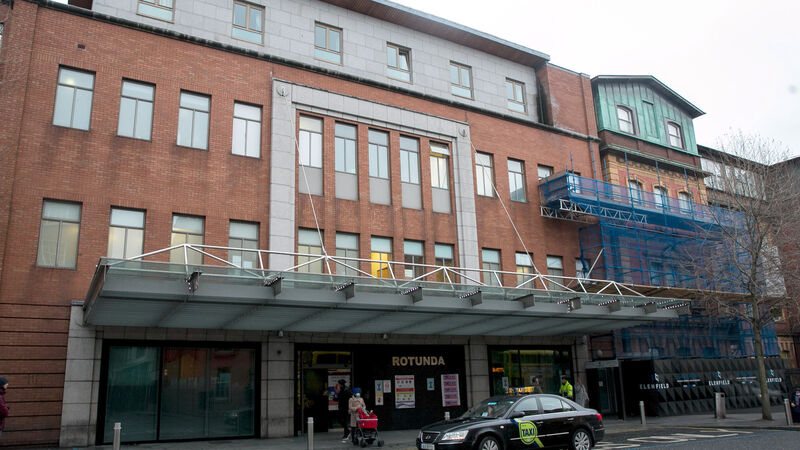
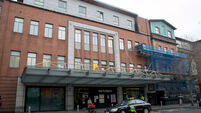
An Coimisiún Pleanála said it was satisfied that the scale, form and location of the Rotunda's new wing meant it would 'encroach upon and further compromise the architectural and historical integrity of Parnell Square'. File picture: Gareth Chaney/Collins
Planning permission for a €100m new wing for critically ill women and infants at the Rotunda Hospital in Dublin has been refused following a successful objection by a conservation group.
An Coimisiún Pleanála has overturned a decision of Dublin City Council to approve the proposed development of a new four-storey, critical care wing which would have provided 80 extra hospital bedrooms as well as a new theatre and connections to the existing entrance and main hospital buildings.
The plans also provided for the demolition of the existing outpatients department.
The commission upheld two appeals against the council’s ruling by the Dublin Civic Trust and an individual, while rejecting the recommendation of its own planning inspector to grant planning permission.
Read More
In a letter to hospital staff, the Master of the Rotunda, Seán Daly, said the commission’s ruling was “incredibly disappointing news for us all but most importantly for the families that we serve.”
An Coimisiún Pleanála said it agreed with the appellants that the proposal to demolish the outpatients building and replace it with the critical care wing would be contrary to the zoning objective of the site which only allowed limited expansion within Georgian conservation areas.
It claimed the proposed development would not serve to protect the existing architectural and civic design character of the site or Parnell Square generally.
The commission said it was satisfied that the scale, form and location of the new wing meant it would “encroach upon and further compromise the architectural and historical integrity of Parnell Square".
It claimed the development would “fundamentally alter its character” by creating a street frontage opposite protected 18th century houses that would fail to respect the historic charge and built heritage of the area.
The commission said it was also satisfied that the proposed development would significantly impact the view across many protected structures within the Architectural Conservation Area.
It agreed with its own planning inspector and the Dublin Civic Trust that Parnell Square and its surroundings are “a heritage setting of the highest order” but also that the scale of the critical care wing would have “clear heritage impacts".
The commission said it disagreed with the inspector’s view that the development represented limited expansion of the Rotunda campus as it pointed out that the new Critical Care Wing would have 10 times the floor area of the outpatients building.
It also disagreed with the inspector that the plans represented an overwhelming public benefit “sufficient to justify the degree of heritage harm identified".
The commission noted that Government policy is to co-locate the Rotunda Hospital in the medium to longer term to Connolly Hospital Blanchardstown by which time the adverse impact of the proposed development on the character and setting of protected structures and the Georgian Conservation Area “could not be undone".
In reaching its ruling, the commission said it had taken into consideration the revised National Planning Framework in relation to the need for the health system to respond to projected population changes and reports and letters of support for the development as well as the underlying clinical imperative for the facility and the submissions of the appellants.
Prof. Daly warned last October that objections to the new wing would result in “significant risk in terms of providing optimum care” to patients transferred to the hospital from all over the country.
He called on the Government to “review the planning process, with respect to healthcare-related infrastructure, where delays are costly both in human and financial terms".
Prof. Daly said the need for the new facility is “essential, both locally and nationally, for the provision of high-quality pregnancy-related and neonatal intensive care".
The critical care wing would have provided a 16-bed labour ward, a 20-bed neonatal intensive care unit, a 25-bed special care baby unit and a 19-bed post-natal unit together with a new operating theatre and recovery area.
Consultants for the Rotunda said the plans had been developed in line with built heritage policies and in consultation with Dublin City Council and conservation experts in order to minimise the visual and structural impacts on historic buildings.
They claimed the new wing would be an attractive contemporary structure that would replace an “unsightly” building and would be “in harmony with the historic architecture of Parnell Square".
CONNECT WITH US TODAY



Be the first to know the latest news and updates