Announcement of €20,000 payment to victims of Stardust fire criticised as a 'backward step' 

Announcement of €20,000 payment to victims of Stardust fire criticised as a 'backward step' 

Survivors and family members in the Garden of Remembrance in Dublin in April 2024 after a verdict of unlawful killing was returned by the jury in the Stardust fire inquests. File picture: Brian Lawless/PA 

The announcement of a €20,000 payment for survivors of the Stardust fire has been described as a “backward step” which abandons “hard-won promises” made to them by Government.

The Minister for Justice Jim O’Callaghan has announced details of the ex gratia payments to survivors of the 1981 fire, who’d previously accessed a compensational tribunal in the 1980s, to recognise the “delays in providing truth and justice” to those affected by the tragedy.


Phoenix Law, which represented the majority of families at the recent inquests, said they found out about the long-awaited scheme via the announcement from Government and hit out at the approach taken by the State.

“The decision to publish this scheme without any prior notice or engagement is both disappointing, and contrary to the previous commitments made to the survivors,” solicitor Darragh Mackin said.

“The victims and survivors engaged in good faith with the Government on the redress scheme. A redline was that it would not be based on, or similar to, the flawed Barrington [compensation] tribunal. This redline has been wholly disregarded without any explanation.” 

On Tuesday afternoon, in the second phase of the scheme, Minister Jim O'Callaghan confirmed payments totalling €16.4m for survivors of the 1981 fire in the Dublin nightclub.

“I am very conscious that the 45th anniversary of the Stardust tragedy is imminent,” Minister Jim O’Callaghan said.

“This will fulfil the Government’s commitment to implement a two-phased approach to Stardust redress.

“Payments in respect of Phase One of the redress, for the families of those so tragically killed in the fire, were completed in August last year. Phase Two, which I am announcing today, will provide for ex gratia recognition to all survivor beneficiaries of the original Stardust Victims Compensation Tribunal.” 

In the early hours of Valentine’s Day 1981, a fire spread quickly through the Stardust in Artane, a popular venue for young people in Dublin at the time.

A disco dancing competition had just concluded when the first flames were spotted.

In all, 48 people died in the fire. 

Most were local to the area, and the average age was just 19. Hundreds more were injured, some of whom severely. In the aftermath, patrons on the night described emergency exits being locked or blocked when they tried to escape.

Furthermore, evidence was heard at a Tribunal that the carpet tiles used on the walls contributed substantially to the rapid spread of the fire.

The first Tribunal of Inquiry into the disaster came to a finding that the “probable” cause of the fire was arson, but this was rejected by families of the deceased.

A Compensation Tribunal set up in the 1980s saw 823 people receive some form of compensation from the fire, but advocates repeatedly called for fresh inquiries to establish the true cause of the fire.

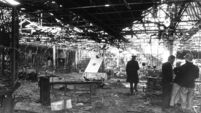
Fire damage at Stardust Disco in 1981. File picture: Tony Harris/PA 

After decades of campaigning, fresh inquests were ordered into the fire in 2019 culminating with the verdicts that each of the 48 people were unlawfully killed.

In their findings, the jury said that the fire in the Stardust began in the hot press in the main bar, due to an electrical fault.

The jury also found that the carpet tiles used on the walls contributed to the spread of the fire, and that at least some of the exit doors were locked, chained or otherwise obstructed at the time of the fire. They said this impeded the ability to access emergency exits and exit through them for those who died.

In the wake of the verdicts, then-Taoiseach Simon Harris delivered a State apology to the families of the Stardust victims and said the State had let them down.

While families were recipients of a compensation scheme in the wake of the State apology, this new redress scheme reneges on previously-made commitments according to legal representatives.

"Most importantly, the Government previously confirmed that upon conclusion of Phase 1, the Minister would embark upon consultation with the survivors as to what Phase 2 looks like,” Mr Mackin said. 

“Again, despite this promise appearing in the Government’s publicly stated position, it has been abandoned without reason or justification.

“The upshot of the Government’s announcement today is simple. It is with regret a backward step in terms of instilling confidence in those directly affected by this fire.

“The decision to depart from previous promises is compounded by the lack of engagement before the instant decision was reached.” 

Mr Mackin said the approach was a “relic of an old age from 1981” in which victims and survivors of the Stardust were viewed as “spectators”, and meant the voices of survivors has been left unheard.

In announcing the new payment scheme, Mr O’Callaghan added: “I am determined that the process that will now be implemented will be as simple as possible. It will not place a significant burden of proof on survivors, or be overly bureaucratic, and it will be accessible without legal assistance.

“It is not intended to constitute ‘compensation’ for the injuries and trauma sustained by those who survived the fire, as that was the scope of the original tribunal, but instead, what is proposed is a payment which recognises the delays in providing truth and justice.

“Given the passage of time, it is also of the utmost importance that the proposal does not give rise to any further trauma for applicants. My department will now prepare arrangements for the implementation of this scheme. Full details, including the simplified applications process, will be available shortly.” 

All those who received compensation from the Compensation Tribunal in the 1980s will be eligible for the scheme, which is set to open for six months. 

Full details will be published in the near future, the department said.

More in this section

Lunchtime News

Newsletter

Keep up with stories of the day with our lunchtime news wrap and important breaking news alerts.

Cookie Policy Privacy Policy Brand Safety FAQ Help Contact Us Terms and Conditions

© Examiner Echo Group Limited