Housing crisis leaves women trapped between homelessness or staying with abuser
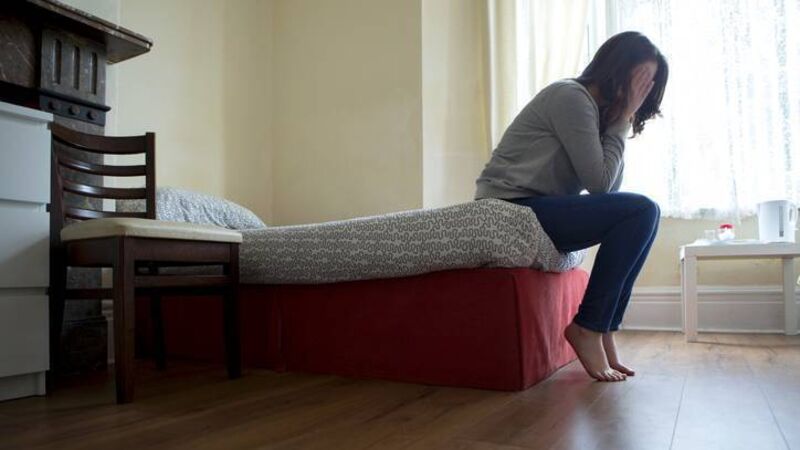
The National Women’s Council said: 'There are over 5,000 children in Ireland’s homeless services, with more than 4,500 women in emergency accommodation. But these figures are just the tip of the iceberg, because the official statistics don’t count women in refuges, or families sleeping on couches.' File photo
The housing crisis is trapping women in domestic violence situations between homelessness or staying with their abuser, according to the National Women’s Council.
The council has made a submission to the Child and Family Homelessness Action Plan, which aims to reduce the amount of time spent in homeless emergency accommodation by children and their families.
The National Women’s Council wants stronger legal protections for women and children in situations of domestic, gender-based, or sexual abuse to be able to remain in the family home.
It says that women seeking to escape domestic violence with their children “are faced with stark choices — often having to choose between homelessness or returning to their abuser”.
After making a decision to leave a situation of abuse, victims are faced with having to move “from one emergency accommodation centre or refuge to another, and face systems — such as the justice, housing, and social protection systems — that do not co-ordinate with each other”.
The council’s executive director, Corrinne Hasson, said: “We know that there are over 5,000 children in Ireland’s homeless services, with more than 4,500 women in emergency accommodation. But these figures are just the tip of the iceberg, because the official statistics don’t count women in refuges, or families sleeping on couches. We simply don’t know how many women and families are in homelessness.
The council's submission outlines how the council’s 2024 research on sex-for-rent exploitation “highlighted the risks faced by women with limited access to safe accommodation, including those fleeing domestic violence and migrant women”.
Senior policy co-ordinator for violence against women, Ivanna Youtchak, said women who are leaving abusive situations “encounter a system with severely limited availability due to high demand, capable of meeting only short-term emergency accommodation needs”.
She added: “Once that immediate crisis period is over, many survivors are left with no long-term housing options. For children already traumatised by domestic violence, instability and moving around between services is profoundly destabilising.
"More must be done to keep women and children in their homes, and in their communities, to stop them from falling through the cracks in the first place.”
Groups such as lone parents, Traveller and Roma women, and those in international protection are particularly vulnerable, as well as people with a disability, according to the council.
The submission says: “Housing insecurity significantly increases women’s vulnerability to abuse and exploitation, while domestic abuse is a primary pathway into homelessness for many women and children.
"For Traveller and Roma women, migrant women, disabled women, lone parents, older women, and members of the LGBTQ+ community, these risks are compounded by intersecting forms of discrimination and structural disadvantage. For these groups, the barriers to accessing safety, support, and secure accommodation are often significantly higher and more complex.”
While the submission welcomes progress made for victims of abuse, it says that policy responses to the plight of women and children will remain fragmented unless the relationship between housing precarity and domestic, sexual, and gender-based violence is not more “explicitly recognised as structurally interconnected and addressed through robust, co-ordinated actions”.
CONNECT WITH US TODAY



Be the first to know the latest news and updates