AI helping to transform breast cancer care in Ireland
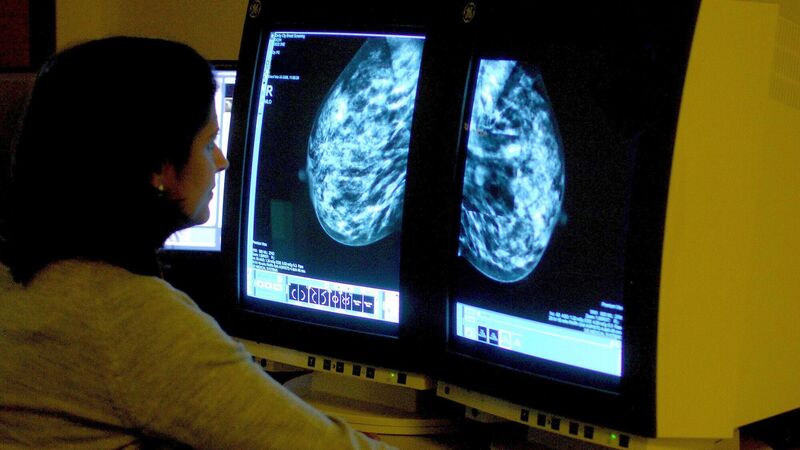
AI is able to improve breast cancer outcomes for patients as the technology can find more early signs of cancer faster than “imperfect” traditional methods.
Artificial intelligence is set to transform Ireland’s breast cancer care, with studies showing it is helping to detect up to 30% more breast cancer cases.
AI is able to improve breast cancer outcomes for patients as the technology can find more early signs of cancer faster than “imperfect” traditional methods.
Breast Cancer Ireland says the findings of two international studies mark “a turning point for precision oncology”, as AI, advanced imaging, and targeted therapies, look set to reshape cancer care in Ireland.
Two landmark studies – the MASAI trial in Sweden and the AI-STREAM trial in South Korea – show that AI used alongside specialist breast radiologists significantly improves cancer detection without increasing false alarms.
Breast Cancer Ireland chair Professor Arnold Hill said the implications of this for patients and the health system are “profound”.
“This is one of the most important developments we’ve seen in breast cancer screening in decades,” Prof Hill said.
“For decades, mammography has been the cornerstone of early breast cancer detection. It’s a powerful tool, but it’s not perfect.
“Some cancers can be challenging to spot on a mammogram, especially in patients with dense breast tissue.
“With increasing demand for screening, many countries, including Ireland, have a shortage of breast radiologists – the highly-trained doctors who read mammograms.
“This puts pressure on the system and can lead to delays in diagnosis.”
The Beaumont RCSI Cancer Centre consultant added: “While AI doesn’t replace clinical expertise – it most certainly enhances it.
“Detecting up to 30% more cancers, while reducing radiologists’ workload by almost half, is a very significant advancement.
“Earlier diagnosis means more targeted treatment, less invasive surgery, and better outcomes for the 3,700 women impacted in Ireland every year.”
In Sweden, the up-to-date results from the MASAI trial, published in 2025, involving over 100,000 women, showed AI-supported screening detected 338 cancers compared to 262 with traditional double-reading (where two radiologists reviewed each mammogram).
As a result, radiologist workload fell by 44%.
Early results from South Korea’s AI-STREAM trial are similarly impressive, showing a 14% increase in detection, again without increasing unnecessary recalls.
The studies also show AI support did not lead to more false alarms or unnecessary recalls.
It instead helped radiologists spot smaller, early-stage cancers that are easier to treat and more likely to result in a cure.
Beaumont Breast Centre consultant radiologist Dr Prof Nuala Healy said: “AI gives breast radiologists an additional pair of expert eyes – prioritising the most challenging mammograms.
“(This helps) detect subtle early cancers, easing routine workload so radiologists can focus on complex patient imaging and procedures”
Meanwhile, a recent survey commissioned by the breast cancer charity, of more than 1500 women attending the symptomatic clinic at the Beaumont Breast Centre, Dublin examined Irish patient’s views on the role of AI in healthcare, and in detection of breast cancer.
Almost half of women agree that the use of AI in healthcare is a good idea.
CONNECT WITH US TODAY



Be the first to know the latest news and updates