State spent €2.8m flying people back to their home countries last year
State spent €2.8m flying people back to their home countries last year

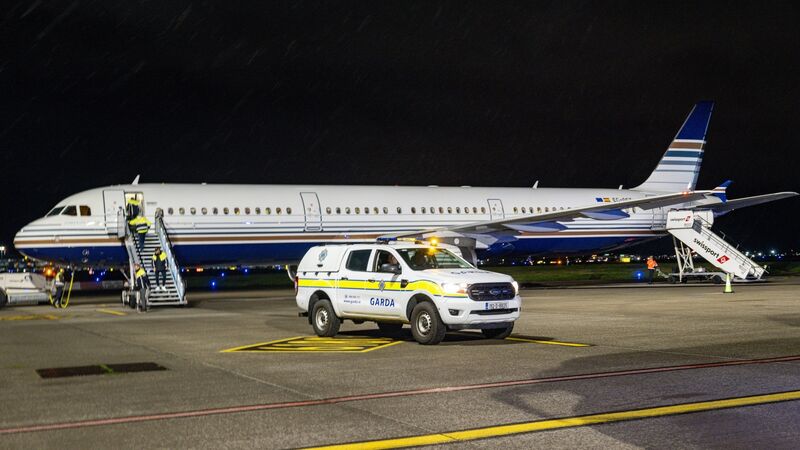
A charter aircraft at Dublin Airport used in the Operation Trench deportation flight last November to which the Irish Examiner was given exclusive access. See 'Inside Ireland's deportation system' below for our report, pics, and video coverage of the largest deportation in the history of the State. Picture: Chani Anderson

Ireland spent more than €2.8m on commercial and charter flights for the removal of illegal immigrants and criminals from the State last year, new figures have revealed.

A total of 205 individuals were returned to their home countries on six charter flights costing almost €1.3m during 2025 — an average of €6,243 per person.


Five of these flights resulted in the deportation of 182 illegal migrants to destinations including Georgia, Pakistan, and Nigeria. One facilitated the removal of 23 EU citizens from the State on grounds of criminality.

A further €1.5m was spent on commercial flights to return illegal migrants to their home countries, according to details published by the Department of Justice.

The figures show the number of deportation orders signed in 2025 almost doubled to 4,700 compared to the previous year, while the number of confirmed departures by individuals subject to deportation orders increased by 88% to 2,111.

Garda vehicles, including prison vans, are driven onto the runway at Dublin Airport as part of Operation Trench. Picture: Chani Anderson

In September, a charter flight to Pakistan carrying 24 failed asylum seekers cost €474,000 — an average of nearly €20,000 per person. A total of 79 gardaí accompanied the deportees.

Last June, 35 people who had been refused international protection travelled on a charter flight from Dublin to Nigeria at a total cost of €324,714. They included 21 men, nine women, and five children.

In response to a parliamentary question by Aontú TD Paul Lawless last week, Justice Minister Jim O’Callaghan said it was a “central priority” that Ireland’s immigration system is “robust and rules-based”.

“Deportations are costly and complex to enforce. It is the preferred option to return people voluntarily and my department has a voluntary return programme to assist people to return prior to the issuance of a deportation order,” he said.

“If a person does not remove themselves from the State following the issuance of a deportation order, they will be removed, and my department has taken action to significantly improve enforcement measures and increase removals.”

Figures published by the department show that the number of deportation orders signed rose by 180% from 2023 to 2024, and almost doubled to 4,700 last year.

Mr O’Callaghan said: “A number of factors impact the costs associated with deportation orders. In particular, the costs for any particular deportation reflect the numbers travelling in each instance, the destination country, and if direct flights are not available the escorts and deportee transit through a hub airport.”

“In some cases, a person may resist deportation and the Garda National Immigration Bureau risk assessment may give rise to the need for additional escorts.” 

The minister noted that his department can reclaim some costs relating to both commercial flights and charter flights used for deportations under an EU fund, but did not specify the proportion of costs that may be covered.

More in this section

Lunchtime News

Newsletter

Keep up with stories of the day with our lunchtime news wrap and important breaking news alerts.

Cookie Policy Privacy Policy Brand Safety FAQ Help Contact Us Terms and Conditions

© Examiner Echo Group Limited