Inaccurate public discourse plays major role in 'widespread' misconceptions on immigration in Ireland
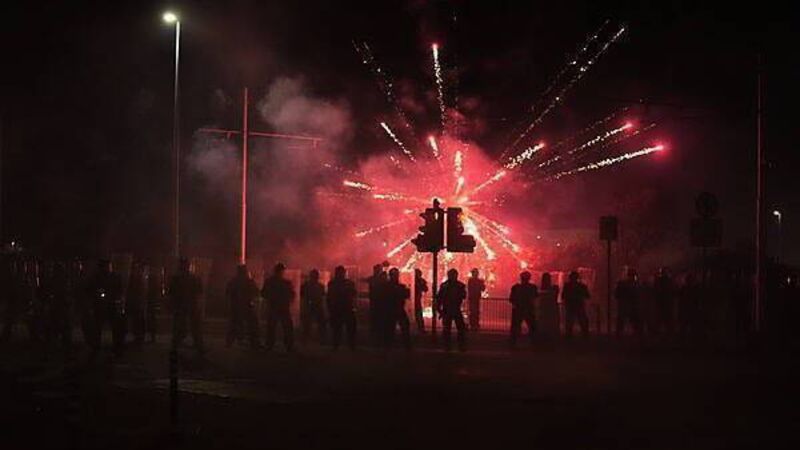
The unrest at Citywest last year. The ESRI report found that 'misperceptions predicted more negative attitudes to immigration'.Â
Misperceptions about immigration in Ireland are “widespread and systematically biased”, as many with negative feelings believe it is happening on a larger scale than it actually is, a new study has found.
Furthermore, factual inaccuracies by public figures about migrants may “distort democratic debate”, increase public vulnerability to misinformation and worsen tensions, according to research published on Thursday.
The Economic and Social Research Institute (ESRI) was commissioned by the Department of Justice to conduct the survey of 1,200 adults which found that people misjudge how much of our population was born abroad, why people come to Ireland, their education levels and employment rates.
“An informed debate about issues like immigration requires shared understanding of the facts,” said Dr Shane Timmons, senior research officer at the ESRI and lead author of the report.
“While most people do not hold negative attitudes toward immigration, those who do tend to strongly underestimate migrants’ economic contribution. In reality, fewer migrants are living in Ireland than people think, and far more come for work and education than people believe.”Â
The ESRI said its study was conducted against a backdrop of increased public discourse around immigration that has been marked by violent protests at buildings earmarked for asylum seekers, increases in racially motivated hate crimes and the spread of online misinformation.
It said that understanding the drivers of attitudes to immigration is important in this context.
It also comes as the Government this week unveiled its new International Protection Bill, which it described as “the most significant reform of Irish asylum laws in the history of the State”, but faced criticism from advocacy groups as “cruel” and “intent on keeping families separated”.
In its research, the ESRI said it did not expect individuals to know precise immigration statistics but wanted to reflect how any inaccuracies in people’s beliefs might relate to their broader attitudes and behaviours towards immigration.
It also did not presume that such misconceptions cause people to feel a certain way towards immigration.
“The purpose of this study is not to advocate for changing attitudes toward immigration for their own sake,” it said. “Rather our aim was to identify systematic misperceptions that can distort democratic debate, increase vulnerability to misinformation and exacerbate social tensions.”Â
It found most study participants overestimated the size of the migrant population in Ireland, putting at 28% the proportion of people having been born abroad compared to official estimates of 19-22%.
They overestimated the number of migrants born outside the EU, UK, and North America, the proportion of the population who are men born abroad and the social housing uptake of migrants.
On the other hand, they underestimated migrant employment rates and third-level education levels, while accurately estimating the same rates for the Irish-born population.
“Misperceptions predicted more negative attitudes to immigration,” the ESRI found. “Overestimating the share of recent migrants seeking international protection and underestimating the share of recent migrants coming for work and education had the strongest links with negative attitudes.
The researchers concluded that misperceptions of immigration are not random and public discourse plays a significant role.
It said the findings suggest that the amount of attention given in public discourse to subgroups of migrants like asylum seekers may lead the public to believe that these groups are more representative of the migrant population than they are in reality.
“Selective amplification of exceptional or politically charged cases, without providing appropriate context, may mislead the public and contribute to misperceptions,” it added. “This evidence further supports efforts for greater accountability of online platforms that fail to counter disinformation.”