Food poverty does not stop at 12, committee hears amid calls to expand hot meals
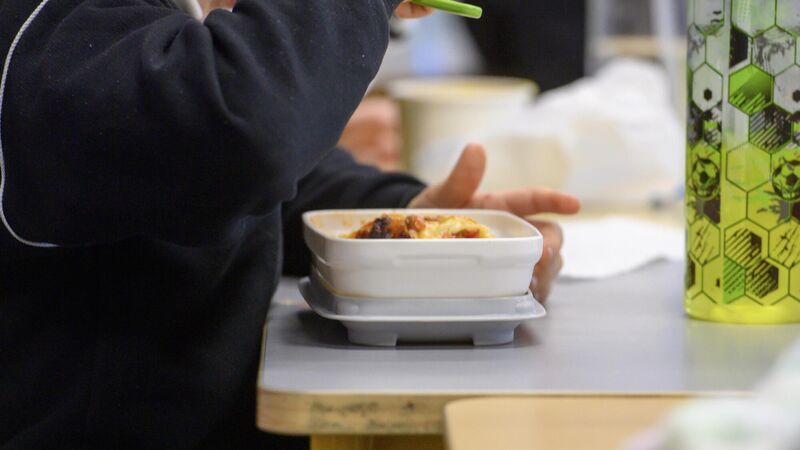
The scheme, which makes half a million children eligible for hot school meals, has a budget of €300m. Picture: Dan Linehan
Food poverty does not end when a child turns 12, and free hot school meals should be extended to children in secondary school, an Oireachtas committee heard.
Paul Crone, director of the National Association of Principals and Deputy Principals, told the Oireachtas Education Committee that the lack of hot meals when children move from primary to secondary school causes disappointment and frustration for students and parents alike.
“Adolescents' nutritional needs increase significantly during this developmental stage,” he said.
“Yet the current structure abandons students precisely when their caloric requirements grow and their capacity to concentrate through long academic days becomes paramount. The policy decision to ignore the DEIS programme as the means of expanding hot meals, compounds this difficulty.”
The committee also heard that administrative and procurement pressures on schools are making the scheme “unsustainable.”
Concerns about hot school meals came to the fore at the start of the most recent school year, when thousands of children were left without lunches as suppliers said changes to the programme had made provision to small schools financially unviable.
The scheme, which makes half a million children eligible for hot school meals, has a budget of €300m.
In the Programme for Government, the coalition committed to beginning the rollout of meals to all secondary schools over the lifetime of the Government, but it has yet to make any announcement a year after its formation.
The Catholic Primary Schools Management Association told the committee that the scheme places a significant administrative burden on principals that needs to be addressed.
“In the short term CPSMA believes a grant should be made available to schools to assist with the administrative burden of procurement for the free meals scheme,” its general secretary Seamus Mulconry said.
“In the longer term CPSMA believe the Department of Social Protection should centralise procurement and issue regional tenders with a public service obligation to supply smaller schools as part of the contract.”
Witnesses also raised concerns about the level of food waste generated by the scheme.
Mark McDonald, director of schools with the Dublin and Dún Laoghaire Education and Training Board, told the committee that schools must consider how to minimise uneaten food.
“In addition, there is a tension between offering a balanced nutritional and evidence supported diet and the sometimes fickle eating preferences of teenagers,” he said.
“The actual menu of food provided goes a long way to addressing this. Schools have been innovative in using surplus food, for example distributing extras during the lunch break or offering it later in the day as additional food to a homework club or study club.”
The National Association for Boards of Management of Special Education said evidence from schools shows food waste increases when meals fail to align with pupils’ sensory preferences, cultural expectations or individual needs.
“Schools also report that, when account is taken of food costs, packaging, transport and staff time for preparation and distribution, simpler food prepared onsite by a dedicated staff member can be both more cost-effective and more acceptable to pupils,” it added.


CONNECT WITH US TODAY



Be the first to know the latest news and updates