New public service broadcaster should be set up in event of united Ireland, researchers say
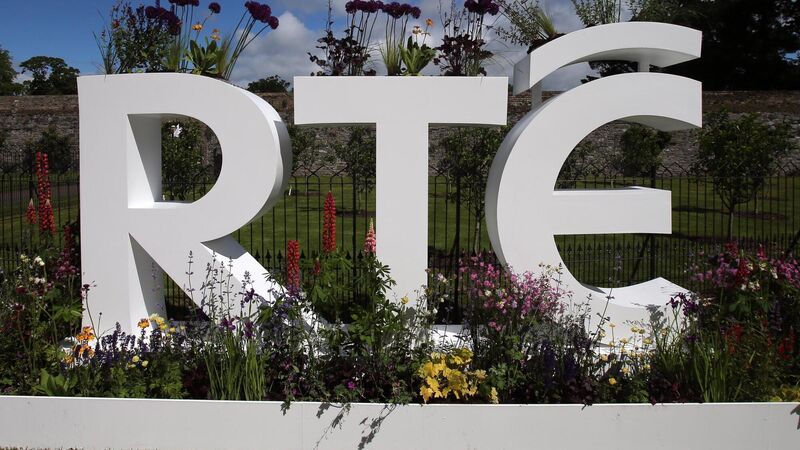
The report examined whether BBC Northern Ireland would continue, whether RTÉ would take over, or if a new body should be set up in the event of a united Ireland.
A new public service broadcaster should be considered in the event of a united Ireland, researchers have said.
Such a new model would involve hubs in 10 areas across the island and draw on the assets, infrastructure and people of RTÉ and BBC Northern Ireland, the researcher from Ulster University and DCU argued.
An alternative media provision also had merit, the joint report said, where an all-island platform — an iPlayer Ireland — could be established.
The report examined whether BBC Northern Ireland would continue, whether RTÉ would take over, or if a new body should be set up in the event of a united Ireland.
The authors concluded replicating the RTÉ/BBC funding structure would cause difficulties.
"We argue that achieving buy-in and support from the two main communities within NI will be more easily won if institutions are created afresh, rather than simply grafting on northern parts to their southern counterparts," it said.
It said maintaining the status quo was "most likely a non-starter", because the region of Northern Ireland would be outside the British TV licence framework in a reunified Ireland.
It said TV licences that fund the BBC are not levied anywhere outside of Britain, but added it was also unlikely audiences in the North would lose access to BBC radio and television programmes.
Instead, it said a new public service media in the event of Irish unity should be considered, provisionally called Public Media Ireland.
It said regional coverage would be "crucial" and suggested 10 regional journalism hubs — in Belfast, Derry, Enniskillen, Newry, Athlone, Galway, Limerick, Dublin, Waterford and Cork — that would cover cultural stories as well as news.
It said such a new media organisation should be diverse and "decentralised", and based on a sustainable funding system.
The report warned of funding issues and TV licence fee evasion rates at RTÉ and the BBC, as well as political interference if direct funding was introduced, and recommended a new media group be funded like the Finnish public media model.
This sees people pay 2.5% of their "total earned income and capital income" above €14,000, but the maximum payment is €163 per year.
The research, compiled by academics from Ulster University and Dublin City University, acknowledges Irish reunification is not imminent or inevitable.
An author of the report, Dr Phil Ramsey from Ulster University, said the research "kickstarts a debate" on what the future of media might look like across Ireland.
Dr Dawn Wheatley from Dublin City University, said: "It is impossible to say with certainty what might happen to public media should the reunification of Ireland ever occur.
"But in this report, we suggest that public broadcasters play a vital role within democracies, and so they should not be overlooked in wider debates."