HSE CEO advises people to avoid emergency departments in areas if at all possible
HSE CEO advises people to avoid emergency departments in areas if at all possible

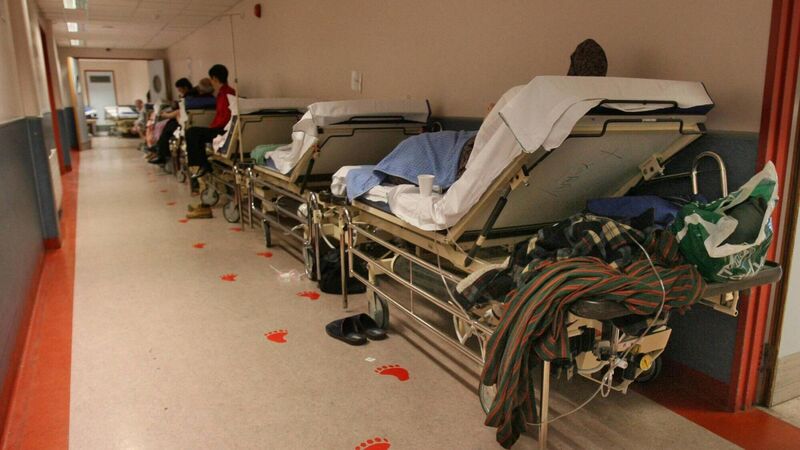
More than 150 people were stuck on trolleys for 24 hours-plus in overcrowded hospitals as they waited for a bed on Monday, including 28 people over the age of 75. File picture

More than 150 people were stuck on trolleys for 24 hours-plus in overcrowded hospitals as they waited for a bed on Monday, including 28 people over the age of 75, amid worsening conditions in emergency departments.

The Irish Patients Association also warned of a “systematic patient safety risk” linked to hospital waiting lists, estimating that nearly 118,000 patients are waiting longer than a year for treatment.


HSE chief executive Bernard Gloster said hospitals in Cork and Kerry are facing “significant pressures” from overcrowding.

“We are seeing over the past eight days, compared to the same eight days last year, a national increase in attendance at emergency department of about 18.5%,” he said.

“In real terms that’s about 700 extra people a day.”

Yesterday, HSE data showed 523 people on trolleys and a further 821 on temporary surge beds, usually used for other care. It means 1,344 people were unable to be given a bed due to overcrowding.

While 16 hospitals were “in the green” for manageable levels of overcrowding, Mr Gloster advised people in many areas to avoid emergency departments if they can.

He put the surge in activity down to high flu numbers and more people with fractures linked to the icy weather.

I want to apologise to people for any delay being experienced or any discomfort in some of our locations due to the sheer volume of demand and pressure on those locations.

Separate figures from the Irish Nurses and Midwives Organisation (INMO) showed 759 people waiting on trolleys or chairs for a bed.

This included 63 in Cork University Hospital, 33 in Tralee, and 19 in Clonmel. The Mid-west faced severe pressure, with 125 people waiting for a bed in Limerick, 15 in Ennis, and three in Nenagh hospitals.

INMO general secretary Phil Ní Sheaghdha was critical of the use of surge beds as a management tool, saying it masks the true depth of overcrowding.

“Patients being treated in these unstaffed areas are often without access to basic equipment such as oxygen and suction in totally inappropriate spaces within our hospitals,” she said .

Ms Ní Sheaghdha also called for more information from the HSE on “what measures it is taking to curb the worst of this entirely predictable overcrowding crisis, particularly in the west, north-west, mid-west, and south-west”.

Meanwhile, the Irish Patients Association called for action on waiting times for procedures. It warned that while funding increased to a record €420m for a system to tackle waiting lists, it “didn’t reach” many patients.

The association said 117,595 patients are now waiting over 12 months for a procedure, an increase of 15,298 patients, or 15%.

It highlighted growing outpatient lists at Ennis, Nenagh, and the South Infirmary in Cork among those of “high concern”. University Hospital Waterford was in the same category, although marked as “slightly improved”. Association chairman Stephen McMahon said: 

When nearly 118,000 public patients wait over 12 months for care, the scale creates systemic patient safety risk.

He warned these long delays can lead to patients’ illnesses worsening or potentially a delayed diagnosis.

The association identified sharp rises in outpatient waiting times, including for dermatology, orthopaedics and rheumatology.

In gynaecology, its analysis showed 90 fewer women waiting longer than a year, but 6,668 patients were added to waiting lists.

In children’s care, it said the overall numbers are falling, but more children are waiting longer than 12 months for specialties, including some surgeries and dermatology.

The data was generated from the National Treatment Purchase Fund.

Commenting on RTÉ Six One On Monday, Mr Gloster said: “There are two critical factors to waiting lists (…) It's the amount of people waiting and the time they're waiting, the time waiting is critical. 

"And what I want to say to people this evening that stark as those numbers are, 82% of people who were on waiting lists at the start of January 2025 were not on them at the end of December 2025. That's how fast the turnaround is. The focus has been on reducing long waiters and increasing the amount of people who are being met within the Sláintecare timeframe."

The Department of Health also defended progress on tackling waiting lists.

"The multi-annual Waiting List Action Plan approach was initiated in September 2021 to sustainably reduce and reform hospital waiting lists and waiting times, " a spokesman said. "Under this approach, the health service has made substantial progress, including a reduction of 58% — or 164,000 fewer patients — waiting over 12 months from September 2021 and December 2025."

  • Niamh Griffin is Health Correspondent.

x

More in this section

Lunchtime News

Newsletter

Keep up with stories of the day with our lunchtime news wrap and important breaking news alerts.

Cookie Policy Privacy Policy Brand Safety FAQ Help Contact Us Terms and Conditions

© Examiner Echo Group Limited