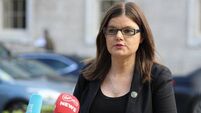
Cost-of-disability payment should be in place by next year's budget, minister says
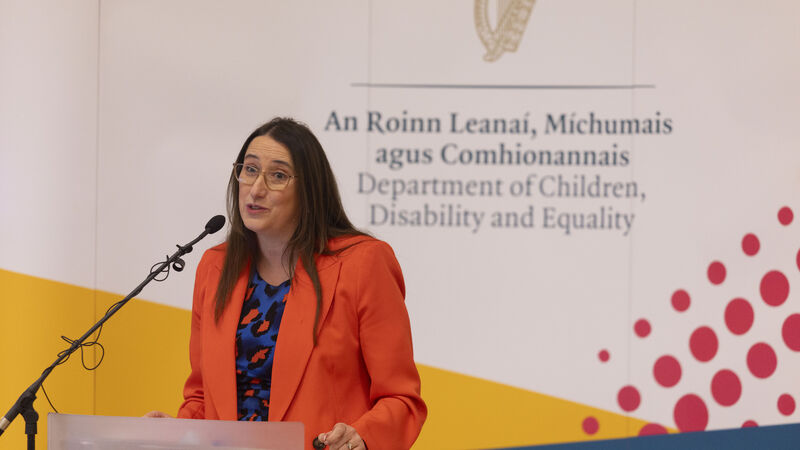
Cost-of-disability payment should be in place by next year's budget, minister says

Disabilities minister Emer Higgins said she expected social protection minister Dara Calleary to bring forward a plan for the payment in the first quarter of 2026, and she was 'hopeful' it would be in place after next year's budget. Picture: Sam Boal/Collins Photos

A new cost-of-disability payment should be in place by next year's budget, the new disabilities minister has said.

Emer Higgins told the Irish Examiner she expected social protection minister Dara Calleary to bring forward a plan for the payment in the first quarter of 2026, and she was "hopeful" it would be in place after next year's budget.

The Government was criticised in the wake of the last budget announcement by disability groups, which said the removal of one-off supports and the disability support grant left disabled people worse off by up to €1,400 a year.

A permanent annual cost of disability support payment is committed to in the programme for government and Ms Higgins said the introduction of the payment was her priority for 2026 in tackling the cost of living.

She said the payment was not going to happen overnight because the practicalities of it had to be teased out. 

"What would that payment look like? What rate would it be set at? How would you qualify for it? How would it be paid? And monthly, quarterly, only in the winter months, as some of the opposition parties are calling for, they're all questions that need to be answered on it."

Assessment of needs

Ms Higgins, alongside children's minister Norma Foley, recently announced changes to the assessment of needs regime. She rejected the notion that asking the Department of Education to undertake an examination of phasing out the assessment as a requirement for accessing additional needs classes was an example of siloed working.

"I think it's a prime example of how we're breaking down silos. We now have the Department of Health, we have the HSE, we have my own department, and we have the Department of Education now all coming together to say, right, how can we help? How can we fix this? And I suppose that's what the Cabinet committee on disabilities is all about."

On staffing, Ms Higgins says the initial priority was to create roles in order to staff them, with an aim of 150 Children's Disability Network Teams (CDNT) places to be created and filled in 2026.

"We'll be recruiting over 1,000 people this coming year, and we'll be recruiting 150 people to work in our CDNT teams. There have been vacancy rates across the country and they differ in different teams, but this is something that we definitely need to address. We operate in a tight labour market.

"We know that these are skilled, qualified professionals we're looking to attract. So it is a challenge, absolutely, but it's something that we're definitely really committed to addressing, and we're looking at it from a number of perspectives."

She said there would be a doubling of college places for courses in psychotherapy, speech language therapy, occupational therapy and for the social care profession. 

"Then what we're doing is taking some of those trainees into the department on student placements, on internships. We also have a new bursary programme where we're financially supporting students who then commit to working in our CDNT teams on graduation."

"We're also attracting talent in from abroad. So we're working with an international level to think we attract more psychologists, speech and language therapists and occupational therapists in particular, into our teams."

Ms Higgins said that those 150 CDNT hires would be prioritised in the most under-staffed areas.

x

More in this section

Lunchtime News

Newsletter

Keep up with stories of the day with our lunchtime news wrap and important breaking news alerts.

Cookie Policy Privacy Policy Brand Safety FAQ Help Contact Us Terms and Conditions

© Examiner Echo Group Limited