Efforts to implement UN disability policy 'window dressing' as disabled people face many challenges
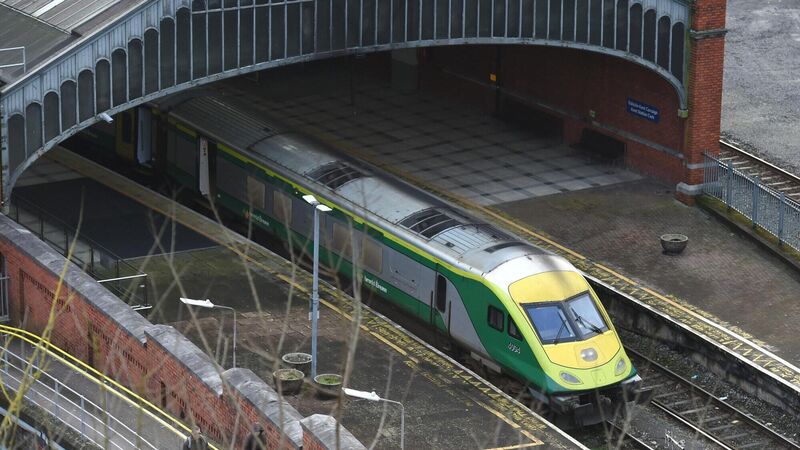
Committee heard of train station bridges without railings, a lack of audio announcements at many stations, and overcrowding on trains. Picture: Larry Cummins
Efforts to implement crucial disability policy from the United Nations have been described as “window dressing” at the Oireachtas disability committee.
The session was a joint hearing with the transport committee and heard of train station bridges without railings and a lack of audio announcements at many stations.
Ireland ratified the United Nations convention on the rights of persons with disabilities in 2018. This means a formal pledge was made by the government to change or update laws and policies.
Dr Robert Sinnott, Voice of Vision Impairment co-ordinator, criticised what has really been achieved since then, especially in the vital area of access to transport.
“When Ireland ratified the UNCRPD, there was a bit of a celebration but there was a sense for a lot of people of business as usual, there was window dressing,” he said.
He called for more consultation on road safety and other transport issues.
Mena Fitzpatrick, also with Voice of Vision Impairment, shared examples of the challenges.
“Mary from Kerry trying to plan her journey, the internet not being accessible, and when she tries to ring to find out about it, it takes so long that she gives up on it,” she said.
In this case, Mary was unable to book assistance or plan her journey from home to her destination.
Some services, such as trains for example, require advance booking if someone needs help with wheelchair access or other supports.
Ms Fitzpatrick described two train stations with new accessible bridges.
However, she said: “They have decided because of health and safety to take hand-rails off these bridges, which is a massive, big deal not only for ourselves. It is dangerous not having a rail to hold onto.”
She also highlighted general problems with announcements for bus and train times or changes at stations.
Sometimes they are not working at all or the wrong stations are announced, which can cause problems for blind people.
“Overcrowding is another problem,” she said.
In her own case, it can be “overwhelming” trying to get off the train, she explained. She lives in Gorey and said she has to rely on a train which is regularly overcrowded.
“We need public transport,” she said. “The transport is getting better but there’s a lot to do.”
The committee also heard from the Irish Wheelchair Association.
Members of the DPO network, an alliance of five national disabled persons organisations, also shared their frustrations.