Ireland needs 'significant shift away from private car use' to meet climate commitments, report says
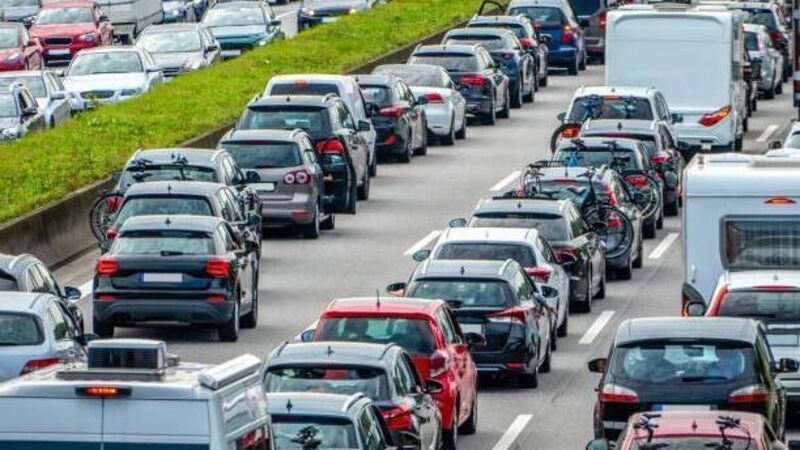
Transport remains 93% fossil-fuel powered, SEAI report found.
Ireland has yet to “break the link” between fossil fuels and our economic development, and needs a “significant shift away from private car use” to meet 2030 climate commitments, a key State body has warned.
Halfway through what it called a “crucial” decade, the Sustainable Energy Authority of Ireland said while Ireland was making progress in reducing its emissions even as our population increases, it must do more of what is already working across a range of sectors.

“We're now at the end of Ireland's first-ever carbon budget,” SEAI chief executive William Walsh said.
“We are making progress while also growing our population and economy — but we need to pick up the pace and do a lot more.”
In its Energy in Ireland 2025 report, the SEAI said Ireland would overshoot its first carbon budget — which is the total amount of greenhouse gas emissions allowed under a specific period — and this will mean Ireland is playing catch-up heading into its second carbon budget through to 2030.
In the report, the SEAI found:
- Energy-related emissions are down 16% since the baseline year of 2018, despite a 10% growth in population since then;
- Ireland’s energy-related emissions are only falling by an average of 2.7% a year, however, against a target pace of 5%;
- Data centres have accounted for 88.2% of the increase in Ireland’s electricity demand since 2015, while demand from other sectors has remained relatively flat;
- Transport remains 93% fossil-fuel powered, while 89.8% of heat demand was met by fossil fuels;
- Energy emissions have reduced by 16% since 2018, but stronger action is needed to meet EU targets.
In the case of transport, private car use was the leading source of transport energy demand last year, while aviation was in second place. Data in the year to date suggests deliveries of jet kerosene for aviation will be higher in 2025 than the previous year.
Data centres accounted for 21.2% of all electricity demand in 2024. This is projected to rise in the coming years. The SEAI noted that on a Europe-wide level, data centres accounted for 3% of the EU’s electricity demand showing Ireland as an outlier.
Last week, a new policy announced by the energy regulator cleared the way for future data centre connections to the grid in a move welcomed by the Government.
For Ireland to meet its binding obligations in terms of emissions reductions, it will need to accelerate the progress it has made in renewable energy sources in the years to come.
The SEAI said these reductions were achieved despite population growth of 10%, increased electricity demand of 18%, and a growing economy.
Progress was made in areas such as solar power atop rooftops, wind energy, and making homes more energy efficient.
While we are bound by legislation to take measures to achieve these goals, the SEAI said society would benefit from them in the form of warmer homes, cleaner air and better public transport.
Mr Walsh added: “The good news is today's results show what is possible. We're keeping the lights on using cleaner energy — 41% of our electricity now comes from wind, solar, and other renewables. We're making progress, and by accelerating delivery — in grid investment and offshore wind infrastructure in particular, we can do a lot more to secure affordable energy for homes and businesses across Ireland."
Read More
CLIMATE & SUSTAINABILITY HUB