‘Completely shut down’: Woman shares how family secrecy around suicide shaped her life
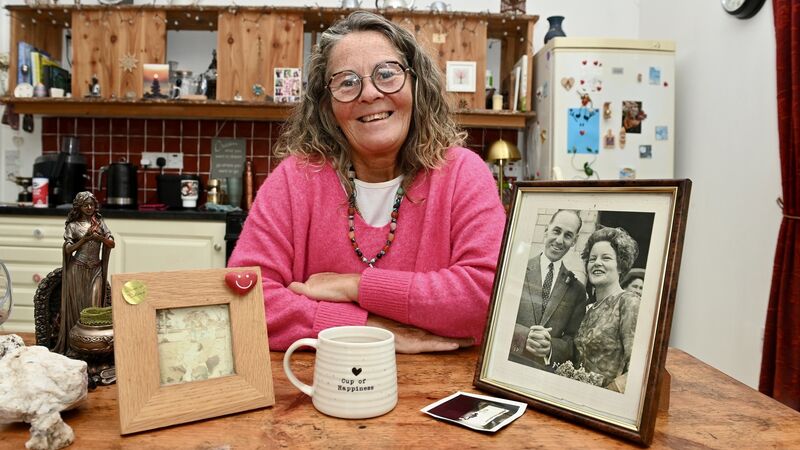
Mary Casey, who lost her father to suicide when she was aged nine, with a photo of her parents Richard and Kathleen Casey on their wedding day. Picture: Larry Cummins
It was during a family gathering that Mary Casey learned the painful truth behind her father’s death after years of believing he had succumbed to a heart attack.
Then aged 21, she was left reeling after a cousin casually questioned whether she knew her dad Richard’s death was a suicide.
From the age of nine, Mary had been told that her dad died of natural causes.
The shocking news left Mary with more questions than answers.
She recalled thinking it was strange that her father had passed away in a hotel room but refrained from asking or even mentioning his death.
Decades on, she has learned to come to terms with the trauma of such a complicated grief, with the help of suicide workshops run by Cork couple and psychotherapists, Brendan and Eileen O’Brien.
She is now speaking out about her battle with grief to mark World Suicide Prevention Day which is marked every year on this date, September 10.
Mary is one of many who participated in the groups which incorporate the family constellation method.
The approach, which uncovers unconscious trans-generational patterns and dynamics within family systems, was initially developed by Bert Hellinger.
It involves the representation of different family members as a means to gain insight into hidden dynamics to improve generational mental health.
“I think somewhere deep inside I knew,” Mary said of her father’s suicide.
“Even at nine years old I thought it seemed a bit odd that someone would die in a hotel bedroom on their own. However, I was never able to bring myself to think about him.
"When my cousin asked me if I knew my father died by suicide I felt like the ground had opened up and swallowed me.
"She just blurted it out after a few drinks. It was at a family gathering so I had to smile for the rest of the evening as everybody chatted. I never told my mother that I knew. I still couldn’t talk about it.”
There were times in Mary’s life when the pain felt unbearable.
“The only time I had to acknowledge my dad’s death was on his anniversary every year on November 18. It was the one day where something about my dad would have to be mentioned.
"I had to go to mass on those mornings to mark his anniversary. I’d go in my uniform and be late for school which always embarrassed me. It was uncomfortable. It was painful, but I could not find a way out.”
She explained that suicides can occur even in the most loving of families.
“I was an only child. My mum and dad met late in life. When they married they were very much in love. My parents both adored me so when my father died, mum definitely wasn’t going to tell me how it happened.
"The minute she told me he was gone I almost physically felt this huge wall shuttering down around me. For 20 to 30 years I was completely shut down and trapped as a nine year old. You might say that, chronologically, I grew up. I became a teenager, and I had boyfriends and went to school. In my adult years I got a job in RTÉ but I was still very much trapped and very much shut down.”
The Dublin native, who now lives in Drimoleague in West Cork, opened up about the secrecy that existed around suicide when she was a child.
“When I was nine, suicide was not talked about. I remember we had we had to sell our house after Dad died and while it was a lovely place, our new home was much smaller and much colder.
"Nobody judged my mother but it was very hush, hush on our road when it came to light that a neighbour has taken his own life. Back then it wasn’t spoken about. When it was, people referred to it using the horrible term 'committing suicide', whereas now things are so different.”
In hindsight, Mary wishes she had been told the truth about the nature of her father’s death.
“I think every child should be told the truth but in an age appropriate way. Every parent knows how much their child can really handle. I’m a firm believer that when a child asks the question you should answer truthfully.
"I have no experience of feeling suicidal, so I can't speak from that perspective but children definitely need more answers.”
She spoke about how suicide workshops facilitated by Brendan O’Brien and his wife Eileen offered her hope and a means to move forward.
“When I heard that he was running free workshops for people bereaved by suicide and with suicidal ideation I signed up straight away. Soon as I started them I knew this was where my healing was.
"It smashed the wall that had shuttered down in front of me after being told about my dad’s death. I can honestly say that I could talk for Ireland about my dad now. My kids know all about their granddad.
"I never blamed him for what he did. There is no blame at all and nothing but unconditional love in our family.
Mary is now able to look back on the short time she had with her father with fondness.
“I remember more the warm feeling and the love more so than the specific memories. It’s funny because the one clear memory I have of him is me asking him how he knew which sock went on each foot. He had to explain to me that it didn’t matter, you just put on whichever one you saw first. It’s funny the things that stick in your memory.”
Meanwhile, Nuala Burke from Bishopstown in Cork is still reeling from the death of her son who lost his battle to mental health eight years ago.
The father of one, who lived in Australia, was aged 37 when he died.
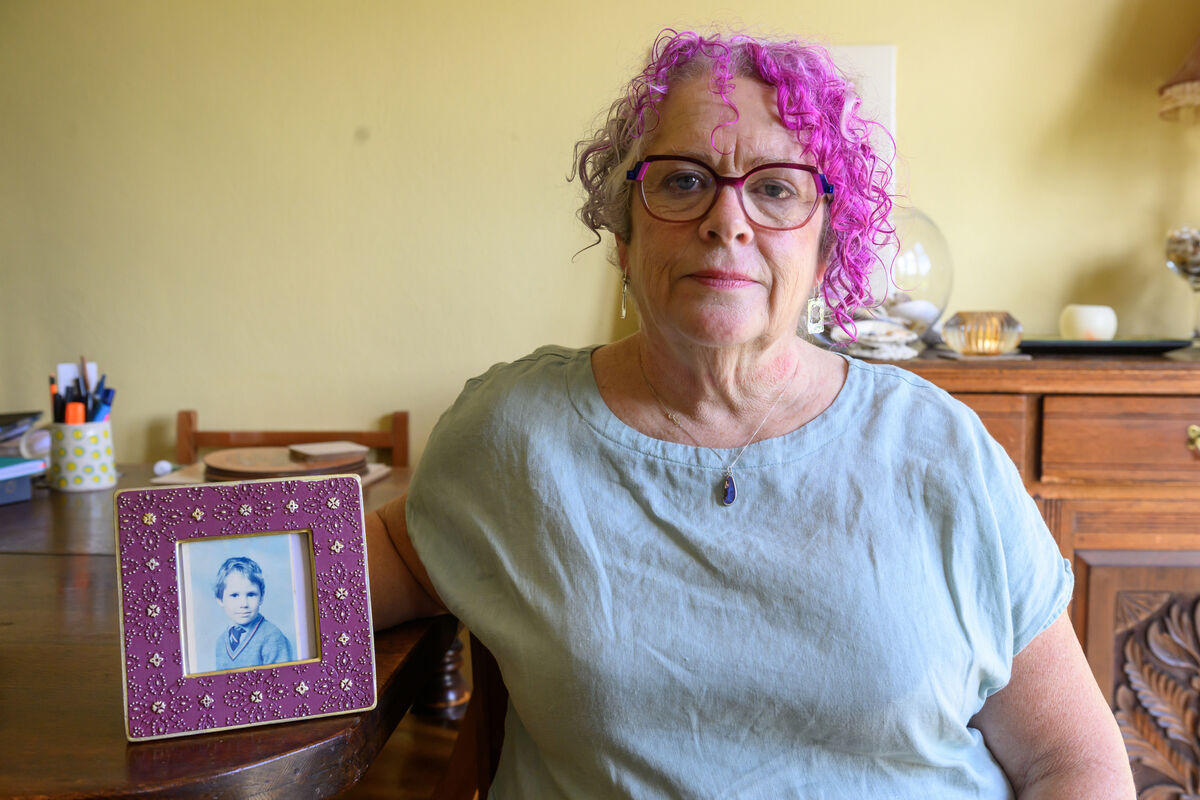
“Steve was lovely, funny and talented,” Nuala told the Irish Examiner.
“He had wonderful friends who I’m still in touch with today. Steve was very loved. If love could stop this there would be no suicides. He was a chef and a DJ who loved music, just like his dad. We had a lovely relationship.
"I still talk to Stephen. In my heart that relationship continues."
She recalled how the death of her son was overshadowed by shock.
“I had to ask somebody, not terribly long ago, who had called me to tell me what had happened because I couldn’t remember. I can’t recall the phone call but that’s the power of shock. I had my concerns that something like this might happen so it shouldn’t have been a bolt out of the blue.
"However, I found myself frozen in shock. I thought I would be able to cope because I had lost my husband early on in life. When that happened I cried every night for a year but with Stephen it was different.
"I didn’t have the relief of tears because I had been frozen in shock for so long. I was just hoping that during his life he knew how loved he was. Sometimes I think that maybe he didn’t.”
The Cork woman is keen to raise awareness of the issue.
“I often describe suicide as a kind of perfect storm. There's never any one simple reason, even when it might appear that there is.
"I’m lucky because I am surrounded by wonderful people. There was one time where somebody commented to me that suicide is a selfish act. I’ll never forget the rage I felt but this was a person who was very kind normally.
"I think they were just thinking out loud. This comment just highlighted to me the work that still needs to be done in raising awareness of suicide. I think my son had depression at the time but what really killed him was human distress.
"We need to talk about this more because this is part of the struggle of being a human being in the world.”
She explained what motivated her to attend the workshops facilitated by Brendan and Eileen O’Brien.
“I think that what Brendan and Eileen do in terms of addressing the intergenerational stuff and the importance of prevention is really valuable. Really I’m doing this for my grandson.
"He lives in Australia and has no idea about what I’m doing in the workshops but I have no doubt this continues to impact him and I want to be able to support him as best I can.
"My own feeling is that Steve had his issues in life and that he was carrying stuff from previous generations as well which is very much the theme of Brendan and Eileen’s workshops.”
Brendan and his wife Eileen both served as lecturers on MTU’s degree course in Counselling and Psychotherapy in MTU. Brendan has also worked with many young people over the years as a school principal.
"The mental health advocate felt compelled to help people struggling with the stigma of suicide after the death of his aunt by suicide back in 1977. He believes that intergenerational trauma can often play a part in depression and suicide ideation.
“In my time if a girl got pregnant and was told not to darken her family’s doorstep again she was excluded from that family.
"That in turn has a negative impact on the system and Hellinger believes that someone else later in the system will carry the pain of the exclusion.”
Brendan dedicates his work to a number of children he worked with in schools and educational settings who went on to take their own lives.
“I remember each of them fondly,” he says.
“I always include them and think of them in all the work we do around suicide.”
CONNECT WITH US TODAY



Be the first to know the latest news and updates