Dead elephants and feral sea lions: how poisonous algal blooms harm the planet

One of many elephants that died in Botswana’s Okavango delta in 2020. The cause was found to be toxic algal blooms poisoning water holes. Photo: National Park Rescue/AFP/Getty
Before the elephants collapsed, they walked in aimless circles. Some fell head first, dying where they stood moments earlier; their carcasses scattered near watering holes across the Okavango delta. The unexplained deaths in May 2020 alarmed conservationists. By July, at least 350 elephants had died and nobody knew why.
“The animals all had their tusks, so poaching was unlikely. A lot of them had obviously died relatively suddenly: they had dropped on to their sternums, which was indicating a sudden loss of muscle function or neural capacity,” says Niall McCann, director of the conservation group National Park Rescue.
Nearly five years later, in November 2024, scientists finally published a paper indicating what they believe to be the reason behind the deaths: toxic water caused by an algal bloom.
A sudden shift between dry and wet conditions in 2019 and 2020 created perfect conditions for cyanobacteria that release toxins lethal to the elephants, although the researchers could not make definitive conclusions as samples were not taken quickly enough in 2020 due to the pandemic.
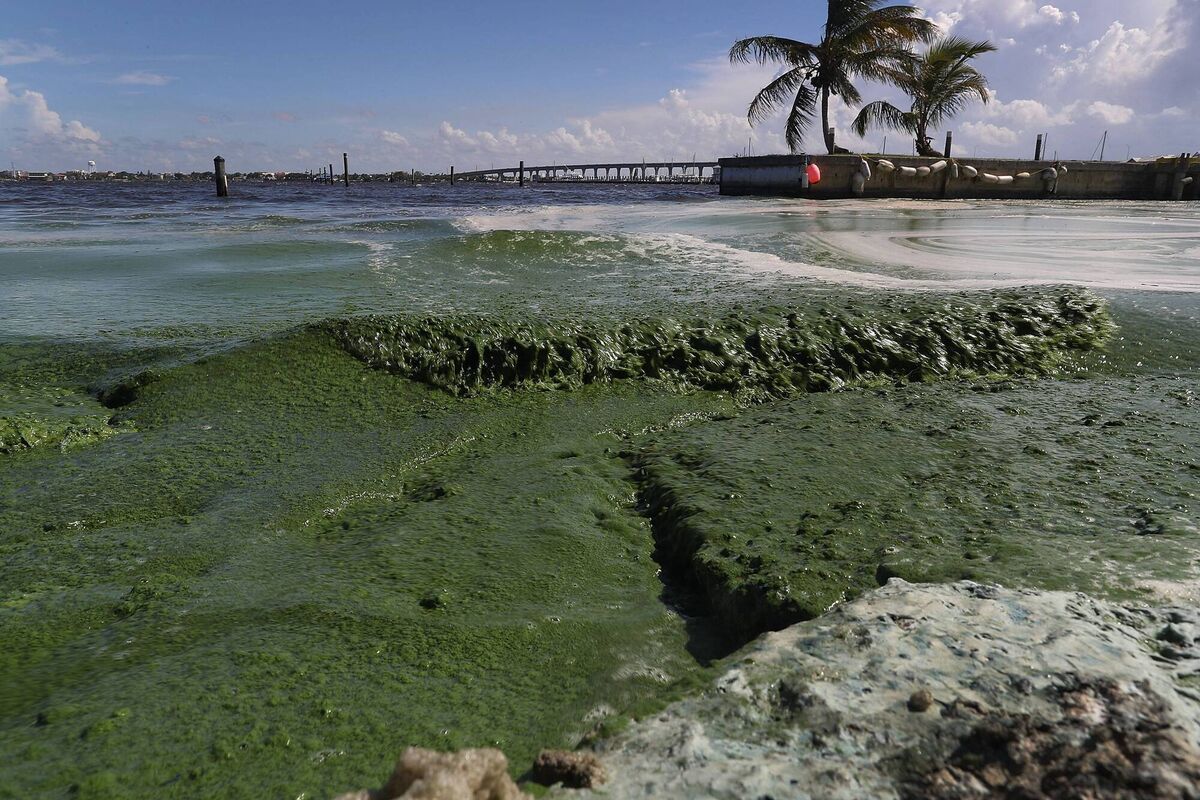
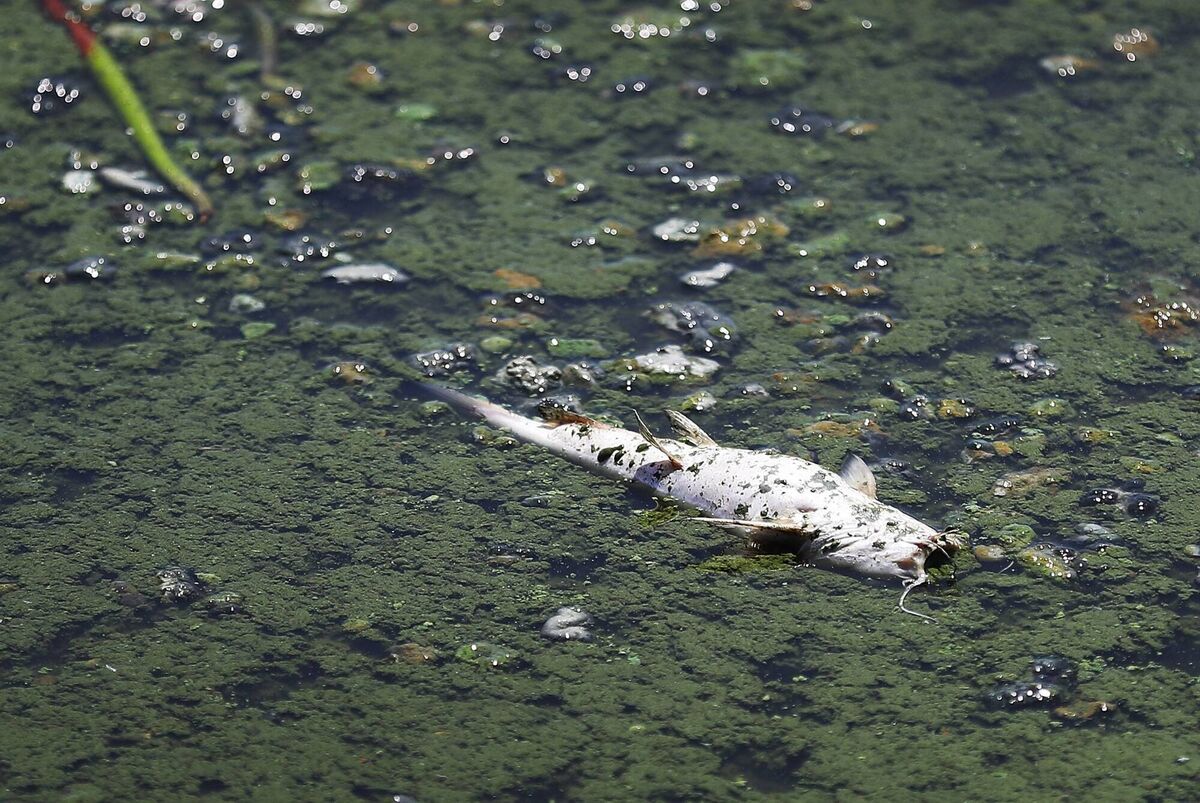
“Blooms” are a rapid increase in the amount of algae, often occurring in shallow, slow-moving warm water. They can transform a sea, lake or river into a mass of green, yellow, brown or even red, sometimes for several weeks. Not all blooms are harmful – many sustain important fisheries.
But sometimes algae forms such a thick layer that it blocks out sunlight in critical habitats; others can release harmful toxins. When the algae die, they rapidly deplete oxygen in water – often creating “dead zones” where few fish can survive.
As the Earth warms, harmful algal blooms are on the rise – even creeping into polar waters. They are driven by a mixture of pollution from agriculture, run-off from human waste and, increasingly, global heating – sometimes with dramatic consequences for wildlife and humans.
As they spread, they are changing the colour of the world’s lakes, rivers and oceans. Nearly two-thirds of all lakes have changed colour in the past 40 years, according to a recent study.
A third are blue – but as temperatures warm, they are likely to turn a murky green or brown, other research has found. The planet’s oceans are turning green as they warm, a result of absorbing more than 90% of excess heat from global warming.
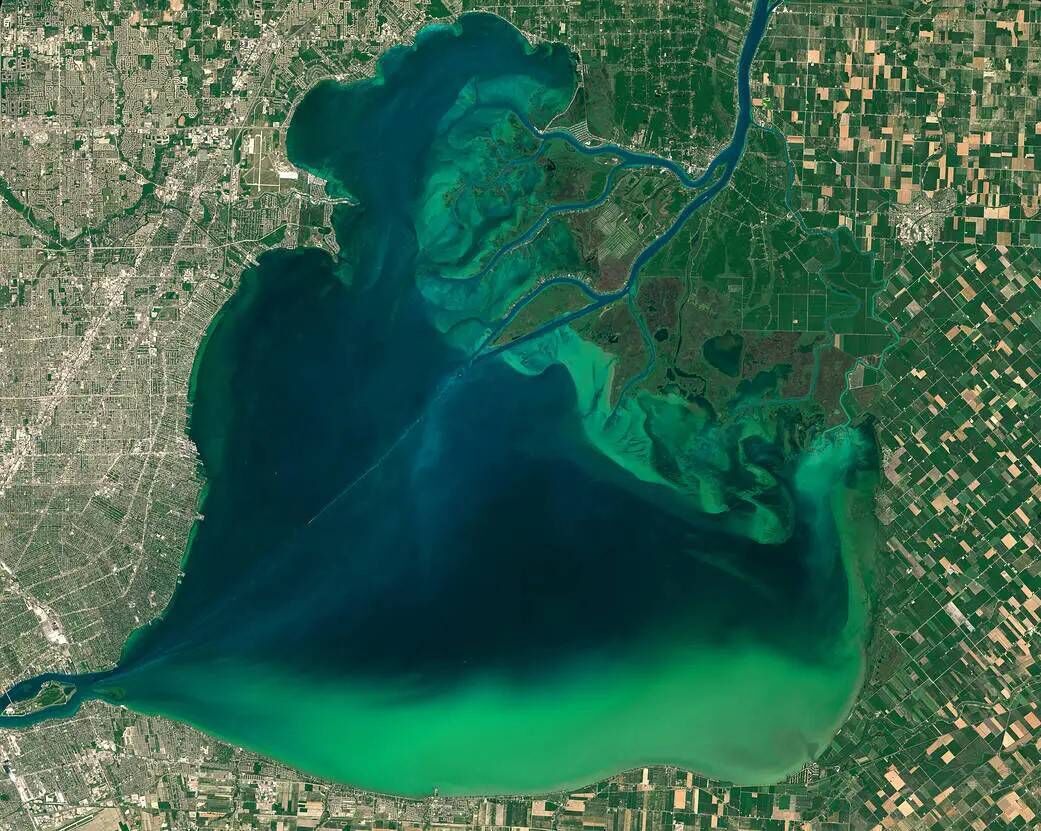
At sea, the size and frequency of blooms in coastal areas has risen by 13.2% and 59.2% respectively between 2003 and 2020, according to a 2024 study.
In freshwater systems, blooms became 44% more frequent globally in the 2010s, according to a 2022 global assessment of 248,000 lakes. The rise was largely driven by places in Asia and Africa that remain reliant on agricultural fertiliser. While progress has been made in North America, Europe and Oceania to stabilise blooms, the climate crisis has driven their resurgence in some freshwater systems.
The fertilisers that people use to grow plants – including reactive nitrogen and phosphates – also supercharge algal growth. As they are washed off fields and pour into water bodies around the world, they significantly alter how ecosystems function.
“Humans are today loading more reactive nitrogen into the biosphere than the natural cycle [is],” said Johan Rockström, director of the Potsdam Institute for Climate Impact Research. He was co-author of a 2023 assessment that found that humanity had now gone far beyond the planet’s natural limits for nitrogen and phosphorus.
“We need to reduce the supply of reactive human nitrogen by over 75%. It’s a dramatic change and there’s a lot of scientific debate about this,” he says.
“Most agricultural scientists say that it is not possible because we cannot feed humanity.
Others warn that it is not a simple choice between food and the environment. In northern Norway, repeated algal blooms have wiped out millions of farmed salmon and cod in recent years. A single bloom killed more than seven million salmon in 2019. This year, another has wiped out up to a million more fish.
In March, a teenager was attacked by a “feral” sea lion off the coast of southern California, where there has been an increase in aggressive behaviour from the animals linked to a large algal bloom, which can poison and induce seizures in the mammals due to the domoic acid neurotoxin it produces.
While there are signs that the bloom is waning, it was the fourth consecutive year that California had experienced a significant outbreak.
However, not everything dies in a dead zone. Once the putrid expanse of algae has dispersed and those that can swim away have left, aquatic species better adapted to low levels of oxygen, or hypoxia, move in. This has led to a boom in jellyfish numbers in many parts of the world.
Denise Breitburg, of the Smithsonian Environmental Research Center, has studied Chesapeake Bay, the largest estuary in the US to experience algal blooms, for decades, says: “The jellyfish we have here are way more tolerant of low oxygen in the water than species they would be competing with for food. They become more efficient predators and can utilise habitat that fin fish are excluded from.”
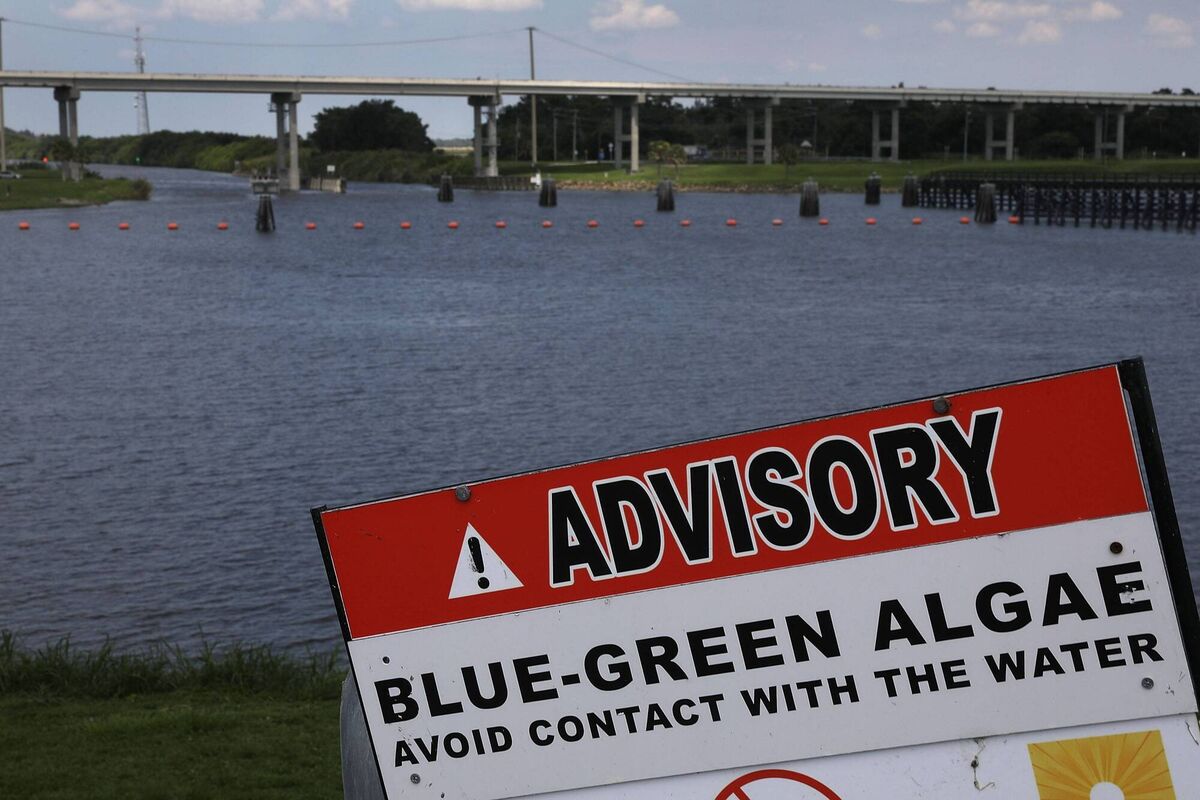
As the world heats, the disruptions that algal blooms cause to ecosystems will be hard to stop, experts warn. Prof. Donald Boesch, who helped first identify the dead zone in the Gulf of Mexico, which last year reached 17,000 sq km, the 12th largest in 38 years of records, says the process will get worse if the world does not prevent rising temperatures.
“As the liquid heats up, its ability to dissolve gases is reduced, so it holds less oxygen. Warmer surface waters can increase the stratification of layers in the ocean. It means that the warmer waters at the surface are less dense than the bottom waters, so they don’t get mixed up.
“It’s going to get worse,” says Boesch.

CONNECT WITH US TODAY



Be the first to know the latest news and updates