Irish students cancelling J1 summers in Trump's America
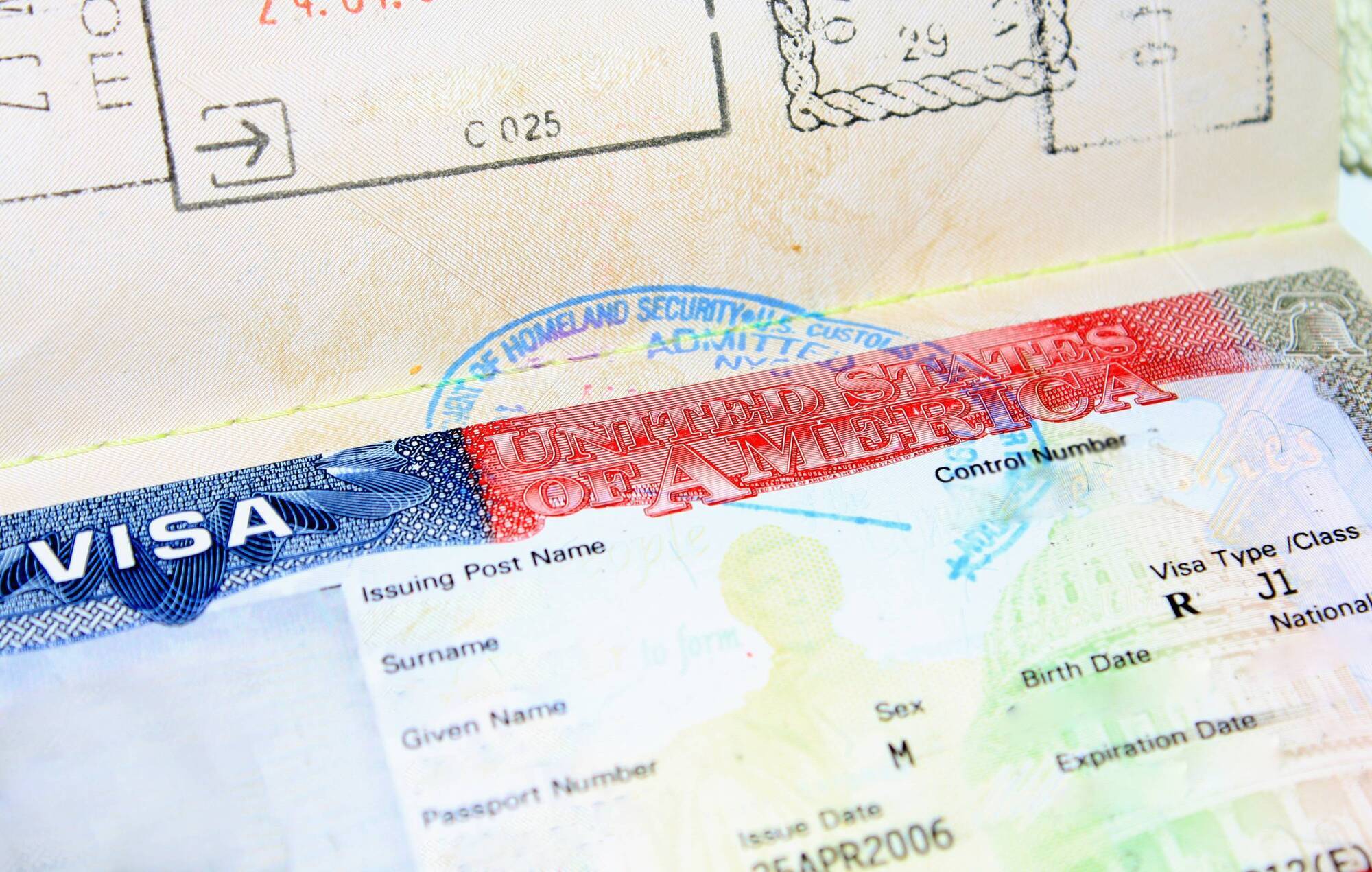
In April, Union of Students in Ireland (USI) urged students to be 'cautious and informed' of the potential impact activism could have on their visa status. File picture
Another exhausting exam season will soon come rolling to a close, heralding the start of summer for thousands of college students across the country.
In years past, many would now be preparing to spend a good chunk of their break bussing tables or bartending in US cities like Boston, New York and San Diego on J1 visas. The programme allows students to work and travel in the States for up to four months.
A rite of passage for more than five generations, a J1 visa is traditionally accompanied with a gentle reminder for students to watch their "ps and qs", have fun, be safe and to behave in front of the Americans. This year, however, the warnings are a little different.
In April, Union of Students in Ireland (USI) urged students to be “cautious and informed” of the potential impact activism could have on their visa status.
In the days prior, US Citizenship and Immigration had announced it was to begin considering “aliens’ antisemitic activity on social media and the physical harassment of Jewish individuals” as grounds for denying immigration requests.
The order immediately affected those applying for “lawful permanent resident status, foreign students and aliens affiliated with educational institutions linked to antisemitic activity.” In the month since, some students have changed their travel plans, opting not to go and taking the financial hit as a result.
A spokeswoman for the USI told the that some have told the union they are reconsidering or cancelling their trips due to fears about how their activism, particularly pro-Palestinian advocacy, could be perceived by US immigration.
One student told the USI:
Another said: “I’ve been involved in Palestine solidarity work at home, and I’m worried that even just posting about it on social media could be used against me when I land in the States. It’s not worth the risk.”
This is just one ripple effect to reach our shores of the havoc the Trump administration continues to wreak on the entire US education system.
Within his first 100 days in office, the Trump administration froze billions in education funding, threatened to defund public schools found to be promoting diversity, equity and inclusion (DEI) or “gender ideology”, and signed countless executive orders that have left education institutions from kindergartens to universities reeling.
Work is well underway to dismantle the US Department of Education, with Trump promising taxpayers they will no longer be “burdened with tens of billions of dollars wasted on progressive social experiments and obsolete programs” by returning power over education to families instead of “bureaucracies”.
And less than a year after a wave of pro-Palestinian demonstrations and protests swept across US college campuses, the US president has also vowed to cut funding to the universities that permit “illegal” protests and deport international students who take part.
He claimed universities such as Columbia and Harvard did not do enough to protect Jewish students during the protests, retaliating against the universities by slashing billions in federal funding.
At least 1,800 international students have seen their visa status revoked often with little to no explanation, amidst continued crackdowns on immigration, according to figures compiled by Inside Higher Education.
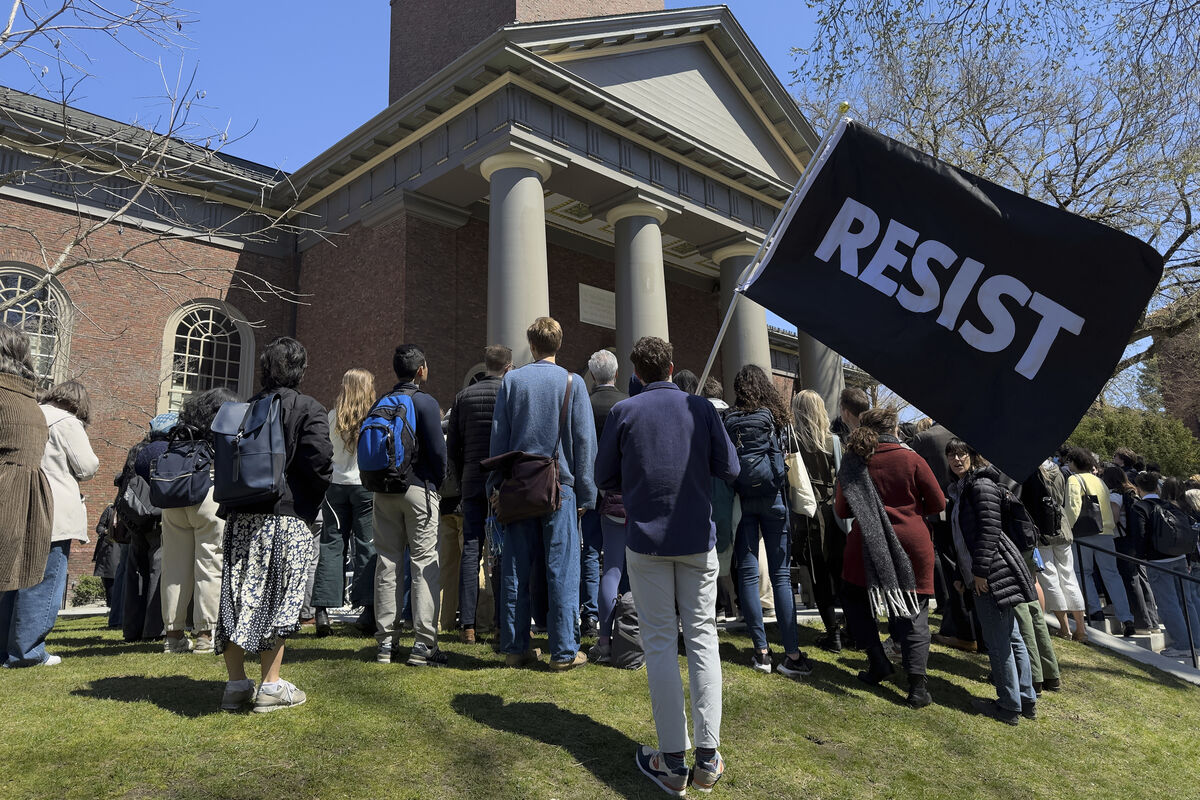
Universities and students are attempting to fight back against funding cuts and executive orders in the courts. On Friday, Trump threatened to revoke Harvard University's tax free status, the latest escalation in a war with the world famous Ivy League school over federal funding.
“We are going to be taking away Harvard’s Tax Exempt Status. It’s what they deserve!” Trump posted Friday morning on Truth Social.
Meanwhile, US scientists continue to see their research funding cut. Almost 800 grants have been eliminated at the National Institutes of Health (NIH), the largest source of funding for medical research in the world.
The cuts have affected projects relating to trans healthcare, the health-related effects of climate change, HIV research and vaccine hesitancy.
Sunghee Lee, a research professor at the University of Michigan, saw her $5 million grant from the NIH terminated in March under the auspices of being a 'DEI' study. Her project was looking at different risk factors for Alzheimer’s disease across all ethnic groups in the United States.
The news her grant had been cancelled came "out of the blue", she told . "I can only speculate [why]. If anybody read an extract of this study, and if anybody had a scientific understanding of any sort of science, they would have known that this is not a DEI study."
The study title uses the word 'Latin X' instead of 'Latino', she added. "Perhaps Latin X is a word that one shouldn't be using. That's the only thing that I can really think of why this was identified as a DEI study."
Many academics here will be watching all this unfurl in the States. The US is often seen as a "paragon" for research, according to Scott Lucas, professor of international politics at the Clinton Institute, University College Dublin.
"Now, I would say that the US has lost that position of being a world leader because what is being done to it by the Trump administration.
“The attempt to control universities under the guise of DEI and ‘woke’ is just a pretext, it has nothing to do with DEI. The whole question about whether you have freedom of academic thought, whether or not you have freedom of academic research, is now a very serious question.”
Many academics, both here and across Europe, are now quietly cancelling plans to travel, he believes. "It's just not worth the risk." There are now European and Canadian universities actively advertising for American academics, he added.
“There are other universities that aren’t necessarily advertising for that but letting it be known to colleagues in the States that they would be welcome to come across.
“You are going to have a ‘brain-drain’ from the United States, both of foreign researchers who work in the US and US researchers who are going to leave, which is really going to hit expertise.
“That’s in addition to the fact that many universities are going to be crippled anyway by what the Trump administration are doing. The line in terms of what the authorities might consider to be inappropriate, that they won't tolerate, they can come in and create a charge for that."
He added that he is grateful for the freedom he has in Ireland to criticise government policy. "I don't think you can necessarily have that level of honesty without retribution in the States now."
"This is one reason why my friends are thinking twice about going across because they know that in the nature of their research they've sometimes criticised US government policies, and I'm not talking about Trump-specific [policies]. They could have undertaken research on immigration, research on climate change, research on covid and they know it doesn't fit along with what the Trump folks want."
A spokeswoman for the Union of Students in Ireland (USI) said: "There is definitely concern that students may be stopped, questioned, or monitored, particularly in light of the US administration’s recent moves to screen social media accounts and former president Trump’s comments around protest-related arrests."
CONNECT WITH US TODAY



Be the first to know the latest news and updates