Press freedom and pluralism face ‘existential battle’ across EU, report finds
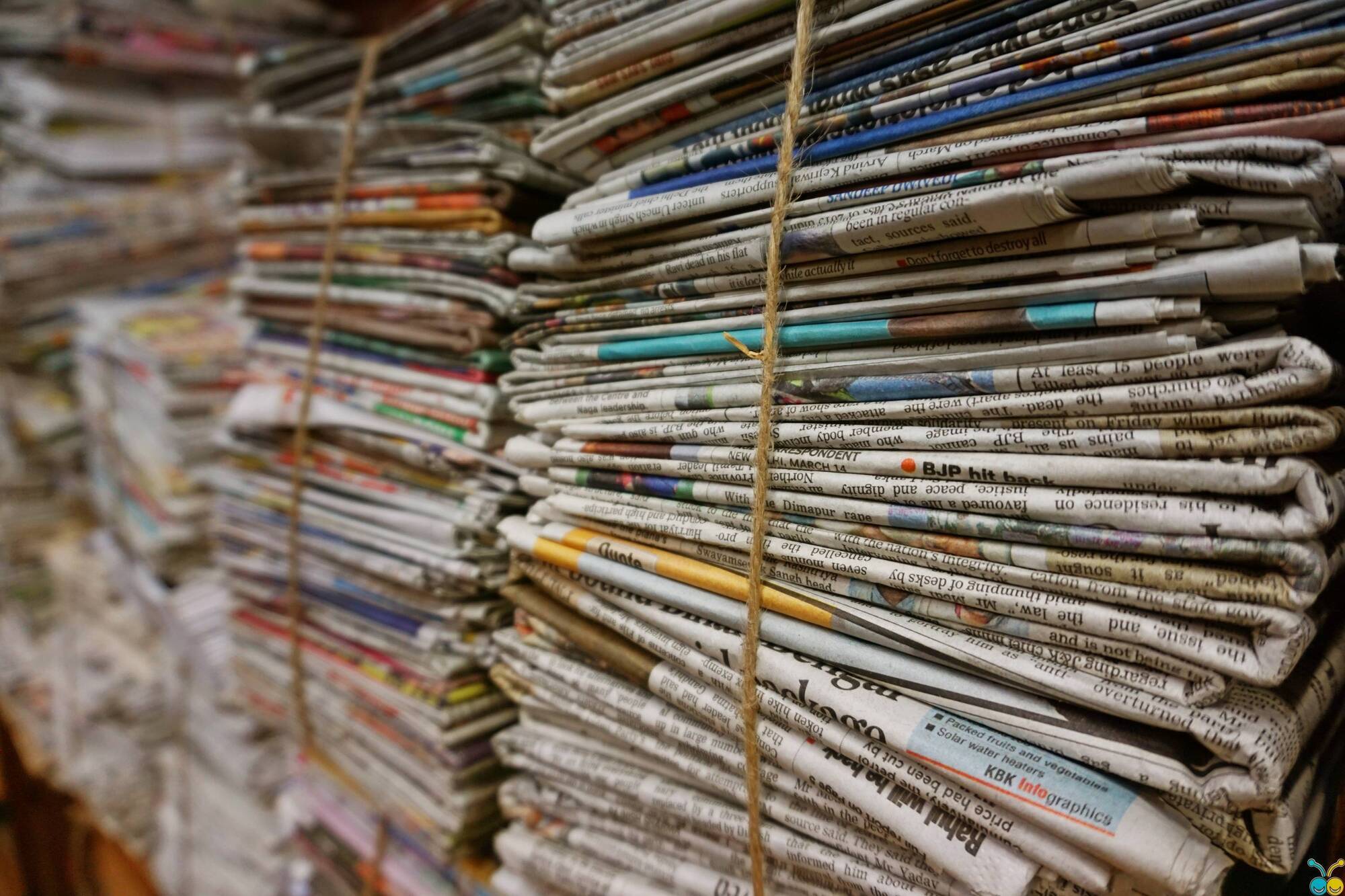
Nearly half of all German newspaper publishers have reduced their editorial staff and 62% expect further cuts.
Media pluralism in many EU member states is being increasingly strangled by a high concentration of ownership, even in countries with traditionally free media markets, according to a report that concludes press freedom is crumbling across the bloc.
The report, produced by the Civil Liberties Union for Europe (Liberties) based on the work of 43 human rights groups from 21 countries, said several EU governments were attacking press freedom or weakening media independence and regulation.
Along with weak ownership transparency rules, growing government influence over public media and threats against journalists, media freedom and pluralism were “under attack across the EU, and in some cases in an existential battle”, it said.
“This isn’t a surprise,” said Jonathan Day, the report’s lead editor. “Governments’ efforts to weaken the rule of law and democratic institutions almost always start by seeking to control their country’s media landscape.”
Day said the EU’s attempt to safeguard media freedom, the European Media Freedom Act (Emfa), was “already facing resistance even before it’s fully in force. How successfully it is enforced may be make-or-break for media freedom in some member states.”
The report singled out an excessive concentration of media ownership as a particular concern in Croatia, France, Hungary, the Netherlands, Slovenia, Spain and Sweden, with ownership often concentrated in the hands of a few ultra-wealthy individuals.
This was exacerbated by inadequate transparency of media ownership, it said, with many member states failing to set up publicly accessible databases required by the Emfa, almost all of which is due to come fully into force in August.
The binding legislation aims to guarantee the protection of journalists and sources, independence of regulatory bodies and full ownership transparency — but many member states “seem unready if not unwilling to fully enforce” it, the report said.
France faced “significant media pluralism challenges”, the report said, highlighting Vincent Bolloré’s acquisition of the Hachette group and installation, at several of its publishing houses, of executives sympathetic to the conservative billionaire’s views.
In Italy, the report noted the planned acquisition of AGI, a leading news agency, by the Angelucci Group, headed by Antonio Angelucci, an MP from the far-right Lega party who already owns Italian newspapers including , and .
Bonnier owns 43% of all subscription-based multi-day newspapers in Sweden; while Schibsted owns 13 more including and .
The Dutch online media market, meanwhile, is dominated by websites owned by DPG Media, Mediahuis and RTL Nederland — with the former announcing plans in late 2023 to acquire the latter, a move being investigated by the consumer and markets authority.
Concerns over pluralism are also rising in Germany, where many local newspapers, hit by digitisation and declining readership, are closing offices. Nearly half of all German newspaper publishers have reduced their editorial staff and 62% expect further cuts.
The report also found that journalists remain vulnerable to hate speech and attacks, suffering police violence in France, Germany, Greece, Hungary and Spain.
CONNECT WITH US TODAY



Be the first to know the latest news and updates