As Francis reaches his final resting place, thousands await their chance to say goodbye
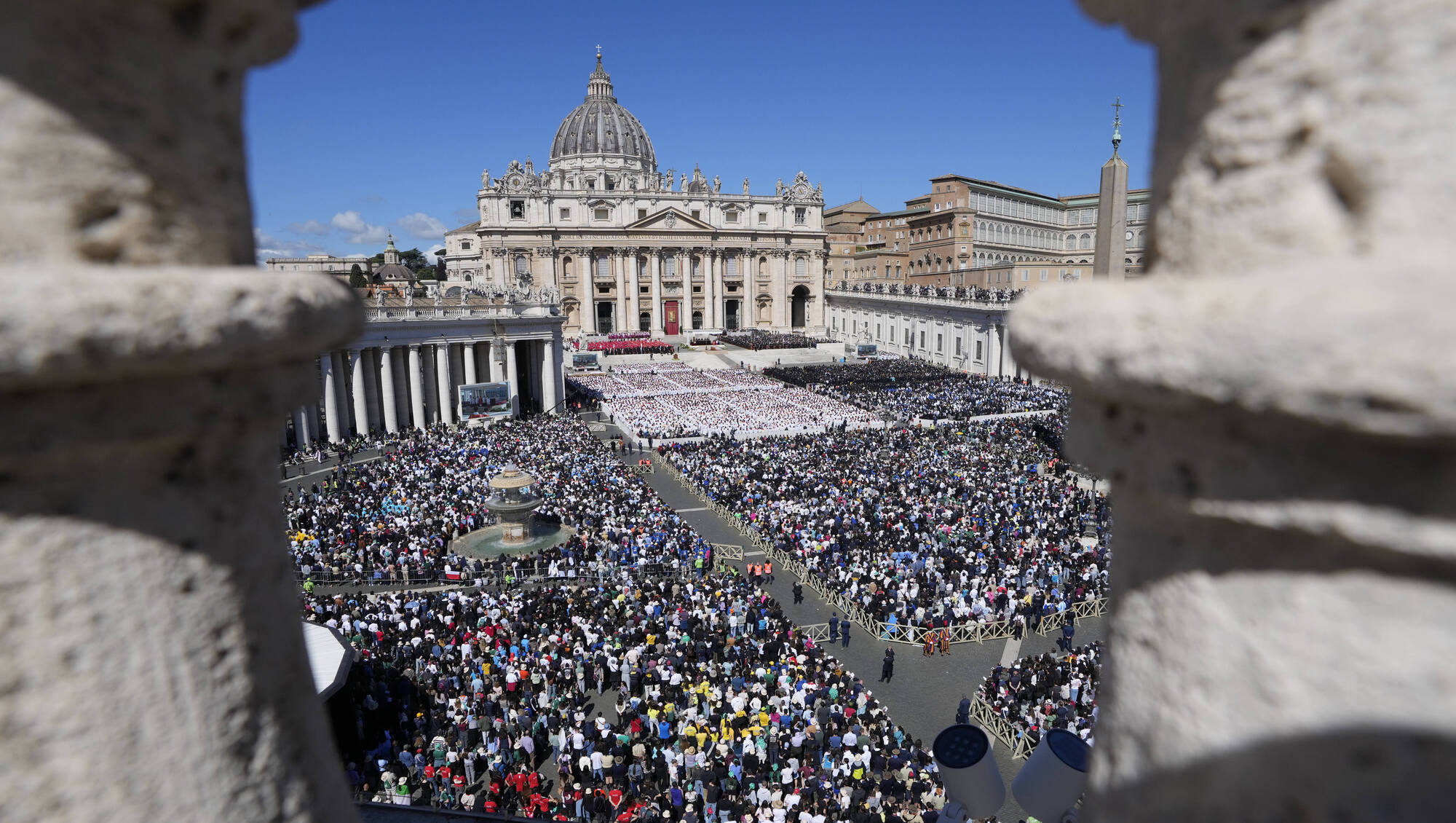
A view of the funeral of Pope Francis in St Peter's Square on Saturday. After a period of mourning, the College of Cardinals will gather in the Vatican’s Sistine Chapel for the conclave to decide who should lead them into the future. Picture: Gregorio Borgia/AP
After world leaders were to the fore on Saturday for the funeral of Pope Francis, Sunday saw tens of thousands from a new generation of young Catholics fill St Peter's Square to bid their final farewell to their spiritual leader.
The vast square and surrounding streets were packed with what Italian police estimated were 200,000 mainly young people, many wearing scouting uniforms or colourful T-shirts.
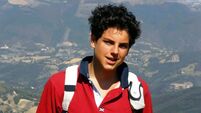
A large number were in delegations from across Italy and several other countries whose initial plan had been to come to Rome for a now-postponed ceremony to proclaim the first Catholic saint from the millennial generation.
Instead of honouring Carlo Acutis, an Italian boy who died from leukaemia aged 15 in 2006, they were now honouring Francis, who died at the age of 88 on April 21 after 12 years leading the 1.4bn-member Church.
"Even having to change plans, it is a joy to remember (Francis)," said Samuele Arregetti, an 18-year-old who had come from Bergamo in northern Italy.
"We are very sad for his death but now thinking of him we are also happy... that he is in Heaven."
For 13 year-old Gabreele Lubans, a scout from Palermo, it was the hope that Francis his generation which struck a chord.
Even in death, Francis made a final contribution to trying to solve the war in Ukraine, with his funeral offering a chance for US President Donald Trump and Ukrainian president Volodymyr Zelenskyy to meet once more after their fractious encounter in the White House in February.
Throughout Sunday, thousands of people queued to visit Pope Francis’s tomb in Santa Maria Maggiore Basilica.
The casket was placed in a simple marble tomb in a side aisle of the basilica. Only his name in Latin, "Franciscus", is inscribed on top, while a reproduction of the plain cross that he used to wear around his neck hangs above the niche.
Many crossed themselves and took photos on their phones as they filed past the tomb.
No Pope had been laid to rest outside the Vatican in more than a century, but Francis opted instead for burial in Santa Maria Maggiore, located in the Italian capital's most multicultural neighbourhood.

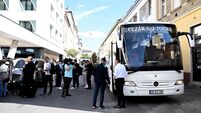
Visitors began queuing well before the Basilica opened at 7am and the church rapidly filled with mourners after the doors opened. Authorities urged people to leave as soon as they had seen the tomb, saying thousands more were waiting to get in.
Dominican Friar Fr Patrick Briscoe, who is based in New York but will be based in Rome until the next pope is chosen, told the : “The fact that Pope Francis is buried there will no doubt lead to an uptake in visitors to what is one of four major basilicas in the city.
“It has always been popular with tourists but it will be more so now, especially among those who want to pay tribute to their late pope.
“I can’t see it being more popular than St Peter’s, which I think will also experience an upsurge in interest among tourists. Maybe, if anything, more people visiting on a tight time scale might forgo the Pantheon.”
With Pope Francis in his final resting place, the thoughts of the world's 1.3bn Catholics turn to who will be his successor.
After a period of mourning, the College of Cardinals will gather in the Vatican’s Sistine Chapel for the conclave to decide who should lead them into the future.
The secretive conclave is unlikely to begin before May 6, and might not start for several days after that, giving cardinals time to hold regular meetings beforehand to sum each other up and assess the state of the Church, beset by financial problems and ideological divisions.
The next meeting of the cardinals, known as a "general congregation", will be held this morning and they could set the date for the conclave.