Cutting mental health funding 'immoral' says psychiatrist who saw 250% increase in patients
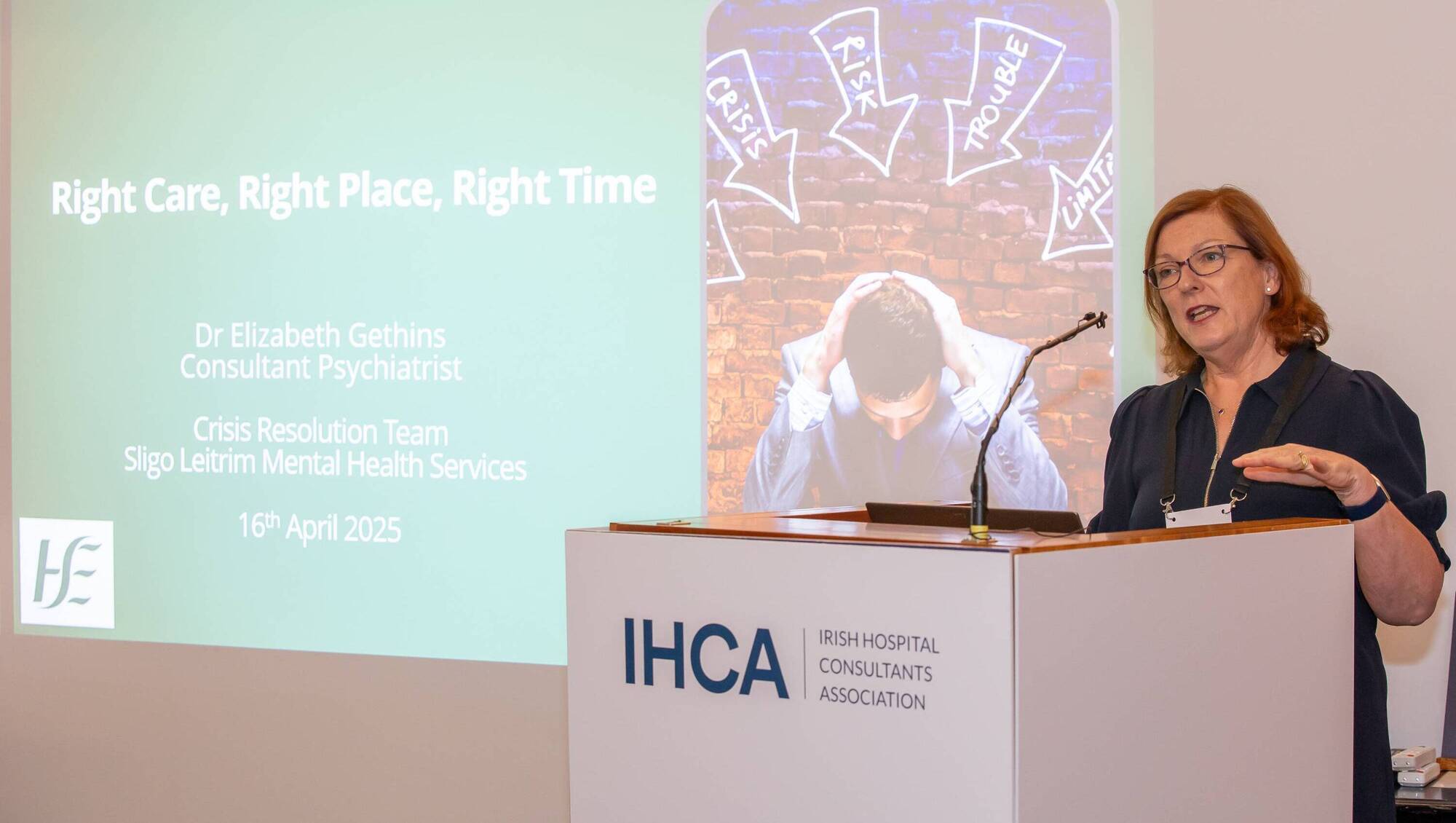
Dr Elizabeth Gethins, consultant psychiatrist with the crisis resolution team in HSE Sligo Leitrim mental health services, at the conference on Tuesday to discuss the draft Mental Health Bill.
A psychiatrist who saw a 250% increase in mental health patients at her hospital’s emergency department as a consequence of covid-19 has said cutting mental health funding is “immoral”.
Dr Elizabeth Gethins was speaking during a discussion of the draft Mental Health Bill on Wednesday.
She played a key role in creating a crisis resolution team which treats patients at home and out of hours. The HSE created a national model for this in 2023.
“There is absolutely a place for psychiatric care delivery in the emergency department but certainly as a consequence of covid in Sligo, we saw a 250% increase in the numbers of people attending the emergency department with mental health issues,” she said.
“I know that for a fact because we actually have the data.”
The team takes referrals from GPs, which means those patients can often avoid hospitals.
“In the first year, we actually had a 20% reduction in the number of people admitted to the adult mental health unit from the emergency department, which is quite significant,” she said.
However, Dr Gethins, consultant psychiatrist with the crisis resolution team in HSE Sligo-Leitrim mental health services, said they were now losing staff due to funding issues.
“For the last year, we have been two out of six down with our senior clinicians,” she said, adding other staff on maternity leave were not replaced.
As a result, she said they have had to restrict referrals.
She added: “I know I’ll speak for a lot of the frustrations a lot of you have as well, we’re having to restrict it, and that is simply immoral and unacceptable.”
She told the audience, hosted by the Irish Hospital Consultants Association, they admitted 29 patients out of almost 500 referrals.
“None of them have we had to use the mental health act with,” she said in referral to the debate around involuntary admission.
The event also heard of a person in severe mental health crisis in a situation where the speaker felt involuntary admission could have helped sooner.
The speaker knew a young person who was admitted to three mental health units over a ”traumatic” three-month period last year.
At one point, the person escaped from a unit, and fled abroad ultimately becoming homeless in a foreign city before gardaí and local police helped find them.
“The delay in proper treatment, and the lack of continuity in medication — occasioned by an absence of three weeks abroad — and a number of unnecessary and highly traumatic episodes, meant the recovery period, in my view, was probably much longer than it needed to be,” he said.
“I’m very grateful the concerned person is alive today and has made a recovery. Were it not for the use of involuntary admission, I’m not at all sure the person would be alive today.”
IHCA vice-president Professor Anne Doherty raised fears around the draft bill.
“While we welcome the broad principles of the Mental Health Bill, we, as an association, have some concerns in relation to ensuring that legislation is workable in practice so that patients can access services in a timely and care-focused manner,” she said.


CONNECT WITH US TODAY



Be the first to know the latest news and updates