Ireland and UK to strengthen maritime security ties amid rising threats
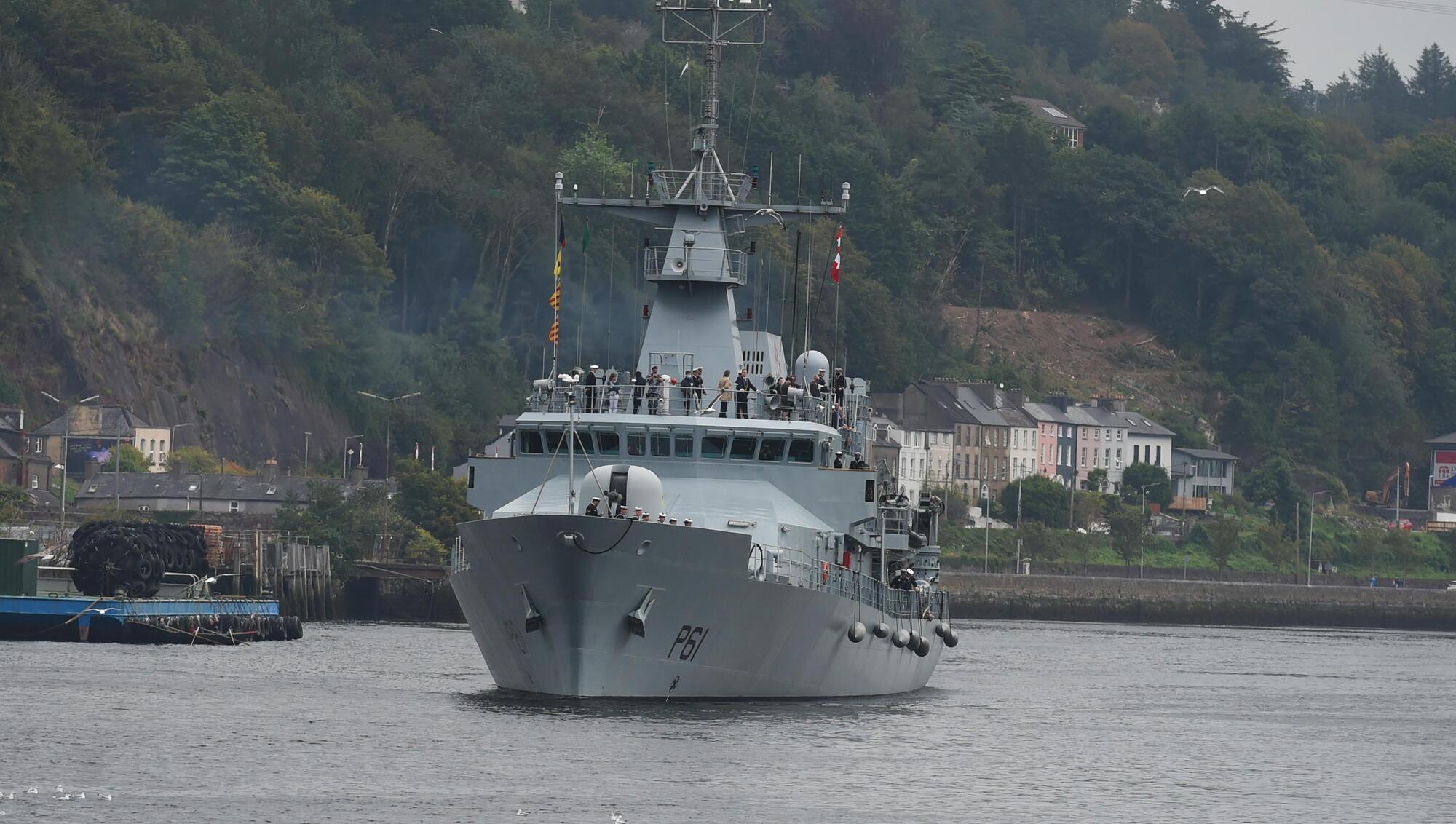
A flotilla of naval vessels led by the vessel LE Samuel Beckett to the quays at Cork City. Picture: Larry Cummins
Irish and British defence forces are moving towards a “collective security approach” regarding shared waters and airspace in a bid to protect critical underwater infrastructure and maritime security, Ireland’s military chief has said.
Lieutenant General Seán Clancy said it was important that there be a “common understanding” of the threats both countries face and to devise a “common approach” in dealing with those threats.
The Defence Forces chief of staff was commenting on Friday after the visit of the UK chief of defence staff, Admiral Tony Radakin, to McKee Barracks in Dublin over a week ago.
Security sources have told the that following the blatantly provocative behaviour of Russian navy vessels and an associated subsea ‘spy’ ship in British and Irish-controlled waters last November, there is growing agreement among the respective militaries of the need for increased cooperation and intelligence sharing.
The so-called research vessel, 'Yantar', patrolled above a cluster of data cables between Ireland and Britain, as well as over the sole electricity interconnector between Ireland and Britain and two gas pipelines between Scotland and Ireland.
The Irish Naval Service received intelligence on the movements of Russian vessels as they left the English Channel and moved up the Irish Sea.
It is understood that, in addition to mapping cables and power lines, British military authorities were also concerned that Russian ships might have been trying to monitor the movements of British submarines from the two submarine bases in Clyde on the west coast of Scotland and Devonport on the southwest coast of England.
Ireland is supposed to have eight operational vessels, but currently only has five due to staffing problems, with only two deployed at any given time—one offshore patrol vessel and one inshore ship.
“We are very reliant on the UK for our strategic picture,” one security source said. “There is a need for a bilateral agreement between the Naval Service and the Royal Navy, the two defences forces really.”
The visit of the British military chief raised speculation about possible further movement in this area before the first annual summit of British and Irish political leaders, which is set to take place next month.
One of the four key areas for discussion is “security, justice and global issues”, where, according to the Government, the aim is to “enhance policy coordination and partnerships in areas where the UK and Ireland have a shared interest, such as cyber security and maritime security.”
Asked by the at the opening of a new cadet building and garage facility at the Curragh on Friday if there is a growing level of cooperation between the Naval Service and the Royal Navy, Lieutenant General Clancy said: “We have a very strong relationship with our nearest geographical neighbour, which is the UK. We share waters, we share airspace and it’s important that we have a common understanding of the threats that exist in those spaces and a common approach to how we deal with those threats.”
The chief of staff stressed the “modern threats” to maritime security and critical subsea infrastructure and acknowledged that it was discussed at his meeting with Adm Radakin in Dublin.
“We have to have those understandings, and part of our engagement in meetings such as I had last week is to develop our understanding and develop how we can collectively address those threats,” he said.
He said it was through these discussions that he could then advise the minister for defence and Tánaiste Simon Harris on “what we should be prioritising in responding to that in terms of capability and how soon we can get to it.”
Lieutenant General Clancy added: “Modern threats that we face today require modern solutions and this is what we have to try and achieve. And through the leadership of the Tánaiste and the Government, we will support that, and we move towards a collective security approach and that’s what we’re doing.”
Mr Harris, who opened the new facilities in the Curragh, said he wanted a “much more aggressive pace” in terms of procurement and improving the capabilities of the defence forces.

CONNECT WITH US TODAY



Be the first to know the latest news and updates