Rare disease plan to identify and address gaps in services
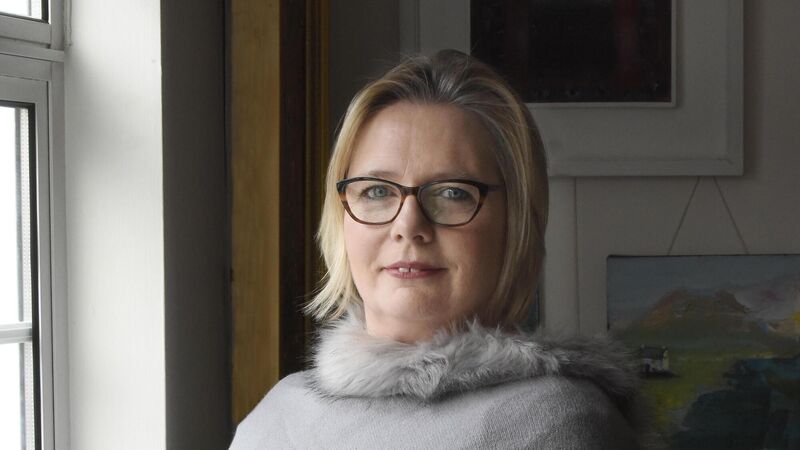
Vicky McGrath , CEO of Rare Disease Ireland, said while there is a lot more work to do, she is more hopeful than for some time. Picture: Moya Nolan
People with rare diseases in Ireland can take hope from a “groundswell of support” for reform in the health services, Rare Disease Ireland has said.
A new rare disease plan is being developed to identify and address gaps in services.
The organisation's chief executive Vicky McGrath sits on the steering group along with the HSE, Departments of Health and Children, as well as other patient representatives.
Ms McGrath, speaking as Rare Disease Day 2025 was celebrated on Friday, said while there is a lot more work to do, she is more hopeful than for some time.
“A lot of changes are very far away, but I do think there is certainly in this area a groundswell of support,” she said.
“[There is] massive public consultation feedback, a huge number of people involved in the patient forums that the Department [of Health] set-up. And all of them are saying the same thing ‘right we’d better start doing something’”.
The pressure for change is coming from patients and their families, but also she said from doctors, healthcare workers, medical groups, pharmaceutical industry, advocacy groups, and NGOs.
“They’re all saying the same thing — 'we should be doing this, it’s just not good enough the system today’,” she said.
There are up to 8,000 described rare diseases. Altogether they affect around 6% of the Irish population, coming to about 300,000 people, according to the Department of Health.
“There’s still lots to do,” Ms McGrath said.
“But the test directory that was launched at the end of January is the first step on the journey in making genetic testing available to everybody across the country. None of this ever goes fast enough but we are making progress.”
This directory identifies genomic tests which can be requested by consultants based on certain criteria.
It is expected to lead to earlier diagnosis and improved treatments.
She said the National Strategy for Accelerating Genetic and Genomic Medicine is targeting “substantial reductions” in waiting times for diagnosis.
“I think this is achievable,” she said.
Up to now many families waited years to find out what condition their child had due to lack of testing and staff shortages.
“We are going from a situation in 2024 where there was zero funding dedicated to rare diseases and in 2026 it will be €8m,” Ms McGrath said.
However she does not expect families will see significant change immediately in some key areas.
She would like to see the newborn screening programme — the heel-prick test — “ramped up” for example.
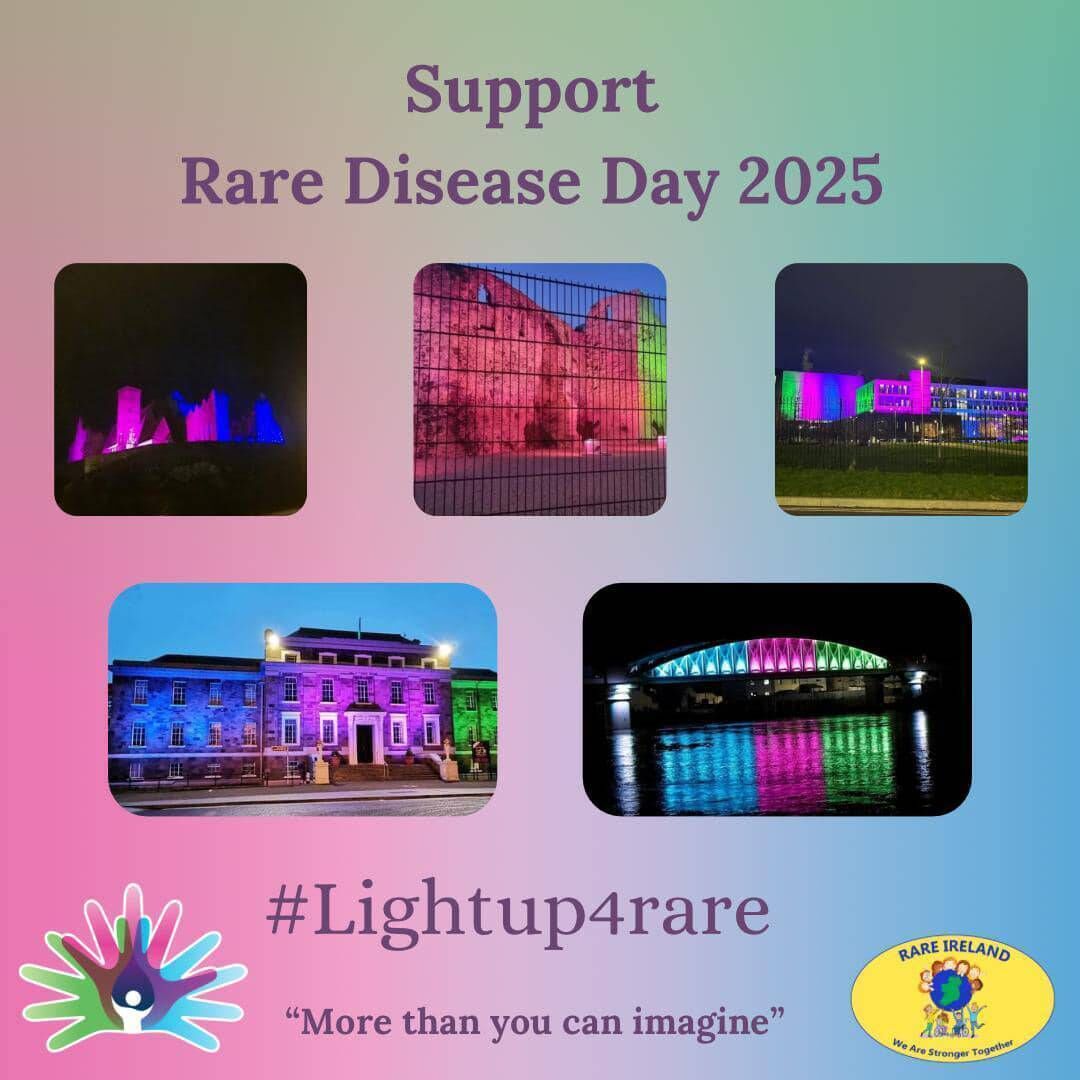
Across the country buildings were lit up to mark Rare Disease Day, including Killarney Town Hall, Ashe Memorial Hall, the quadrangle at University College Cork, and Limerick City Hall.
Laura Egan from Rare Ireland, who helped coordinate the events, said: “Today, on Rare Disease Day, we celebrate our rare community, the rareness of our loved ones, their unique personalities, their achievements, and all the love they have brought to our lives.
“The journeys they have taken us on have taught us more than we can ever teach them.”
She co-founded Rare Ireland to fill a gap in patient support after her own daughter was diagnosed with a rare condition.
“Leaving a hospital with a diagnosis you have never heard of is a daunting, traumatic experience for any family, but now there is a community waiting to support you,” she told families.


CONNECT WITH US TODAY



Be the first to know the latest news and updates