Maternity units don't have to declare hundreds of stillbirths and newborn baby deaths every year
Maternity units don't have to declare hundreds of stillbirths and newborn baby deaths every year

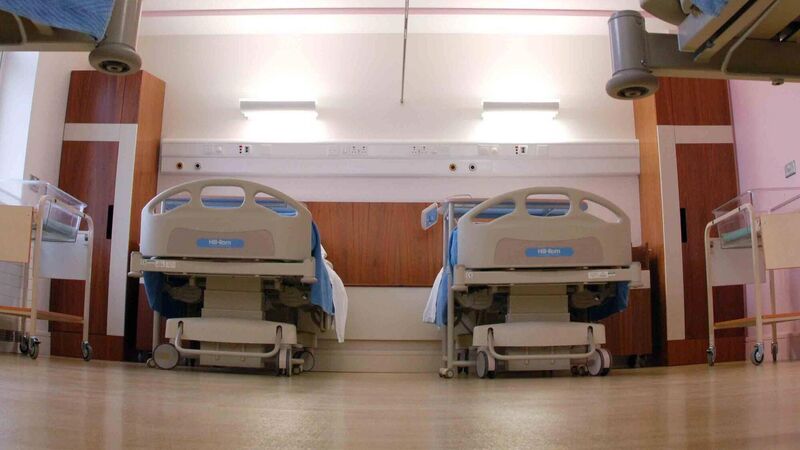
The HSE has been repeatedly asked to explain why only the deaths of babies over a certain weight are declared on MPSSs and not lighter babies, but the agency has declined to explain why. File picture: Denis Scannell

Hundreds of stillbirths and newborn baby deaths are being left out of maternity safety declarations every year by maternity units, the Irish Examiner has learned.

This is because only the deaths of babies weighing over 2.5kg (5.5lbs) are declared on HSE monthly Maternity Patient Safety Statements (MPSS), while any baby lighter than that isn't declared at all.


This means the deaths of newborn babies, including stillbirths, who weigh around the same weight as other babies whose deaths were the subject of major HSE investigations in the past do not have to be declared. This is regardless of how viable they may have been before they died.

The 2010 stillbirth of baby Asha Reilly, one of 18 babies whose care was the subject of the damning 2018 Walker Report, would not — for example — have to be declared today on an MPSS. Her mother Lorraine said she weighed just 1.4kg (3.11lbs) when she was stillborn at Galway’s Portiuncula Hospital on March 8, 2008.

The Walker Review of adverse events at Portiuncula concluded that in 16 of the 18 cases it reviewed — which also included the death of Asha’s sister Amber shortly after she was born there in 2010 — were “serious errors in management”.

Lorraine and Warren Reilly at the inquest of the death of their child Asha. Lorraine said: 'I am disgusted that not all stillbirths have to be declared on Maternity Patient Safety Statements.' File photo: Hany Marzouk

The deaths of babies with congenital anomalies like Down syndrome or Spina Bifida are also not declared on an MPSS, which was brought in as a “powerful tool” in 2015 to aid health service transparency by the then chief medical officer Dr Tony Holohan.

Lorraine told the Irish Examiner: “I am disgusted that not all stillbirths have to be declared on Maternity Patient Safety Statements. To think any hospital would not have to declare the death of a baby stillborn at the same weight as my baby Asha is horrific.

"If the HSE does not include all perinatal deaths, then we are not getting a true account. Parents are then not being correctly informed of potential patient safety issues that multiple baby deaths might signal in any of the HSE's 19 maternity units."

She said the weight and congenital anomalies restrictions are "effectively airbrushing an untold number of babies out of these Maternity Patient Safety Statements".

Roisin Molloy, whose son Mark’s death in 2012 sparked the Portlaoise Baby Scandal that led to major maternity reforms including the first National Maternity Strategy, said: “This is appalling. Maternity Patient Safety Statements were brought in to regain the public’s trust in our maternity services providing greater transparency. Under-reporting baby deaths totally undermines that trust.”

Roisin Molloy: 'Under-reporting baby deaths totally undermines that trust.' File photo: Moya Nolan

The fact that only stillbirths of a certain weight are declared on these safety statements emerged after the Irish Examiner discovered a high number of stillbirths at Mayo University Hospital in 2023. The paper subsequently reported there had been seven stillbirths at MUH, five of which had happened between October and December that year.

But when the Irish Examiner checked the hospital’s MPSS for 2023, it was discovered that the perinatal mortality rate for the year only equated to two stillbirths. The HSE, which estimates there are about 250 stillbirths every year, later stated two of the seven stillbirths had been reviewed externally and had been classed at Serious Reportable Events (SREs).

As well as stating that Perinatal Mortality Rates (PMRs) on each MPSS relate to babies who weighed “2.5kg” (5.5lbs) and over, the HSE also says the rates declared on each MPSS are "adjusted" PMRs. This is a rate that excludes the deaths of babies who had a congenital anomaly - which the HSE also refers to as "physiological or structural abnormalities" - when they died.

They are excluded because, according to the HSE, "larger fetal medicine referral units will have higher numbers of incidences of major congenital anomaly due to the diagnostic pathway". They also said the exclusion reflects the fact that "neonatal death is not unexpected and is in fact explained by the underlying condition".

According to the 2023 Irish Maternity Indicator System National Report, the total "unadjusted" perinatal mortality rate - defined as the "total infant deaths, including stillbirths and early neonatal deaths weighing 500 grams or more" — equated to 263 deaths. However, the "adjusted" figure — which excluded babies with congenital anomalies - for the same year equated to 45 baby deaths.

The HSE has been repeatedly asked to explain why only the deaths of babies over a certain weight are declared on MPSSs and not lighter babies, but the agency has declined to explain why. Instead, it stated that very detailed data on stillbirths is collated and reviewed by a variety of bodies in the HSE.

It was however put to the HSE that while these bodies do indeed publish the data, none of it is the number of stillbirths in each of the HSE’s 19 maternity units on a monthly basis. The HSE declined to comment.

In his February 2014 report into the deaths of four babies who died in Portlaoise Hospital between 2006 and 2012 and which featured in a January 2014 RTÉ PrimeTime programme, Dr Tony Holohan said each hospital should produce a monthly maternity patient safety statement.

The then chief medical officer said such statements would be a “powerful tool” to “inform on activity trends in a healthcare unit” and to focus attention on areas “that are both performing well and underperforming” so that such data could be used to “implement necessary change for better patient outcomes”.

He said key metrics should include perinatal outcomes that include the number of stillbirths.

x

More in this section

Lunchtime News

Newsletter

Keep up with stories of the day with our lunchtime news wrap and important breaking news alerts.

Cookie Policy Privacy Policy Brand Safety FAQ Help Contact Us Terms and Conditions

© Examiner Echo Group Limited