Security services suspect murder motivated by online jihadist radicalisation
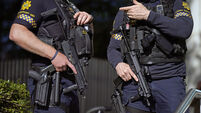
The murder is the second attack believed to be motivated by online jihadist radicalisation in the country. Picture: Alamy Stock Photo
Authorities believe that a recent murder in Ireland was motivated by violent jihadist radicalisation, the has learned.
It is thought to be the first murder in Ireland linked to radical Islamist terrorism. Details of the death cannot be provided as proceedings are under way in the case.
The development follows collaboration between security services here and in another jurisdiction.
The suspected motivation behind this murder, which happened in recent years, has not become public knowledge before.
It is the second attack believed to be motivated by online jihadist radicalisation in the country. Details of the previous unrelated case are known and did not involve a fatality.
Jihadist attacks are extremely rare in Ireland compared to most European countries, and counter-terrorism efforts here mostly relate to the financing of terrorism committed abroad.
The New Year’s Day terror attack in New Orleans has again highlighted the issue of online jihadist radicalisation across the world, including in Ireland.
Experts told the that greater political and financial resources need to be put into national security, including dealing with online radicalisation and linked issues of disinformation and online hate.
Sources said this is to try to deal with jihadist radicalisation, but also the growing threat in recent years of far-right radicalisation in Ireland.
“Where radicalisation in the past would take time, now the threat is the speed radicalisation is happening online,” one security source said. “That is very difficult to stop given the largely unregulated social media.”
The source said there is a need to raise awareness in education, health, social services, sport, and religious groups, of radicalisation and possible signs to look out for, and provide a contact point with gardaí.
Security analyst and former army officer Declan Power agreed, stating: “Personal radicalisation is much harder for law enforcement or intelligence agencies to detect or monitor. The ‘early warners’ or ‘detectors’ are the community — teachers, family, friends, and coaches — who may note a change in temperament or disposition of a subject.
"National security is not always about the gardaí or military. We need to broaden this out and include people working in education and health. We need to be more imaginative.”
Mr Power sees potential in proposals in the Fianna Fáil election manifesto of setting up a new department of domestic affairs and the establishment of a new national intelligence agency.
He said: “We need a more rounded vision, beyond the ‘green’ [military] and ‘blue’ [gardaí], with the right department and a different culture.”