Stairways to heaven: Meet the Cork-born designer scaling new heights in world's glitziest buildings
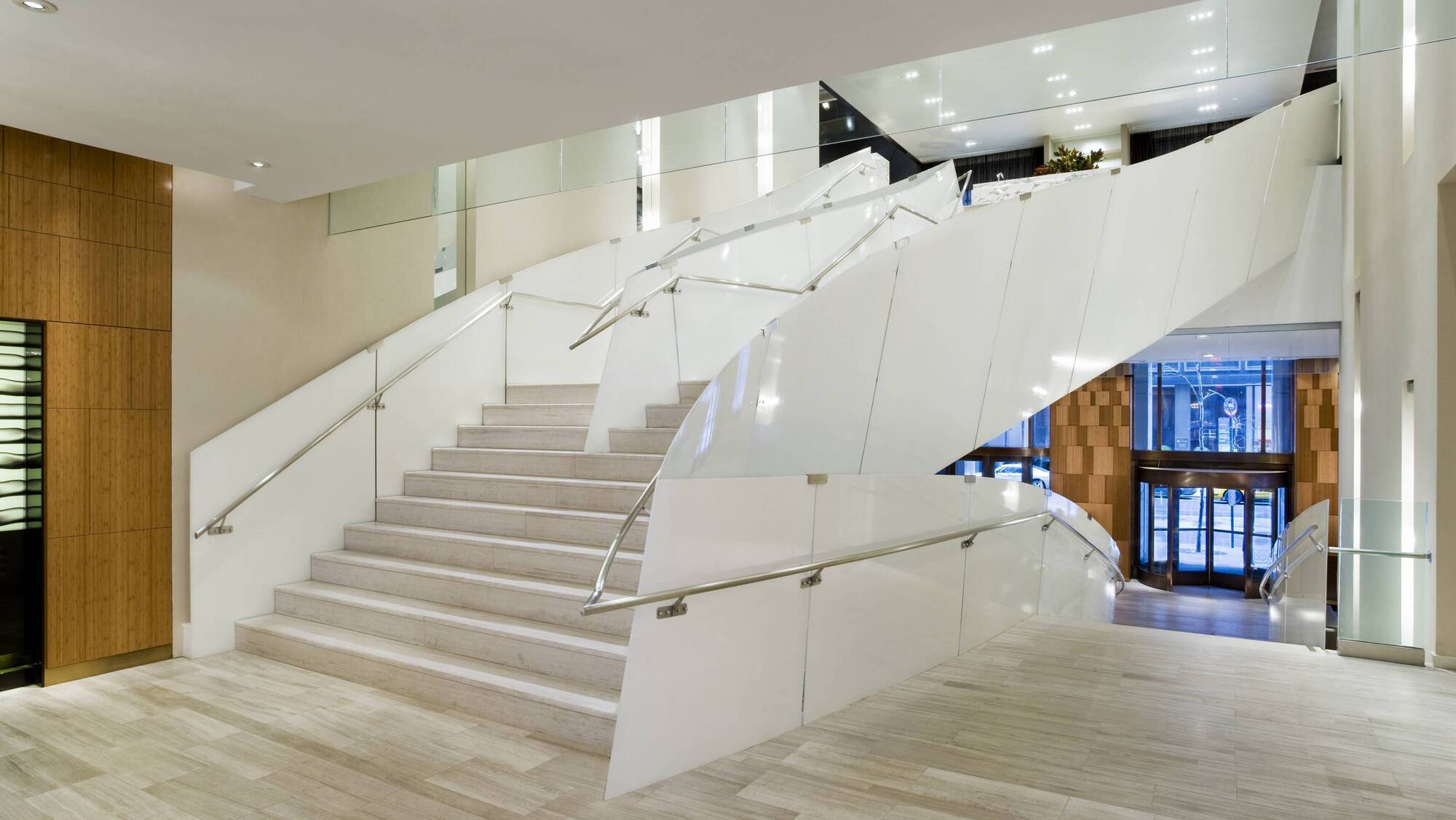
The Hyatt Hotel Lobby stairwell in New York, designed by Norman Mooney.
If you've never heard of Norman Mooney, you may well have walked on some of the stairways he has created.
If you've travelled to New York, Boston or Miami in recent years, chances are good his works of art have contributed to your step count.
Global brands like CELINE, Louis Vuitton, St Regis, H&M, and Harry Winston count on Norman to design everything from staircases to elaborate doors for their flagship stores, everywhere from New York's Fifth Avenue to downtown Miami.
His art is also in notable collections such as the US State Department, The Mint Museum in Charlotte, North Carolina, and the Taicang Art Museum and Nanhai Art Centre in China.
And Norman's work also features in renowned buildings such as the United Nations, One World Trade Centre, the Rockefeller Centre, Saks Fifth Avenue, Yale University, One Vanderbilt, and even the Super Bowl.
And it all started in Cork — the Crawford College of Art and Design, to be specific.
"We studied everything — pottery, ceramics, stone carving, wood carving, steel and metal. I got a really good practical base there," says Norman of the artistic training that now informs his work.
"After Crawford, I transferred to the National College of Art and Design [NCAD], and that was more conceptually based. We were told not to go into the studio, we were to think and draw and stand back — not just hit things with a hammer.
"So there I had two good combinations, the very practical from Crawford and the conceptual in NCAD."
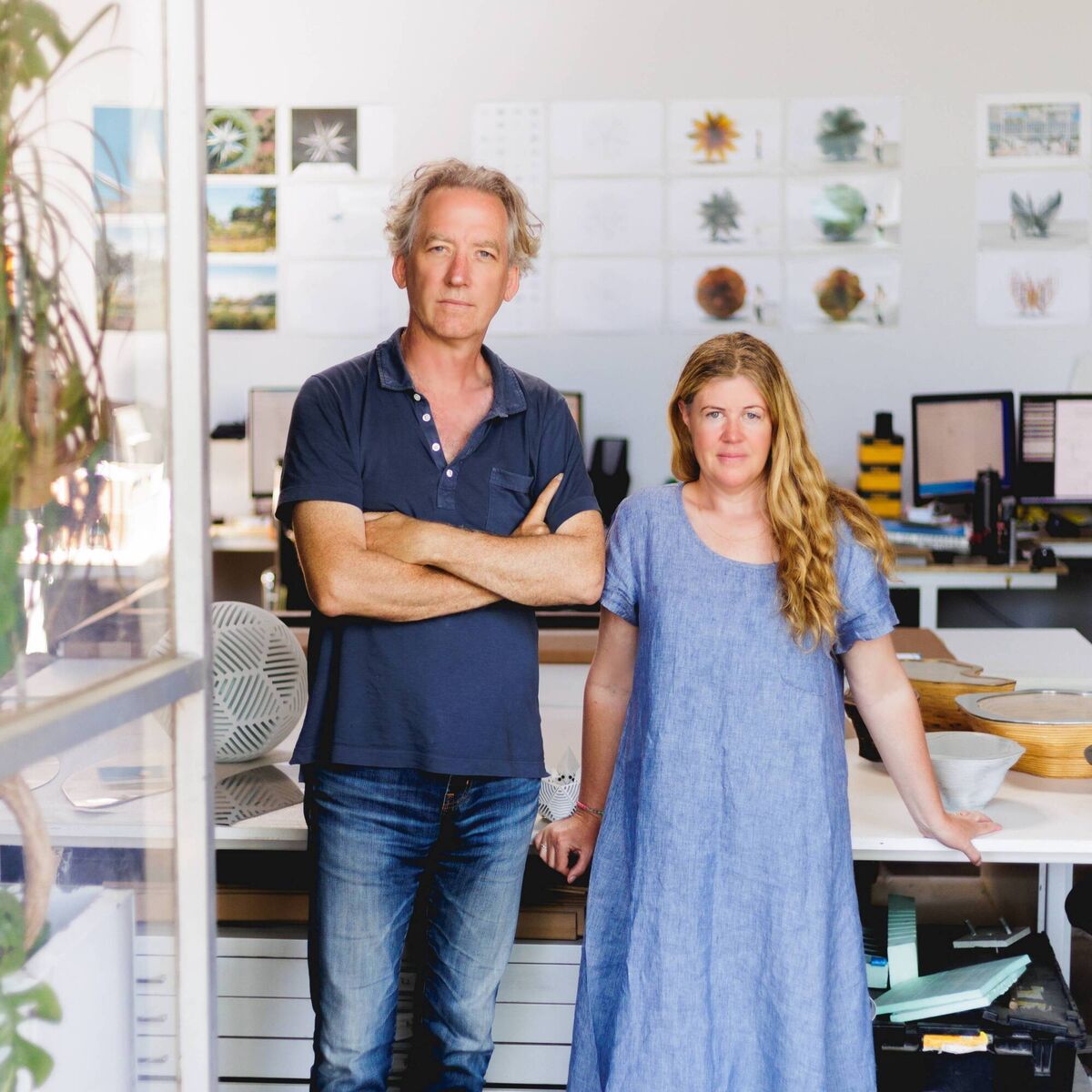
But what was it like being an art student in Ireland of the 1980s, and what happened upon graduation that led Norman to New York?
"Going to art college, the most surprising thing to me was that there were people like me, there were people who thought like me."
But upon graduation from NCAD, "there wasn't much going on".
Norman, and his artist friends, Andrew Duggan and the late Maurice O'Connell, filled this void through public art and the "Accidental Gallery".
They managed to get a lease on St Mary's Church, on Dublin's Jervis Street, and from here the friends put on performances in the capital's inner city.
"We were seeing how art could just happen in public space, we were making our own spaces. I'm not sure how appreciated it was at the time, we had fruit thrown at us," he adds.
While Ireland of the late 80s and early 90s might have been hostile to progressively-minded artists, Norman made "life-long friends" before departing Irish shores to build a career and home abroad. But the United States of America was not on the initial horizon.
"I had a scholarship to do a master's in Beijing and I really wanted to get out and travel, but China felt wrong. Athens was also an option."
It was his mother, who unbeknownst to him, directed him and his future wife towards America.
"We came over here in 1994. My mum put mine and Ruth's [artist Ruth Shortt] name down on a Visa programme without telling us, and then the Visas were announced and we got it. America really wasn't on our radar," says Norman, who explains the young couple planned to "just go for the summer".
That summer of '94 started out with him "trimming I-beams off the top of Manhattan buildings in 95F heat (35C)", but ended up with him owning a 10,000sq ft warehouse space in trendy Williamsburg 30 years later.
In a career that began in Cork and now spans more than three decades and multiple continents, how did things kick off in Manhattan?
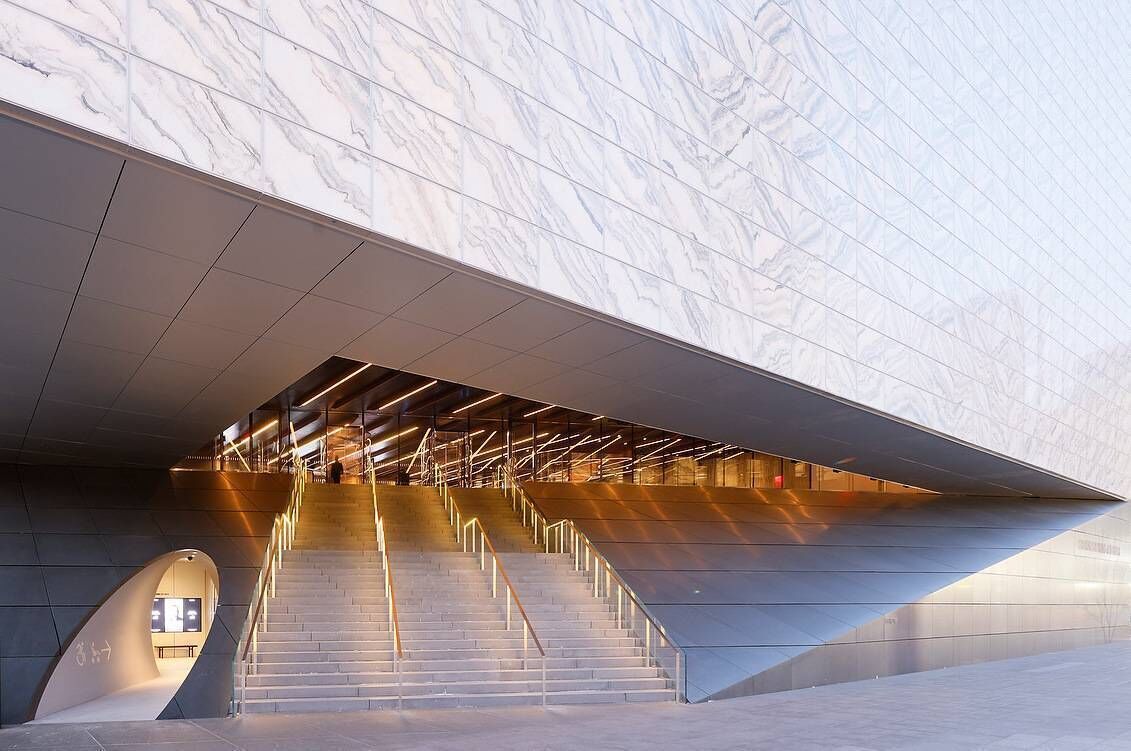
While he initially "landed in the East Village", it was out in the Hamptons that Norman found "summer work" that would come to both direct and define his career.
"Quite quickly we found work with Mihai Popa, a Romanian artist in Bridgehampton. We didn't really know what the Hamptons was, we thought we were just going to the beach for a summer job," says Norman.
Transport was costly and funds soon ran tight commuting from the East Village out to the Hamptons, so the couple asked Mihai if he could also employ Ruth and cover the cost of their train fare. Mihai did both.
"I ran his studio with a team of five people, and we ended up staying there for two years," says Norman.
Crucially, the Romanian sculptor gave Norman his own studio space, and during that first winter in New York, he was able to develop his own body of work.
Nova, as Mihai was known, worked on a large farm with multiple people constructing his large sculptures, and when people bought his work, the profits were shared with everyone so they too could make work.
"It's a foundation now," says Norman, of the 95-acre sculpture park that is home to Nova's huge steel works of art in Bridgehampton.
But it was Brooklyn where Norman would have his very own work space. Back in the city, the couple found themselves in Dumbo, right at the foot of the Brooklyn Bridge, in a neighbourhood where Truman Capote wrote .
"Ruth found Urban Glass and began working there and together we found a raw industrial space in a warehouse building in Dumbo and I started making work in the city," says Norman.
It was 1997, by this stage and the artist remembers thinking: "I'll have this wrapped up in two years".
It would however, take more like 10 years, to really establish himself as an artist, and develop his career as an artist.
By 1999, Norman had started the Dumbo Arts Centre and by 2009, he had his "first really big show" in the Milk Gallery in Chelsea — once home to the MTV Video Music Awards afterparty. He presented his "star pieces" to a packed gallery.
"Milk — it was rammed, but the next day after our opening Lehman Brothers crashed," says Norman.
Even in the shadow of a global recession, "a lot of stuff came from that show" and Norman moved to an even larger space.
"We moved the studio from Dumbo to Williamsburg, to this huge 10,000sq ft warehouse space, and that is where I got to push space, that was in 2010," says Norman.
By pushing space, he means the actual bricks-and-mortar space needed to create extremely large sculptures, some constructed with more than 700 pieces of aluminium, ending up in contemporary art galleries around the world and even in embassies.
It was in the Williamsburg warehouse that Workspace11 was born, a place where Norman could fabricate large architectural installations for those Fifth Avenue clients and beyond.
"Workspace 11 started when we moved to Williamsburg, where we started doing architectural projects and building the team to manage that work.
"Public art installations were a natural progression and my first big commission was for the Urban Institute of Contemporary Art in Grand Rapids, Michigan," says Norman, where his famous 'Windseeds' sculptures were taken "outside" for the first time.
It was 2012, and this act of moving his art outside was another major turning point in his career.
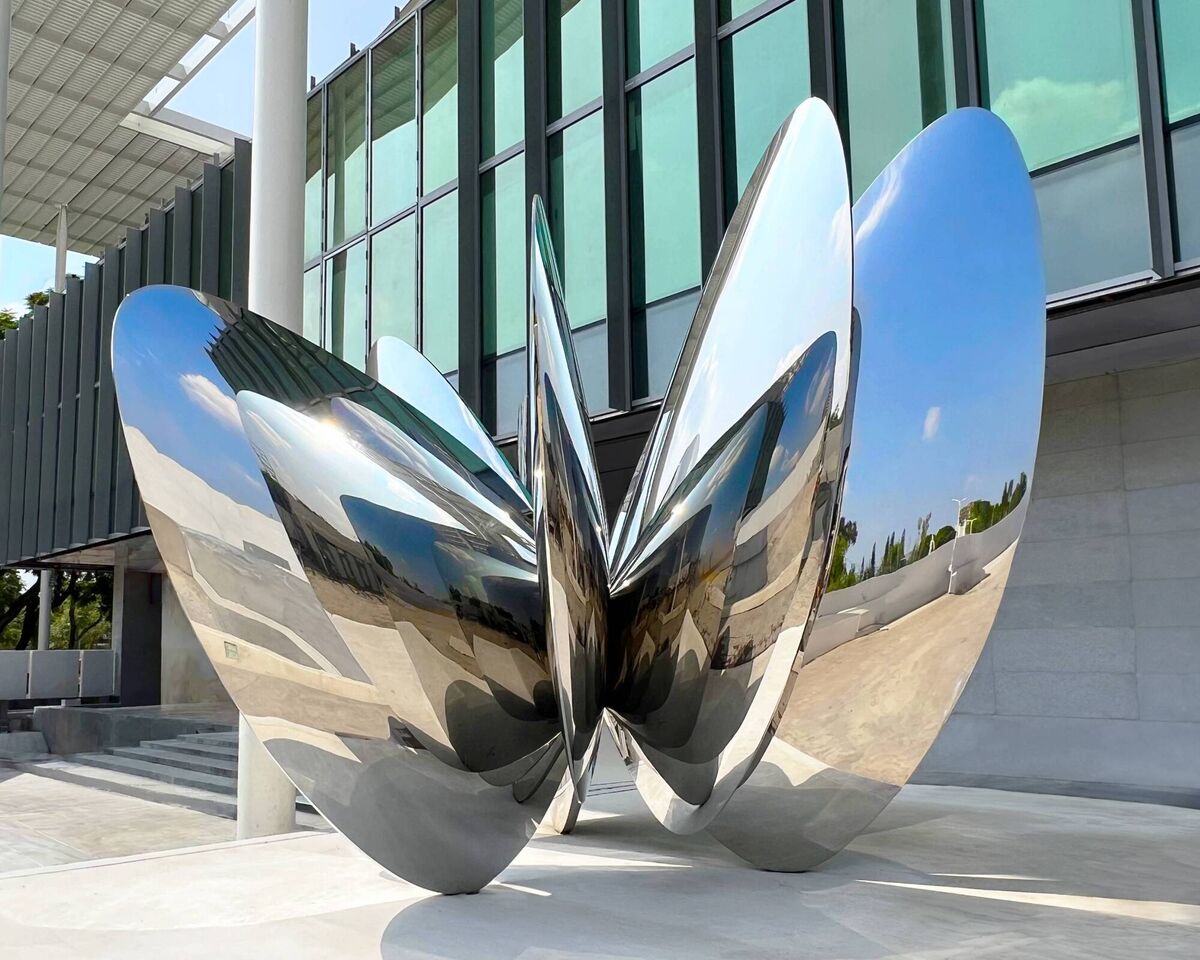
A career defining moment for this Cork-trained artist was having his 5m-tall mirror-polished stainless steel sculpture, the 'Butterfly Effect' find a permanent home at the new US consulate in Mexico's cultural capital Guadalajara.
Mexico has been a "big space" for Norman, and his work is part of several private art collections in Mexico City.
From Dumbo to Williamsburg, and now back to Brooklyn, Norman continues to push space and his new studio is in the 150,000sq ft Powerhouse Arts Building in Brooklyn, an old power station redesigned by the world renowned architects Herzog & de Meuron — the same architects who designed the Tate Modern in London, also a power station.
Norman has balanced all of this with family life. Ruth and Norman have four children together, the first being born in 2000, and so family life has been interwoven with their work over the last 30 years.
"Family and work have always been intertwined, the kids come to the studio and I love bouncing things off them. It's all a creative process and Ruth and I work together a lot," says Norman.
Finances have been another balancing act.
"When it was a feast, we bought and renovated a house in Brooklyn and when it is a struggle and a fight, we remind ourselves that we are lucky to have the opportunity to create the work that we do." says Norman.
While home has been Brooklyn for many years, the couple did toy with a return to Ireland during the pandemic.
"Compared to the 1980s, the energy in Dublin feels great, it feels like a very different city, it's multinational now. And there was a moment in covid where we asked ourselves: 'Is this a moment to return?'," explains Norman.
The decision was taken to stay in New York, where their four children feel is most definitely home, but the family returns to Ireland, and Cork, regularly.
"We were back in Ireland for a month in the summer, in Dublin and West Cork," says Norman.
And like Dublin, Cork felt very different to his Crawford days in the 1980s, but not West Cork.
"West Cork hasn't changed a lot, it's the same, beautiful place it always was."


CONNECT WITH US TODAY



Be the first to know the latest news and updates