Garda Commissioner Drew Harris to be quizzed on policing of Coolock protests
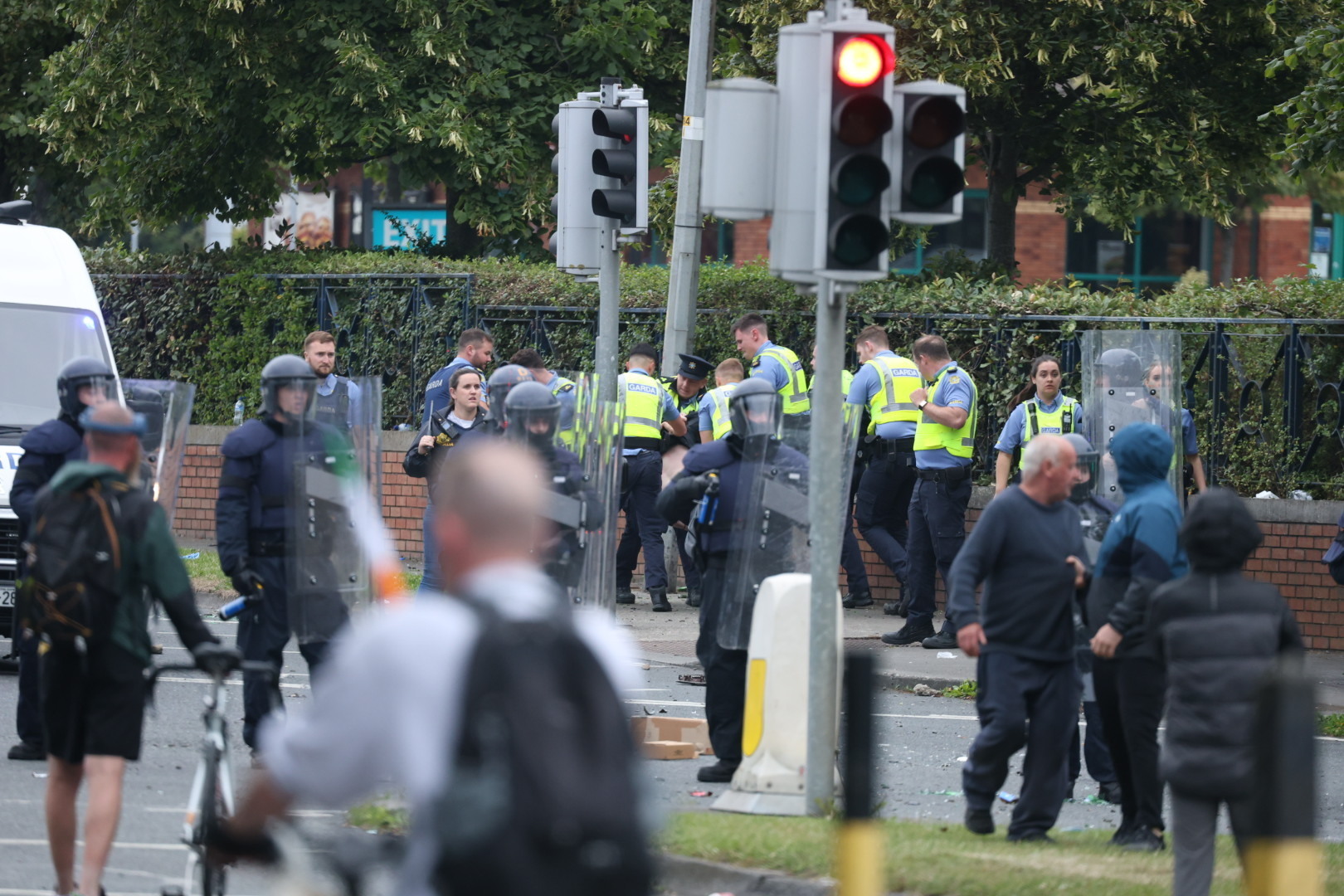
The GRA said it was “extremely fortunate” uniform members did not suffer serious injuries from missiles, including glass bottles and bricks, thrown at them by people engaged in the violence. Picture: Colin Keegan/Collins
Garda Commissioner Drew Harris is to be questioned about the policing of the Coolock protests and disorder by the Policing Authority when he appears before a scheduled public meeting on Thursday.
The commissioner has already briefed authority chair Elaine Byrne in advance of the meeting.
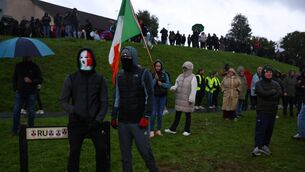
The largest Garda staff body has raised serious concerns about the safety of frontline uniform members who had to manage escalating disorder on the morning of last Monday week before the arrival — some hours after disturbances began — of a public order unit.
The Garda Representative Association (GRA) said there was “a clear delay” in the deployment of the public order unit which, it said, potentially exposed members at the scene to “extremely volatile and dangerous conditions” for a number of hours.
The GRA said it was “extremely fortunate” uniform members did not suffer serious injuries from missiles, including glass bottles and bricks, thrown at them by people engaged in the violence.
Criticisms have also being levelled at Garda management over a decision to deploy a public order unit overnight on Sunday to escort workers entering the old Crown Paints factory site to begin preparations for the arrival of asylum seekers, but to direct the unit to leave at 4am once the staff were inside the facility.

Critics have said the unit, or a replacement unit, should have maintained a presence there in the likelihood of disorder once people realised the makeshift ‘Coolock Says No’ camp at the entrance of the site had been removed and work was starting at the old factory.
Garda management sources said public order units were deployed on the basis of a threat assessment, rather than in case there may be trouble at some stage.
Mr Harris has completely rejected criticisms there was a delay in deploying the public order unit.
There have been calls to set up a dedicated public order unit, with officers deployed full time to it, rather than the current system where members work in regular units in stations but are trained in public order policing and are scrambled to respond to incidents.
Some management sources query the need for such a unit and also doubt whether there are sufficient garda numbers to operate such a system.
The disorder on Monday started after a small number of people gained entry to the site, assaulted a member of security with an iron bar, set a JCB on fire and stole and set mattresses ablaze.
Three further arson attacks have taken place at the site in the following week. On Monday, gardaí seized seven home-made petrol bombs near the site.
In a statement, the Policing Authority confirmed the policing of the Coolock disorder would be discussed at a scheduled public meeting with the Garda Commissioner on Thursday.
“The Policing Authority has engaged with public order issues from early in its existence and continues to do so," it said. "The authority will meet the commissioner this Thursday and the meeting will be live streamed.
“The commissioner has briefed the chairperson on the events in Coolock and this, along with our ongoing oversight of this area, will form the basis for the public order policing agenda item on Thursday.”
Public order policing is the first item on the agenda on Thursday afternoon.