IE Explains: Everything you need to know about Friday’s European, local, and Limerick mayoral elections
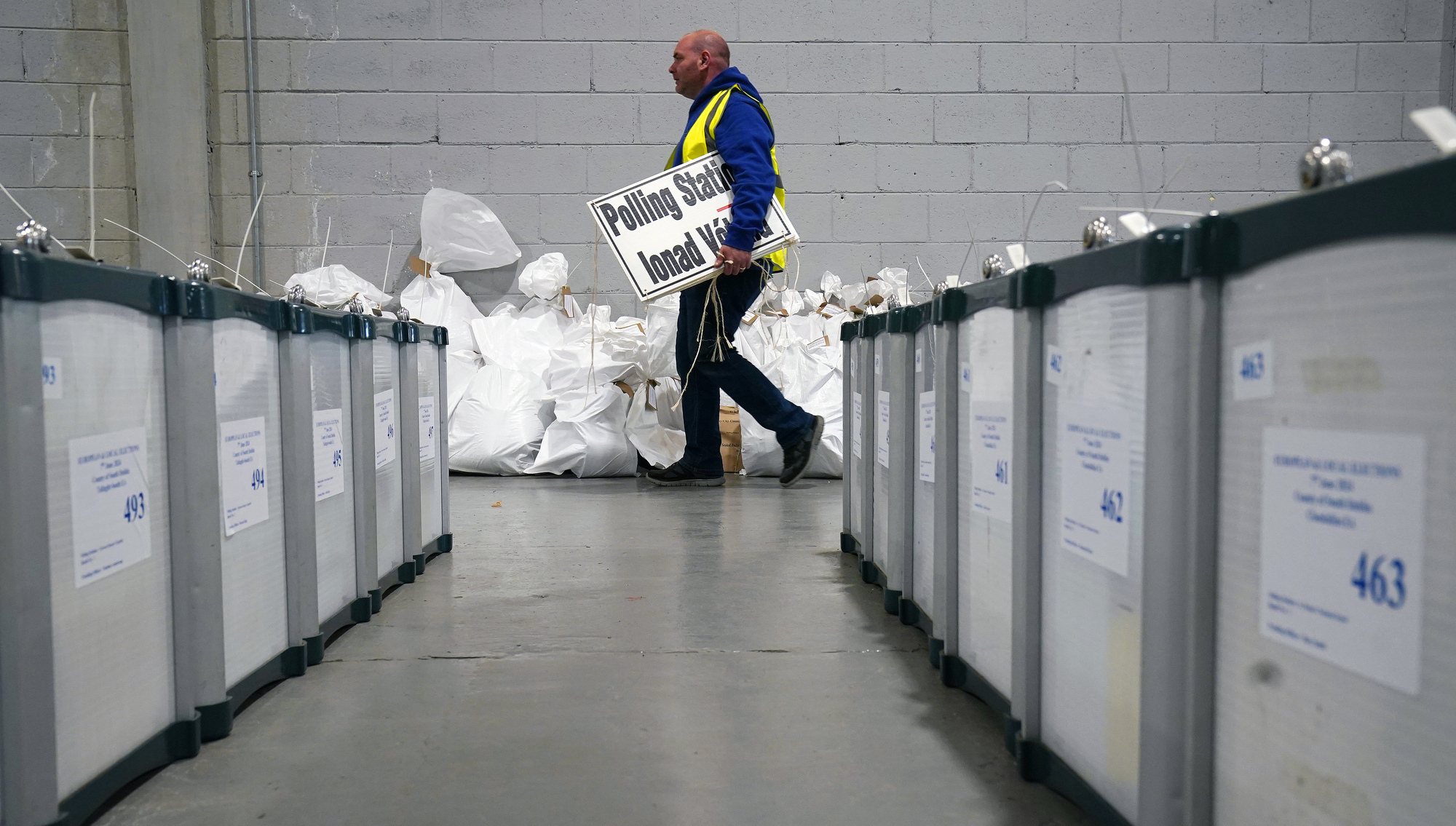
Election warehouse manager Michael Leonard prepares for ballot box delivery in Dublin. Picture: Brian Lawless

Election warehouse manager Michael Leonard prepares for ballot box delivery in Dublin. Picture: Brian Lawless

Ireland will head to the polls once again on Friday to vote in the local, European Parliament, and Limerick mayoral elections.

The majority of us will only vote in the first two, while those registered to vote in Limerick can also vote for the new mayor.

Ahead of Friday’s elections, we at the Irish Examiner have rounded up everything you need to know.

When do the elections take place?

Voting in the local elections, European Parliament elections, and Limerick mayoral election will all be held on Friday, June 7.

Polling stations will be open across the country from 7am to 10pm.

Who can vote in the local elections?

In order to vote in a local election, you must be over 18 years of age, live in the local electoral area, and be on the electoral register.

You do not have to be an Irish citizen, but you must be resident in Ireland to vote.

You can check www.checktheregister.ie to see if you are on the electoral register and registered to vote. 

 Unfortunately, if you are not registered by now, it is too late for you to vote in Friday’s elections, as the deadline was May 20, 2024.

Who can vote in the European Parliament elections?

Every Irish citizen aged 18 and over and on the register of electors can vote in the European elections.

If you are an Irish citizen but you are living in another EU country, you can vote in that country.

If you are from another EU member state but are living in Ireland, you can vote in Ireland. But to do so, your name must be on the register.

You cannot vote in the European elections in more than one constituency or country.

Who can vote in the Limerick mayoral election?

To vote on the election of the mayor of Limerick you have to be 18 or older, ordinarily resident in the State, and registered to vote within the Limerick city and county electoral areas.

What you need in order to vote

You must remember that you can only vote at the polling station listed on your polling information card.

You do not need to bring your polling information card with you to vote, but you must bring a valid form of ID. A passport or driving licence are most commonly used to prove your identity, but you can also use a public services card or an employee or student identity card with a photograph.

How to vote 

When you arrive at your polling station on Friday, you will be asked to give your name and address. You will also be asked for identification, so have your ID ready for inspection.

Your ballot paper(s) will then be stamped. Ensure that they are, otherwise they will not be valid.

There will be a different ballot paper for each election; local, European, and the Limerick mayoral election. So, depending on your eligibility, you may be provided with up to three different ballot papers.

Ballot papers will show a list of names in alphabetical order, party logos, and images of each candidate. File picture: Dan Linehan

You will then take your ballot paper(s) into the private voting compartment. Pencils will be provided, but you can bring your own on the day if you wish.

The ballot paper(s) will show a list of names in alphabetical order, as well as party logos and images of each candidate. There will be a box to the right of each name where you will mark your preference.

You mark a 1 in the box beside your first choice and, if you wish, a 2 beside your second choice, and so on. You must start with 1 on each ballot paper, or your vote will not be counted.

You can mark your preference for as many or as few candidates as you like. If you do not want to fill out a preference for all candidates, you leave blank the box beside those you are not voting for.

Do not make any other mark on the ballot paper or your vote will be spoiled and not counted.

When you have made your selections, fold your ballot paper and then place it in the ballot box.

Will there be accessible voting measures?

Yes, if you have a visual impairment, a ballot paper template with raised print and braille on it will be available at every polling station, so anyone with a visual impairment can vote independently.

There are also options in place for people who are unable to vote in person at a polling station.

Voters who are unable to vote at a polling station can vote by post, and there is also an option to vote in a hospital or a nursing home.

How many candidates are running?

Local: In the local elections, there are 949 seats to be filled in county and city councils. This is spread across 166 local electoral areas.

There are more than 2,100 candidates in the running to fill those 949 seats, and 31% are women. This is the highest number of women ever to run in the local elections.

European: There are 74 candidates running in the European Parliament elections, but only 14 MEPs will be chosen to represent Ireland at the European Parliament.

Within that 14, five must be chosen from the Midlands North-West constituency, where a record 27 candidates are running.

Interestingly, the ballot paper for voters in this constituency will be 73cm long in order to include all 27 candidates.

Five candidates will also be selected from the Ireland South constituency, where 23 candidates are running across 10 counties.

Four candidates will represent Dublin, where there are also 23 candidates in the running.

Across the continent, some 373m people are eligible to vote, and 720 MEPs will be elected across Europe in total.

The elections are actually spread across four days, with some countries heading to the polls on Thursday, and others not until Saturday and Sunday.

Limerick: In Limerick, 15 candidates will be battling it out to become the first mayor of Limerick city and county.

The newly-elected mayor will hold their position for a term of five years and earn a yearly salary of €154,134.

When will we get the results?

For the local elections, ballot counting will begin on Saturday, June 8, when all ballot papers will be sorted and separated.

The first seats should be filled by the afternoon, but the final results may take several days.

For the European Parliament elections, the count will begin on Sunday, June 9 and it is then that we will get the first sense of who the winners and losers are across Europe.

In Limerick, the count for the new mayor looks set to begin on Monday, June 10. The count could go on late into the night or even into Tuesday morning, and if a TD gets elected to this role, then Limerick will be facing a by-election to fill their Dáil seat.

x

More in this section

Lunchtime News

Newsletter

Get a lunch briefing straight to your inbox at noon daily. Also be the first to know with our occasional Breaking News emails.

Cookie Policy Privacy Policy Brand Safety FAQ Help Contact Us Terms and Conditions

© Examiner Echo Group Limited