World faces ‘deathly silence’ of nature as wildlife disappears, warn experts
World faces ‘deathly silence’ of nature as wildlife disappears, warn experts

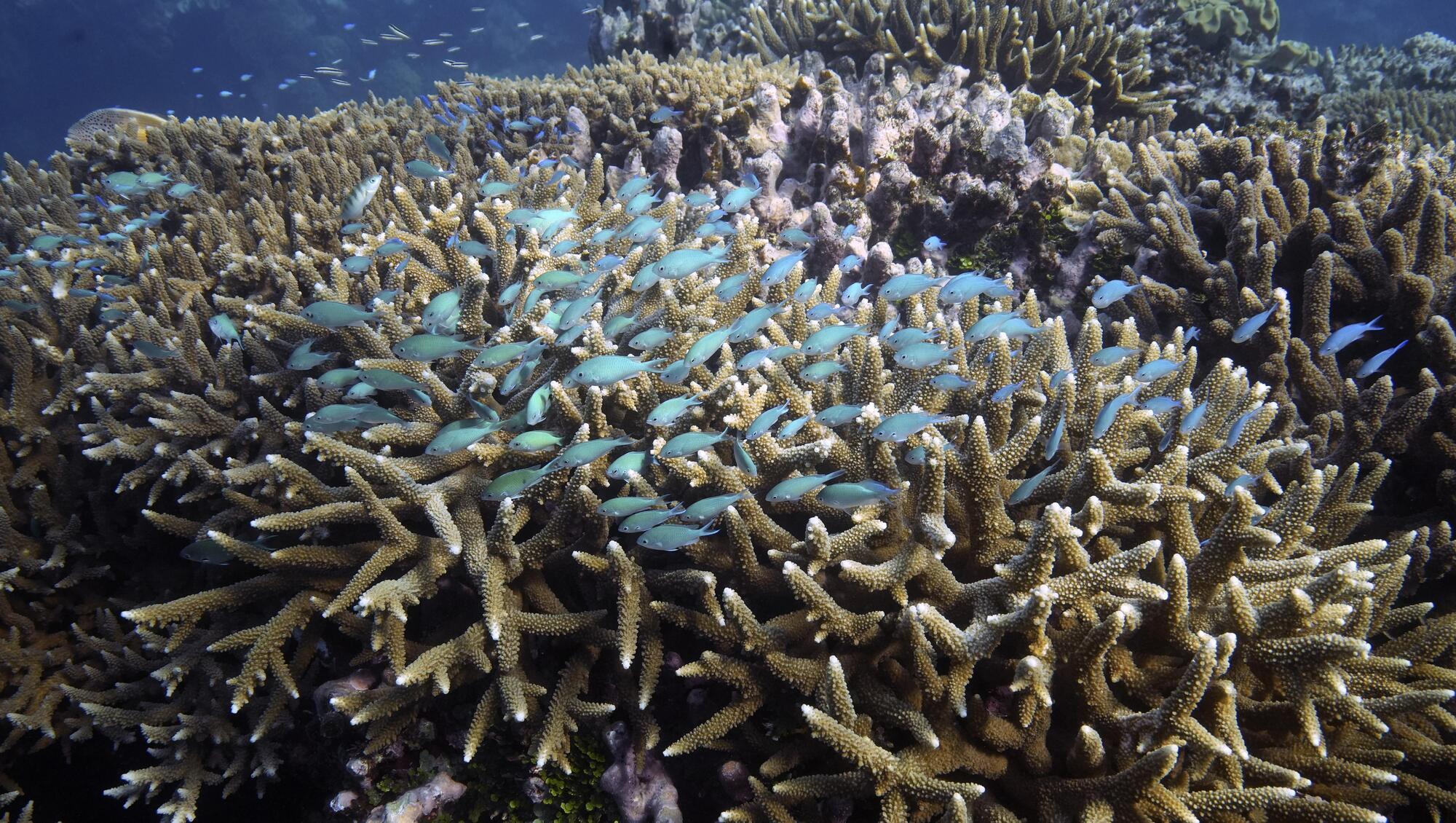
A school of fish swim above corals on Moore Reef in Gunggandji Sea Country off the coast of Queensland in eastern Australia

Sounds of the natural world are rapidly falling silent and will become “acoustic fossils” without urgent action to halt environmental destruction, international experts have warned.

As technology develops, sound has become an increasingly important way of measuring the health and biodiversity of ecosystems: our forests, soils, and oceans all produce their own acoustic signatures. Scientists who use eco-acoustics to measure habitats and species say that quiet is falling across thousands of habitats, as the planet witnesses extraordinary losses in the density and variety of species. 

Disappearing or losing volume along with them are many familiar sounds: the morning calls of birds, the rustle of mammals through undergrowth, and summer hum of insects.

Today, tuning into some ecosystems reveals a “deathly silence”, said Prof Steve Simpson from the University of Bristol. “It is that race against time — we’ve only just discovered that they make such sounds, and yet we hear the sound disappearing."

“The changes are profound. And they are happening everywhere,” said US soundscape recordist Bernie Krause, who has taken more than 5,000 hours of recordings from seven continents over the past 55 years. He estimates that 70% of his archive is from habitats that no longer exist.

Prof Bryan Pijanowski from Purdue University in the US has been listening to natural sounds for 40 years and has taken recordings from virtually all of the world’s main types of ecosystems.

He said: “The sounds of the past that have been recorded and saved represent the sounds of species that might no longer be here — so that’s all we’ve got. The recordings that many of us have [are] of places that no longer exist, and we don’t even know what those species are. In that sense, they are already acoustic fossils.” 

 A diver over bleached coral at Orpheus Island in Queensland.
 A diver over bleached coral at Orpheus Island in Queensland.

 Numerous studies are now documenting how natural soundscapes are changing, being disrupted and falling silent. A 2021 study in the journal Nature of 200,000 sites across North America and Europe found “pervasive loss of acoustic diversity and intensity of soundscapes across both continents over the past 25 years, driven by changes in species richness and abundance”. 

The authors added: “One of the fundamental pathways through which humans engage with nature is in chronic decline with potentially widespread implications for human health and wellbeing.” 

The shift in ecosystem sound is happening in the air, the forests, the soil, and even under the water. During the cold war, the US navy used underwater surveillance systems to track Soviet submarines — and found they struggled to do so near coral reefs due to all the sounds reefs produced. It wasn’t until 1990 that civilian scientists could listen to this classified data.

“Whenever we went to a healthy reef it blew our minds — the cacophony of sounds we heard,” said Simpson, who has been monitoring coral reefs using hydrophones for more than 20 years. “A healthy reef was a carnival of sound.” 

At the outset of his research, noise pollution from motorboats was his main concern, but 2015 and 2016 brought significant bleaching events, which resulted in 80% mortality of corals. “They cooked the reef,” he said. More than half of the world’s coral reef cover has now been lost since 1950. If global heating reaches 2C, more than 99% of coral reefs are expected to start dying.

The result of these bleaching events is a “deathly silence”, said Simpson. “We swam around those reefs crying into our masks."

Guardian

x

CLIMATE & SUSTAINABILITY HUB

More in this section

Lunchtime News

Newsletter

Keep up with stories of the day with our lunchtime news wrap and important breaking news alerts.

Cookie Policy Privacy Policy Brand Safety FAQ Help Contact Us Terms and Conditions

© Examiner Echo Group Limited